Algeria
 Egypt
 Libya
 Morocco
 Sudan
 Tunisia
 Benin
 Burkina Faso
 Cabo Verde
 Côte d'Ivoire
 Ghana
 Guinea
 Guinea-Bissau
 Liberia
 Mali
 Mauritania
 Niger
 Nigeria
 Senegal
 Sierra Leone
 The Gambia
 Togo
 Cameroon
 Central African Republic
 Chad
 DR Congo
 Equatorial Guinea
 Gabon
 Republic of the Congo
 São Tomé and Príncipe
 Burundi
 Comoros
 Djibouti
 Eritrea
 Ethiopia
 Madagascar
 Malawi
 Mauritius
 Mozambique
 Rwanda
 Seychelles
 Somalia
 South Sudan
 Tanzania
 Uganda
 Angola
 Botswana
 Eswatini
 Lesotho
 Namibia
 South Africa
 Zambia
 Zimbabwe
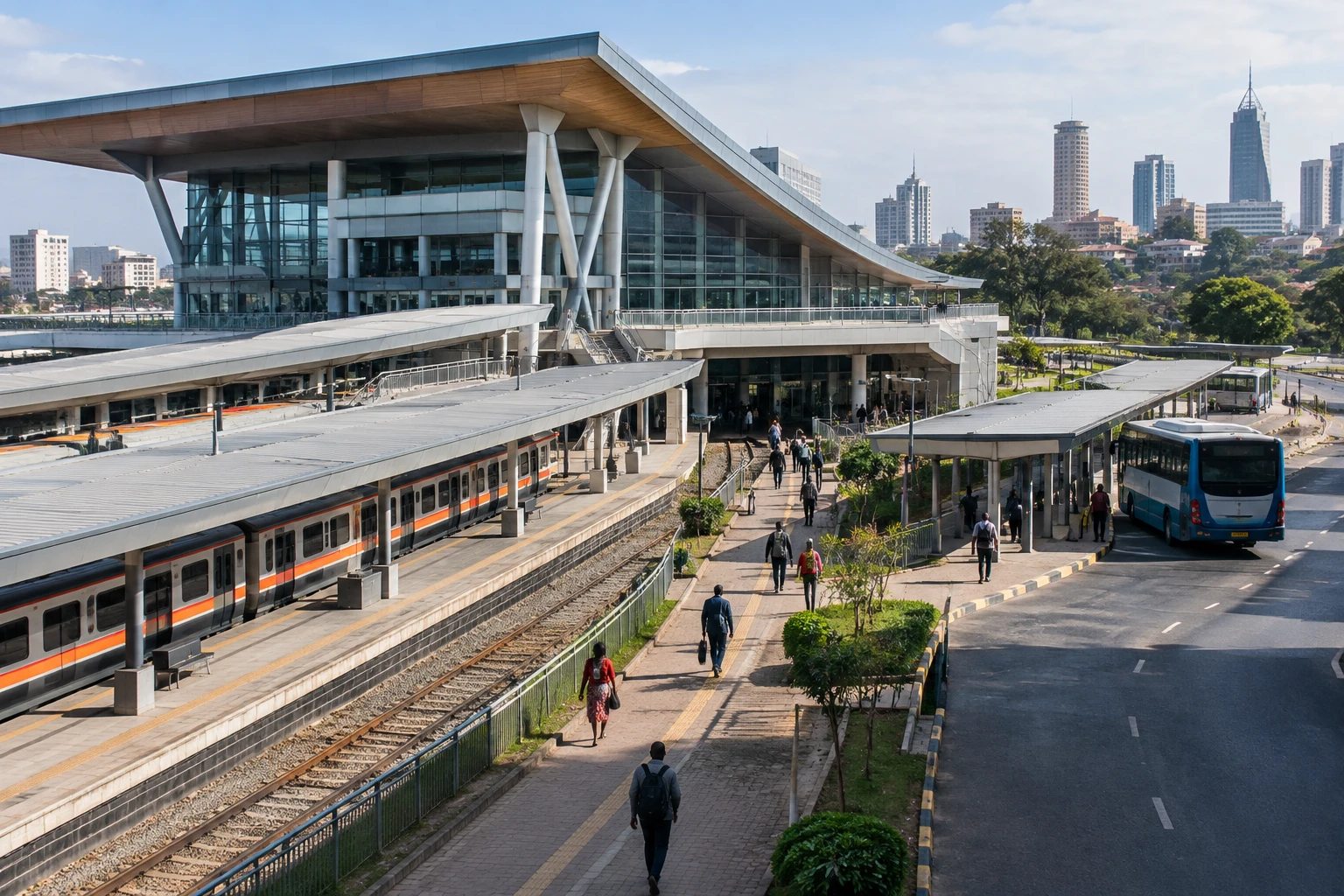
In Nairobi, losing time in traffic jams is more than an inconvenience: it also means lost working hours, transport costs and harder daily journeys for residents of neighbourhoods far from the centre. Kenya is preparing a response based on several modes of transport, but the challenge will be to make them work as a coherent network.
A metropolis outgrowing its roads
Kenya’s capital concentrates jobs, services and economic activity, while journeys extend well beyond its administrative boundaries into neighbouring counties. Households that rely on privately operated minibuses, known as matatu, are particularly affected by traffic jams, transfers and fluctuations in journey times. Motorists also face delays, which complicate the movement of goods and workers.
The Kenyan government has already described congestion as a major economic cost. In 2024, the then transport minister, Kipchumba Murkomen, estimated annual losses at 120 billion shillings. This figure is a ministerial estimate, not an independent measurement presented here as definitive. It nevertheless illustrates why the authorities are seeking to strengthen public transport.
This ambition forms part of the Kenya Urban Mobility Improvement Project, or KUMIP: a programme focused on mobility in the Nairobi metropolitan region and development around transport corridors. Kenya Railways, the state-owned railway company, says the programme covers commuter rail, access to stations and urban development around certain stations, among other areas. The World Bank is among its financing partners.
Rail to Thika: studies and future investment
The corridor linking Nairobi Central Station to Thika is one of the routes being considered for commuter rail development. Project documents describe potential work on tracks, stations, signalling and telecommunications, as well as electrification of the network and the acquisition of trainsets. Access roads and development around stations are also intended to make transfers easier.
However, the programme under study must be distinguished from work already completed. Notices published in 2026 by Kenya Railways and in the World Bank’s public procurement documents concern the recruitment of experts and consultancy services. They do not mean that construction of the electrified line is already under way or that a date has been set for passenger services to begin. The process is intended to clarify technical choices and prepare subsequent steps.
Kenyan announcements cite an investment of about 65 billion shillings, or roughly $500 million, to modernise the Nairobi-Thika corridor. This amount indicates the scale envisaged, but should not be confused with expenditure already incurred. Kenya Railways documents confirm the project’s components, while procurement notices show that preparatory activities are continuing.
Electrification could enable more frequent services and greater capacity, provided the tracks, safety systems and maintenance facilities are also upgraded. It will not, by itself, solve the “last-mile” problem: getting from home to a station and then reaching the workplace remains essential if rail is to be a practical option.
BRT complements rail, but transfers remain essential
At the same time, Kenya is developing BRT Line 5, a bus rapid transit system operating along a dedicated corridor to improve service regularity. The announced project includes a section of about 10.5 kilometres, 13 stations and road infrastructure. Its announced financing amounts to $59 million, through the Export-Import Bank of Korea.
Information published in 2026 reports progress in preparing the line, but its infrastructure does not yet provide a service for passengers. Its timetable and implementation therefore remain to be seen. The bus network could serve routes not directly covered by rail; its usefulness will nevertheless depend on frequency, waiting times, fares and straightforward connections with matatu and railway stations.
The Madaraka Express train between Nairobi and Mombasa, for its part, serves intercity travel. It does not replace a commuter network designed for daily journeys within the metropolis. Confusing these two functions would give a misleading picture of the services available: a long-distance rail link is not enough to carry commuters between residential neighbourhoods and employment hubs.
Coordination will determine the benefits for residents
For residents living near future stations, improved services could reduce reliance on roads and make journeys more predictable. For people in less well-served areas, the benefits will depend above all on feeder services, pedestrian access and the combined cost of transfers. Fast infrastructure that is difficult to reach risks primarily benefiting areas that are already connected.
Development around stations can also attract housing and businesses. It requires careful planning: improved access alone does not guarantee that current residents will be able to remain near the stations. Decisions on land use, access and local services will therefore matter as much as railway infrastructure.
The challenge is also institutional. Several public bodies are involved in roads, rail and metropolitan planning. Without coordinated timetables, shared information and reliable transfers, rail and BRT risk operating as separate projects. Informal transport operators, including matatu services that account for a significant share of journeys, will also need to be taken into account in organising the network.
Across East Africa, Nairobi’s experience will be watched in a region where major cities are also seeking to better integrate transport and urban development. Kenya is a member of the East African Community (EAC), which brings neighbouring countries together for regional cooperation. For now, the next concrete steps to watch in Nairobi remain national: progress on studies, tenders and construction for rail and BRT. Their coordinated introduction into service — rather than the announcement of an isolated project — will show whether they make a difference for passengers.