Algeria
 Egypt
 Libya
 Morocco
 Sudan
 Tunisia
 Benin
 Burkina Faso
 Cabo Verde
 Côte d'Ivoire
 Ghana
 Guinea
 Guinea-Bissau
 Liberia
 Mali
 Mauritania
 Niger
 Nigeria
 Senegal
 Sierra Leone
 The Gambia
 Togo
 Cameroon
 Central African Republic
 Chad
 DR Congo
 Equatorial Guinea
 Gabon
 Republic of the Congo
 São Tomé and Príncipe
 Burundi
 Comoros
 Djibouti
 Eritrea
 Ethiopia
 Madagascar
 Malawi
 Mauritius
 Mozambique
 Rwanda
 Seychelles
 Somalia
 South Sudan
 Tanzania
 Uganda
 Angola
 Botswana
 Eswatini
 Lesotho
 Namibia
 South Africa
 Zambia
 Zimbabwe
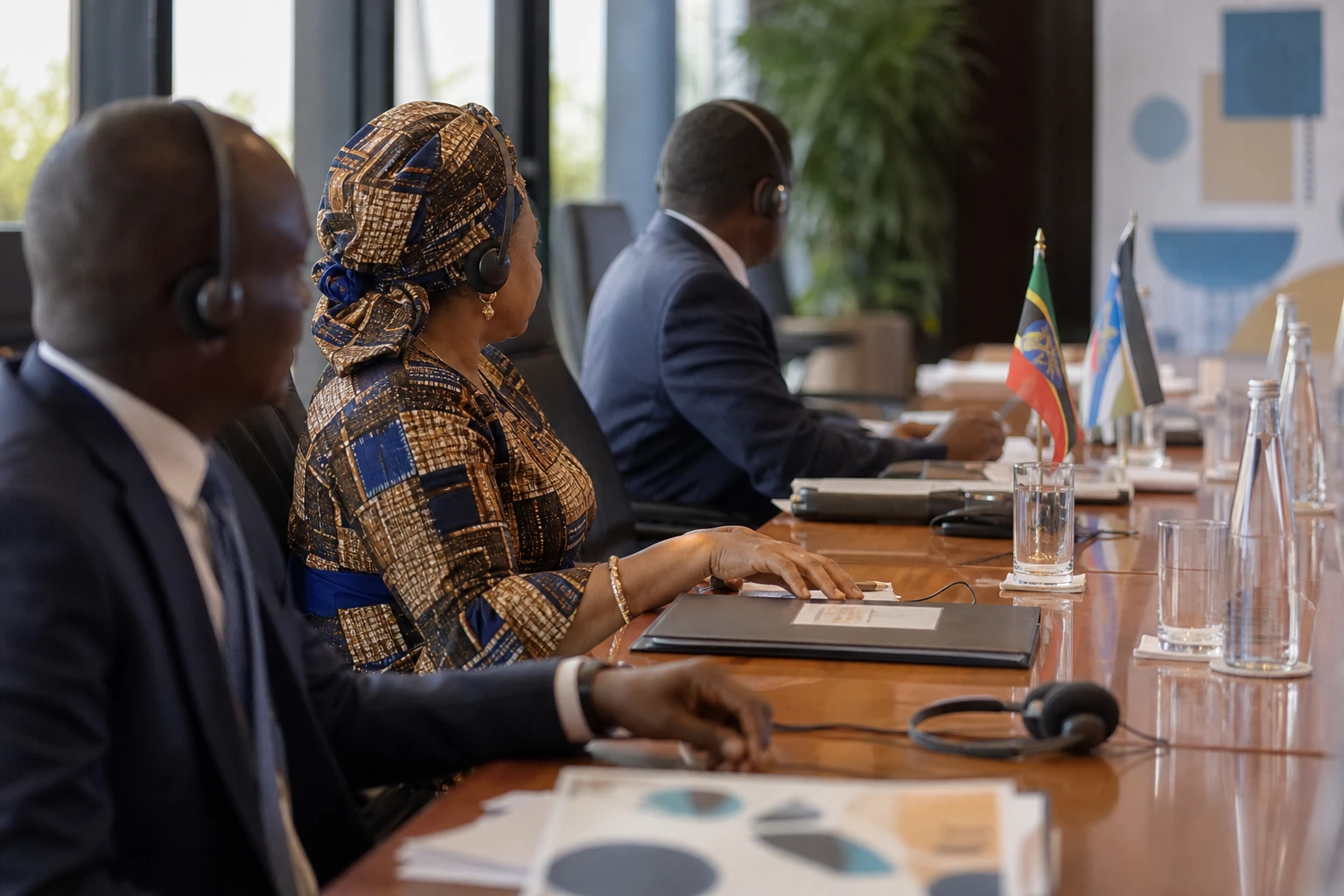
Nairobi, a showcase for architecture conceived on the continent
In Nairobi, an architecture biennale says more than something about the aesthetics of buildings. It also says who has the right to imagine the city, who it is built for, and what its priorities are. In a Kenyan capital where pressure on land, daily travel and affordable housing remain tangible issues, architecture becomes a public debate, not a luxury reserved for star names.
The gathering opening in Nairobi presents itself as the first Pan-African biennale devoted entirely to the built environment. It is scheduled to run from 7 to 11 September 2026, opening at the Kenyatta International Convention Centre in the heart of Nairobi, with a clear theme: “Shifting the center: from fragility to resilience”. The programme brings together conferences, panels and public events on architecture, urban planning, design, heritage and industry.
The choice of Nairobi is no coincidence. The city is already home to major institutions in global urban planning, including the headquarters of UN-Habitat, making it a natural place to discuss African cities, which are on the front line of urban growth. Kenya, for its part, has also eased access to its territory for many African nationals since 2025, amid a regional context in which the movement of people and ideas is becoming increasingly important for those working on cities.
A response to the urban crisis, and to intellectual dependence
The debate comes at a specific moment. Africa is urbanising rapidly. UN-Habitat says urbanisation is one of the continent’s major transformations and can become a driver of inclusive growth if states invest in infrastructure, housing and services. The same institution notes that Africa is still building its cities, offering a rare opportunity to avoid mistakes made elsewhere.
In Kenya, the issue is visible in central neighbourhoods as well as on the outskirts. Nairobi concentrates economic opportunities, but also inequalities in access to housing, transport and urban amenities. The Kenyan authorities themselves acknowledge this in recent public documents: housing, urban digitalisation and mobility projects are now at the heart of national planning. It is in this context that an architecture biennale takes on immediate political significance.
The stakes, however, go beyond the Kenyan capital alone. In East Africa, the movement of architects, students, urban planners and investors is linked to regional integration promoted by the East African Community, or EAC, of which Kenya is a member. Kenya’s ministry responsible for EAC affairs says it coordinates the implementation of regional programmes and the acceleration of integration. A biennale in Nairobi therefore also becomes a space for regional dialogue, not just a national one.
This dimension matters to African professionals. For a long time, the continent’s major architectural reference points were validated elsewhere, in European or North American capitals. The Nairobi gathering seeks to shift this centre of gravity. It highlights practices conceived in Africa to address its real constraints: climate, materials, densification, urban informality and the cost of land. It is a way of taking back control of the African architectural narrative.
What the biennale means for Kenya and the region
For Kenya, the impact is twofold. First, symbolic: Nairobi is reaffirming its role as a continental capital for discussions about cities, at the crossroads of urban diplomacy, international institutions and creativity. Second, practical: the biennale brings professionals, universities, local authorities and investors together around concrete projects, from affordable housing to cultural infrastructure. The event’s official website also announces a book of projects and discussions open to practitioners from across the continent and the diaspora.
For residents, the benefits are more down to earth. A better-designed city is measured by more than its façades. It can be seen in shorter journeys, safer neighbourhoods, accessible public spaces, better water management and housing that does not push lower-income households ever further away. This is where the theme of resilience takes on its full meaning. A resilient city is not a showcase city. It is a city able to absorb climate, economic and social shocks without excluding some of its residents.
The event also resonates across Africa. The continent faces the same dilemma in different contexts: how can cities be built without reproducing imported, costly and often unsuitable models? How can construction be fast, but better? How can professions, local authorities, universities and users be brought together? The Nairobi biennale puts these questions at the centre of a continental agenda, as the African Union promotes economic integration and the AfCFTA, the African Continental Free Trade Area, seeks to facilitate trade between countries.
The political significance is clear: Nairobi is not merely hosting a cultural event. The Kenyan capital is providing a space to negotiate how Africa wants to build itself, in the most literal sense. The coming weeks will show whether the biennale becomes a lasting fixture or simply a marker of prestige. But from its first edition, it raises a central question: who will design tomorrow’s African city, and on the basis of which local realities?