Algeria
 Egypt
 Libya
 Morocco
 Sudan
 Tunisia
 Benin
 Burkina Faso
 Cabo Verde
 Côte d'Ivoire
 Ghana
 Guinea
 Guinea-Bissau
 Liberia
 Mali
 Mauritania
 Niger
 Nigeria
 Senegal
 Sierra Leone
 The Gambia
 Togo
 Cameroon
 Central African Republic
 Chad
 DR Congo
 Equatorial Guinea
 Gabon
 Republic of the Congo
 São Tomé and Príncipe
 Burundi
 Comoros
 Djibouti
 Eritrea
 Ethiopia
 Madagascar
 Malawi
 Mauritius
 Mozambique
 Rwanda
 Seychelles
 Somalia
 South Sudan
 Tanzania
 Uganda
 Angola
 Botswana
 Eswatini
 Lesotho
 Namibia
 South Africa
 Zambia
 Zimbabwe
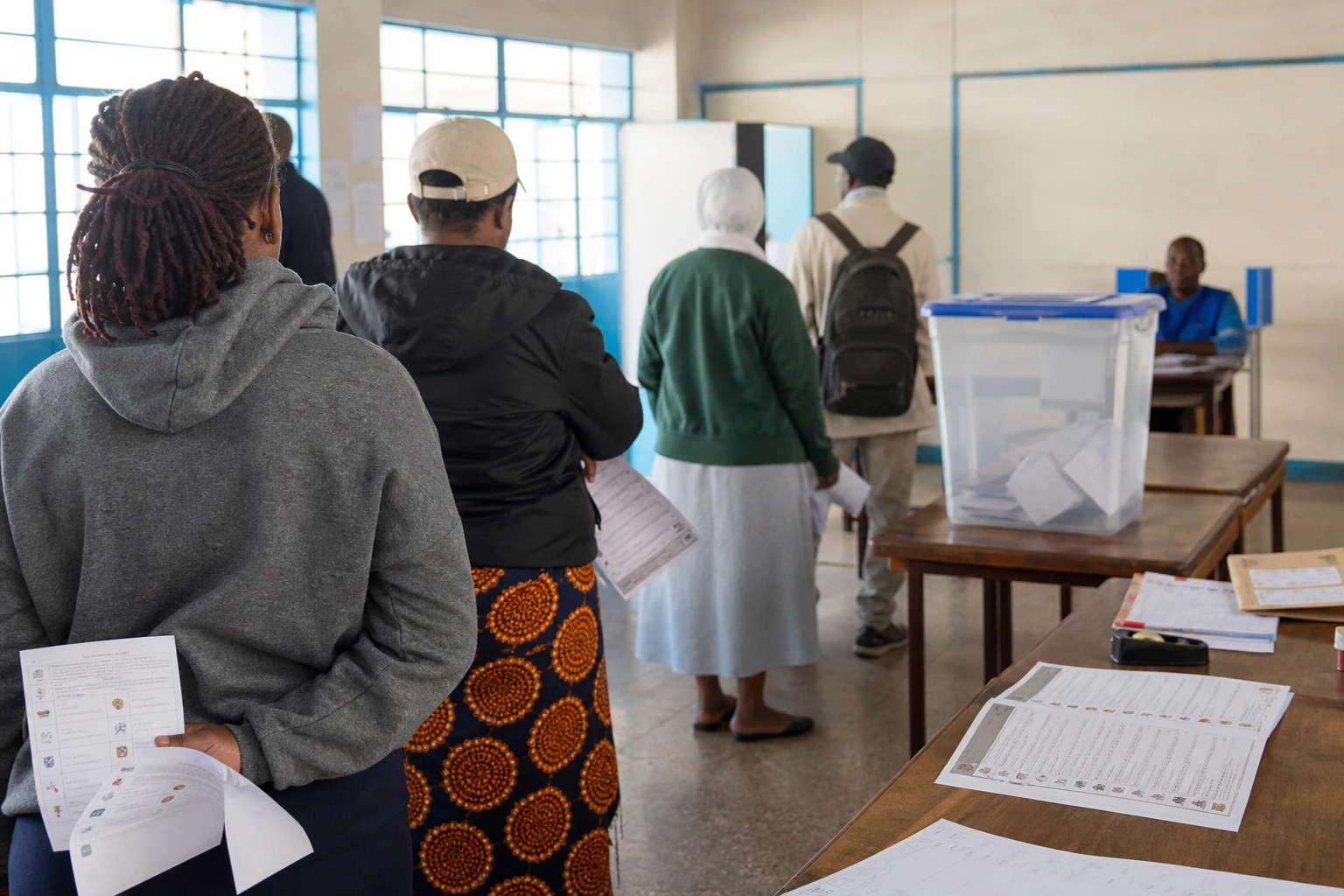
In Nairobi, the political battle is already playing out on the streets
In Kenya, the race towards the 2027 election is no longer confined to political parties, parliamentary corridors or televised statements. It is also measured by the ability to fill a square, turn out a procession and convince young voters that another political offer is possible. At Saturday’s rally in Nairobi, the demonstration showed one thing above all: the opposition is seeking to seize the initiative ahead of a presidential election scheduled for Tuesday 10 August 2027 by Kenya’s electoral commission.
This episode comes amid an already tense climate. Since the major protests over the cost of living and police abuses, the country has experienced several periods of tension, forceful dispersals and mass arrests. In June 2026, more than 350 people were arrested in Nairobi during a march marking the anniversary of the 2024 protests. Two months later, clashes again disrupted political gatherings in the west of the country.
The Sifuna camp’s message: be visible, count numbers, look ahead
The Nairobi rally was organised by Linda Mwananchi, a movement gaining momentum around Nairobi senator Edwin Sifuna, Siaya County governor James Orengo and Embakasi East MP Babu Owino. Its organisers described the event as a mobilisation success, with a large crowd and a peaceful procession in the capital. Several leaders then presented the gathering as a test of strength ahead of 2027.
The platform’s political core is clear. Since the death of Raila Odinga in October 2025, ODM, the major historic opposition party, has been going through a period of realignment. Some of its senior figures, including Sifuna and his allies, oppose rapprochement with President William Ruto’s camp. Others support a policy of co-operation with the government. This split has fuelled a series of internal tensions, sanctions and signs of a possible breakaway.
Nairobi carries considerable symbolic weight in this contest. It is the capital and the country’s administrative and media centre. It is also a political barometer. When a movement draws a large crowd there, it signals that it is not confined to a regional base. It is seeking to appeal to urban young people, wage earners, small traders and swing voters who could tip an election campaign. This is a political inference, but it reflects how the forces involved use the capital as a sounding board.
The legal and security framework remains central
Public gatherings in Kenya are governed by a specific framework. Under the Public Order Act regulations, organisers must notify the police before a meeting or procession. Security forces can oversee an event, but may also restrict a gathering if public order is threatened. This legal framework explains why Linda Mwananchi’s organisers had formally notified the police before earlier stops on their campaign.
At the same time, the country’s recent experience has made the authorities wary. The protests of 2024 and 2025 left a deep mark. Several deaths were reported during the most violent demonstrations, and police responses were strongly criticised by human rights organisations and local observers. In 2026, the mere announcement of a gathering now draws a visible security presence, particularly when national opposition figures are travelling.
The Nairobi rally nevertheless stood out for an atmosphere more controlled than at some previous events. That matters. For opposition leaders, the ability to mobilise without unrest is as important as the size of the crowd. For the police, the challenge is the reverse: to prevent a political demonstration from turning into a street clash. For traders, motorcycle taxi drivers and informal vendors, whose livelihoods depend on the ebb and flow of processions and roadblocks, the difference between calm and chaos is immediately reflected in their takings.
What this growing momentum reveals
Linda Mwananchi’s strength lies less in a detailed programme than in a straightforward political promise: to break with the current trajectory and prepare a credible alternative to William Ruto. The slogan “one term”, rendered in Sheng on Nairobi’s streets, expresses this strategy. It boils the debate down to a question of changing the people in power, political fatigue and a generational break. This language resonates particularly with some urban young people, who have been prominent in recent protests in Kenya.
But this momentum also has its limits. A large crowd does not make a solid coalition. The Sifuna camp still has three questions to resolve: unity among its leaders, turning a movement into an electoral machine, and the ability to move beyond regional loyalties. Kenyan sources show that internal discussions centre on a future political formation, a possible departure from ODM and the role of leaders such as Orengo, Babu Owino and Godfrey Osotsi. In other words, street mobilisation is only one stage in a battle over political organisation.
For William Ruto’s government, the contest is not solely about his national popularity. It is also about his ability to maintain order, contain dissent and retain the institutional advantage until the August 2027 election. Kenyan politics remains marked by shifting coalitions, alliances of convenience and rapid realignments. The balance of power is therefore not fixed. It will depend as much on the streets as on candidate selections, as much on the coastal and western regions as on Nairobi, and as much on young activists as on party machinery.
A Kenyan episode with an East African reach
This episode extends beyond Kenya because the country occupies a central place in the East African Community, whose members include Kenya, Uganda, Tanzania, Rwanda, Burundi, South Sudan, Somalia and the Democratic Republic of the Congo. In this region, changes of government, protests and opposition realignments often influence the tone in other capitals. Nairobi remains one of East Africa’s leading political and economic centres.
The continental significance is therefore clear. If Kenya’s opposition manages to organise around young leadership and a clear message, it will fuel other African debates on generational succession, the role of major historic parties and how to turn social anger into an electoral platform. If, on the other hand, the realignment fragments, Kenya could offer another case study of opposition forces that mobilise strongly but struggle to unite when it matters. The next development to watch is the electoral preparations gathering pace ahead of 10 August 2027.