Algeria
 Egypt
 Libya
 Morocco
 Sudan
 Tunisia
 Benin
 Burkina Faso
 Cabo Verde
 Côte d'Ivoire
 Ghana
 Guinea
 Guinea-Bissau
 Liberia
 Mali
 Mauritania
 Niger
 Nigeria
 Senegal
 Sierra Leone
 The Gambia
 Togo
 Cameroon
 Central African Republic
 Chad
 DR Congo
 Equatorial Guinea
 Gabon
 Republic of the Congo
 São Tomé and Príncipe
 Burundi
 Comoros
 Djibouti
 Eritrea
 Ethiopia
 Kenya
 Madagascar
 Malawi
 Mauritius
 Rwanda
 Seychelles
 Somalia
 South Sudan
 Tanzania
 Uganda
 Angola
 Botswana
 Eswatini
 Lesotho
 Namibia
 South Africa
 Zambia
 Zimbabwe
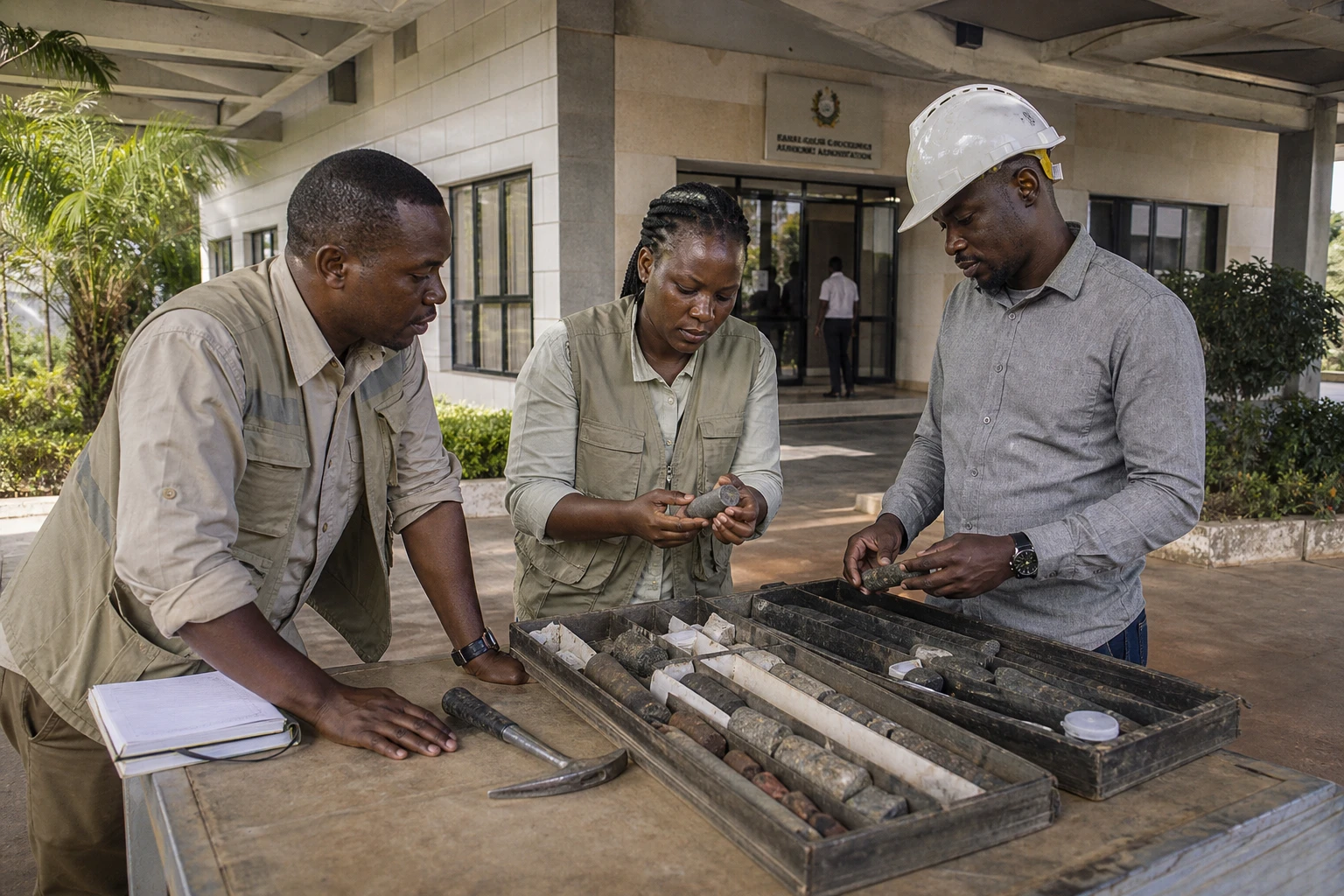
In north-western Mozambique, a single deposit could soon attract interest from several sectors of the global industry. At Monte Muambe, the project is no longer focused solely on rare earths. It is also targeting fluorspar, an understated but essential mineral used to make chemicals, refrigerants, steel and components linked to the nuclear industry.
This diversification gives the Mozambican site new strategic importance. It is attracting the attention of the United States, which is seeking to reduce its dependence on imports of critical minerals. For Mozambique, the stakes are different but just as tangible: turning a geological resource into industrial activity, skilled jobs and national revenue.
Monte Muambe moves up a gear
On 28 September 2026, NeoTerra Group announced that it had applied for a $5 million grant under the US U.S.-Africa Strategic Investment programme. The British company wants to fund further work on the fluorspar component of the Monte Muambe project, located in Tete province.
The application does not yet amount to funding being awarded. It is intended to support an assessment of an operation larger than the initial project, which envisages capacity of 50,000 tonnes of fluorspar a year. NeoTerra says it wants to increase the estimated resource of calcium fluoride, or CaF₂, from 716,000 tonnes contained to 4 million tonnes.
The proposed programme would also include a study of the regional and international fluorspar market. Finally, it would examine the possibility of installing a hydrofluoric acid production plant in Mozambique. This step is important: it would mean the project’s value was not limited to mining and exporting raw ore.
Data published by NeoTerra on the Monte Muambe project indicate a JORC-compliant mineral resource of 3.48 million tonnes at 20.6% CaF₂, as well as an additional exploration target. These are geological resources and targets, not production that is already available.
US support already under way for rare earths
The new application builds on an established relationship between the project and Washington. In February 2026, the US Trade and Development Agency, or USTDA, signed a $1.875 million grant agreement with Monte Muambe Mining.
This initial funding is for a pre-feasibility study on rare earths. A pre-feasibility study assesses a project’s technical, economic, financial and environmental viability before an investment decision is made.
According to USTDA documents, the project could target annual production of around 15,000 tonnes of mixed rare earth carbonate. This product would contain, among other elements, neodymium, praseodymium, dysprosium and terbium, which are used in permanent magnets, electronics and certain industrial and military applications.
US support is driven by concerns over security of supply. Fluorspar is among the minerals the United States considers critical. According to the 2026 US Geological Survey report, the United States remains 100% dependent on net imports for its fluorspar consumption, excluding sales from stocks or by-products.
China remains the world’s leading producer. US Geological Survey data put its 2025 production at around 6 million tonnes, or nearly two-thirds of the estimated global total in the available data. This concentration is fuelling US efforts to diversify suppliers, although China does not account for all US imports.
For Maputo, the question is how much value is created
The Monte Muambe project comes at a time when Mozambique is seeking to make better use of its natural resources. The country already produces coal, graphite, titanium and natural gas. However, exploiting these resources does not automatically guarantee local processing or sufficient redistribution of revenues.
Fluorspar could open up another path. A mine producing 50,000 tonnes a year would create a new industrial activity, but the possible installation of a hydrofluoric acid plant would change the equation further. It would require technical skills, energy, infrastructure and strict safety standards. In return, it could retain a greater share of the value in Mozambique.
This ambition aligns with the priorities of the Southern African Development Community, or SADC. The regional organisation advocates developing value chains in which minerals are processed, at least in part, within the region. Mozambique could thus become a source of supply as well as an industrial link for southern Africa.
The effects would not be the same for all parties. Investors would seek a resource large and profitable enough to develop. Authorities in Maputo would need to secure tax revenues, environmental rules and participation by Mozambican companies. In Tete province, expectations would focus above all on jobs, infrastructure and benefits for communities near the site.
Mozambique’s new framework reinforces these expectations. The Ministry of Mineral Resources and Energy now publishes an updated mining law, as well as a local content law adopted in 2026. These texts will need to be assessed in terms of their practical application: access to contracts for domestic companies, training, subcontracting and revenue transparency.
A project still subject to several conditions
The $5 million application is not a final decision. NeoTerra must still demonstrate that increasing the resource is technically feasible and economically justified. It will also need to specify processing costs, water and energy requirements, logistics and environmental protection measures.
The announced timetable provides for continued scoping work on the 50,000-tonne-a-year operation. NeoTerra is targeting a final investment decision by the end of 2026 and has mentioned a possible start to construction work in 2027. These dates remain dependent on technical results, permits and the mobilisation of capital.
For Mozambique, Monte Muambe is therefore about more than US funding. The project tests the country’s ability to negotiate its place in new global critical-mineral supply chains. For SADC, it also raises the question of regional processing of resources. The United States, meanwhile, will have to balance the rapid securing of supplies against support for a project that is still in development.
The next steps will be decisive: the US decision on the grant, drilling results, changes in the resource estimate, metallurgical studies and a decision on possible hydrofluoric acid production. At that point, Monte Muambe can be assessed not merely as a geological promise, but as a genuine Mozambican industrial project.