Algeria
 Egypt
 Libya
 Morocco
 Sudan
 Tunisia
 Benin
 Burkina Faso
 Cabo Verde
 Côte d'Ivoire
 Ghana
 Guinea
 Guinea-Bissau
 Liberia
 Mali
 Mauritania
 Niger
 Nigeria
 Senegal
 Sierra Leone
 The Gambia
 Togo
 Cameroon
 Central African Republic
 Chad
 DR Congo
 Equatorial Guinea
 Gabon
 Republic of the Congo
 São Tomé and Príncipe
 Burundi
 Comoros
 Djibouti
 Eritrea
 Ethiopia
 Kenya
 Madagascar
 Malawi
 Mauritius
 Rwanda
 Seychelles
 Somalia
 South Sudan
 Tanzania
 Uganda
 Angola
 Botswana
 Eswatini
 Lesotho
 Namibia
 South Africa
 Zambia
 Zimbabwe
In Moamba, in Maputo Province, the Mozambican government is banking on a vast economic area to attract businesses and expand production. But a zone with special rules does not, by itself, create lasting jobs: everything will depend on investments actually made, infrastructure available and benefits for local residents.
A project rooted in the southern corridor
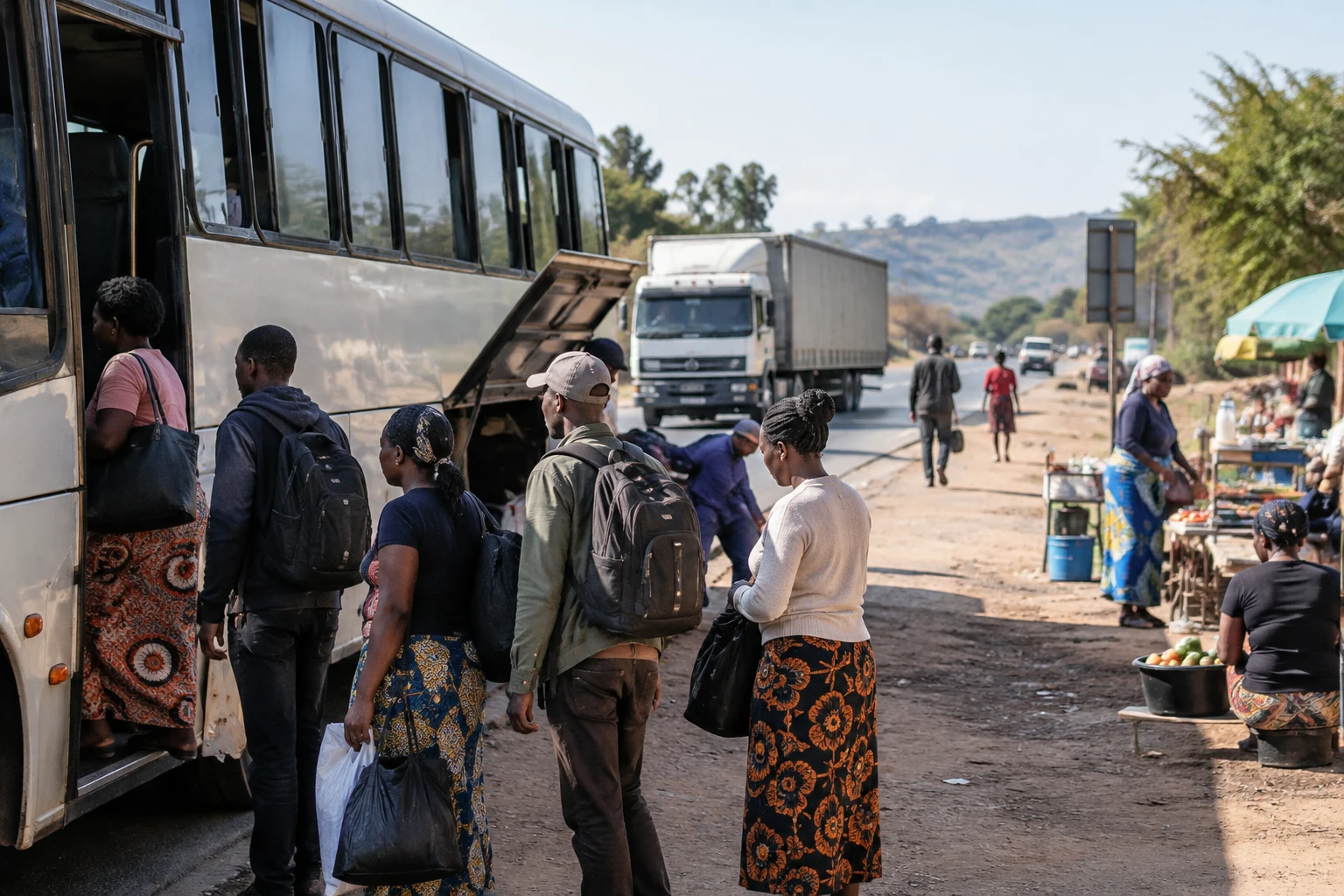
Moamba lies in southern Mozambique, within the province surrounding the capital, Maputo. The district is on a route linking the capital to Ressano Garcia, a border post with South Africa. This location may appeal to industrial, commercial and logistics activities serving both the domestic market and regional trade. Proximity to a transport route is, however, a potential advantage, not a guarantee of reliable access to energy, water or markets.
Mozambique is a member of the Southern African Development Community (SADC), a regional organisation bringing together countries in southern Africa and promoting, among other things, economic cooperation. In this context, a site close to routes to South Africa may matter to companies importing inputs or seeking to sell their products in the region. Competition among territories to attract these activities nevertheless remains strong.
The country already has special economic zones and industrial free zones. Mozambique’s investment and export promotion agency describes these schemes as designated areas that may benefit from a special customs regime and measures intended to facilitate investors’ activities. Moamba’s zone is therefore part of a tool already used by the authorities, rather than an entirely new model.
What the government has approved
The Council of Ministers approved the creation of the Moamba Special Economic Zone (SEZ) at its meeting on 3 November 2026. The announcement was made public the following day. The designated area covers 64,000 hectares in the administrative posts of Moamba-Sede, Pessene and Ressano Garcia, according to several independent Mozambican media outlets.
The government presents the SEZ as a way to increase production and trade capacity, attract investment, support employment, broaden tax revenues and generate foreign currency. The announced measures are based in particular on incentives and simplified administrative procedures. The precise terms, their implementation timetable and the conditions for companies to gain access will need to be monitored as the scheme is rolled out.
The Mozambican daily Diário Económico reports that Council of Ministers spokesman Inocêncio Impissa cited more than $1 billion in expected investment and more than 5,000 direct and indirect jobs. These figures are projections reported by the authorities, not results already achieved. The same outlet says at least four large companies are already active in the district and that other entities could set up there.
The area and boundaries are also reported by Evidências, which says the decree was announced at the end of the Council of Ministers’ 32nd ordinary session. Cross-checking these reports confirms the project’s main details. It does not, however, make it possible to verify that all the announced investments will be committed or that the projected jobs will materialise.
Benefits will depend on implementation
For businesses, special status may reduce some costs and delays if tax benefits and procedures are genuinely accessible and predictable. For the state, the issue is more complex: incentives may initially reduce some revenues, while a broader tax base will depend on the creation of activities that pay taxes over the long term and buy locally.
Residents of Moamba will not automatically benefit from the announced jobs. The impact will depend on the skills sought, training opportunities and hiring conditions. Local small businesses could benefit from demand for transport, services or supplies. Conversely, if companies import most of their equipment and inputs, links with the local economy could remain limited.
The scale of the designated area also raises practical questions: which land will be affected, what consultations will be held and how will existing uses be addressed? The public information available in the reports consulted does not yet detail these issues. Requirements for secondary roads, water, electricity and public services will also need to be specified, so that the zone does not operate as an enclave disconnected from the district.
The country’s previous special zones are a reminder that administrative creation is only the first step. The public agency APIEX, for example, presents the Mocuba zone, created in 2014, with eight authorised investment projects and projected jobs. This reference does not allow the two sites to be compared directly, but it highlights the importance of distinguishing announced projects from achieved results.
A test for regional industrial strategy
Moamba will be an indicator of Mozambique’s ability to turn its geographical position and incentive regimes into local production. For SADC, the issue also concerns the movement of goods and the integration of value chains between neighbouring countries. A zone that processes raw materials, develops local suppliers and sells across borders can strengthen these exchanges. A zone focused on benefits for investors, without local roots, would have a more limited impact.
The next steps to watch are the publication of applicable rules, the effective demarcation of the site, initial financial commitments and the progress of companies already present. The authorities will also need to report on jobs created and revenues generated, rather than relying on initial targets. For Mozambicans in Maputo Province, the project’s success will be measured less by its hectares than by the activities established, the skills developed and the share of value created that remains in the national economy.