Algeria
 Egypt
 Libya
 Morocco
 Sudan
 Tunisia
 Benin
 Burkina Faso
 Cabo Verde
 Côte d'Ivoire
 Ghana
 Guinea
 Guinea-Bissau
 Liberia
 Mali
 Mauritania
 Niger
 Nigeria
 Senegal
 Sierra Leone
 The Gambia
 Togo
 Cameroon
 Central African Republic
 Chad
 DR Congo
 Equatorial Guinea
 Gabon
 Republic of the Congo
 São Tomé and Príncipe
 Burundi
 Comoros
 Djibouti
 Eritrea
 Ethiopia
 Kenya
 Madagascar
 Malawi
 Mauritius
 Rwanda
 Seychelles
 Somalia
 South Sudan
 Tanzania
 Uganda
 Angola
 Botswana
 Eswatini
 Lesotho
 Namibia
 South Africa
 Zambia
 Zimbabwe
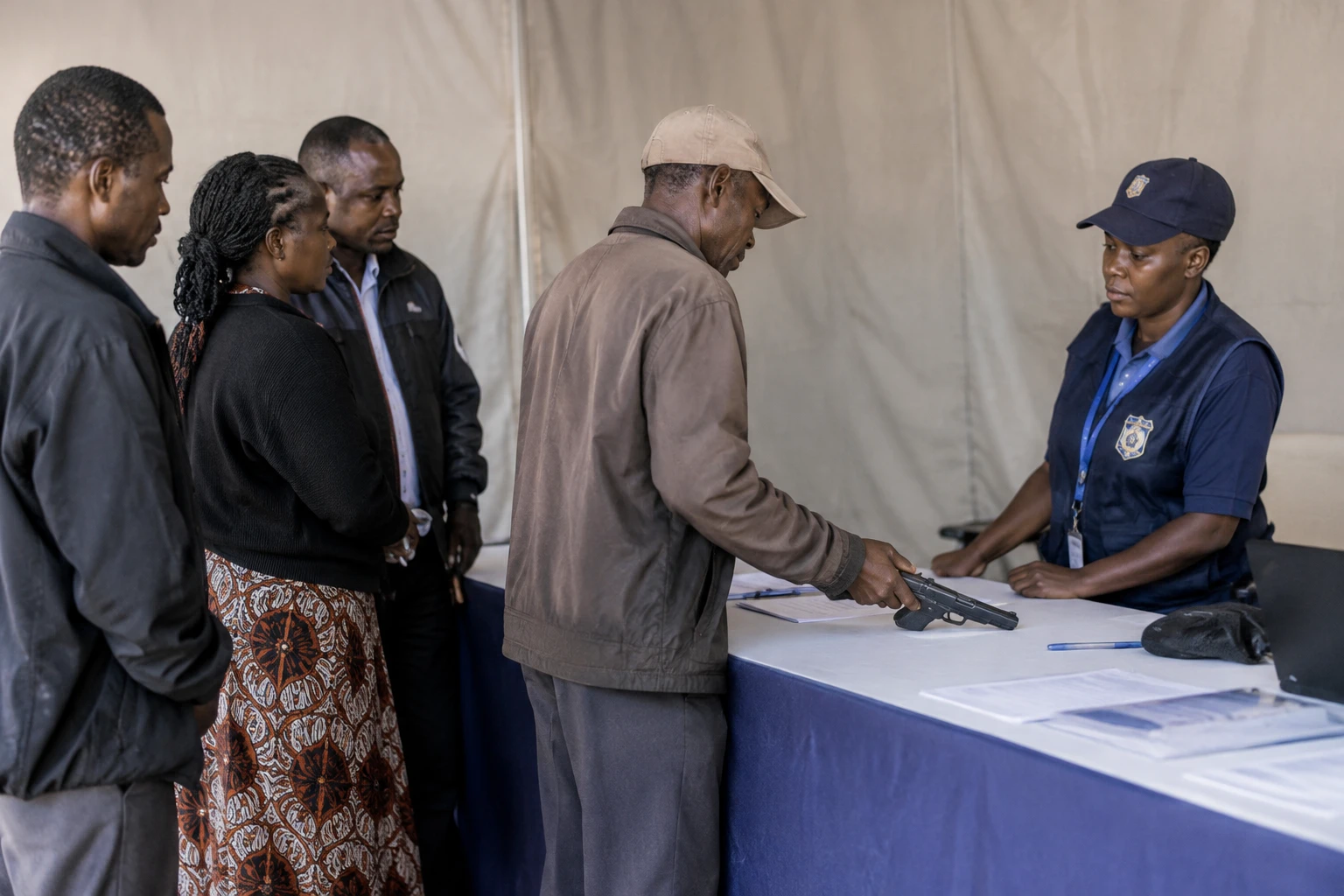
Handing in a weapon without fear of arrest: that is the promise at the heart of “Amnesty 2”, an operation launched by the Mozambican police. But the offer comes with a deadline. After December 2026, the authorities say they intend to forcibly recover illegally held weapons.
A period for voluntary handovers before coercion is used
On 11 October, in Manhiça, Maputo province, President Daniel Francisco Chapo called on people holding illegal weapons to hand them in before the end of the year. He was speaking at the closing of a training session for the police’s special and reserve units. Two Mozambican media outlets reported the appeal and the timetable announced.
According to Chapo, people who voluntarily hand in their weapons as part of the operation will not be questioned, sanctioned or detained. After the December deadline, however, the authorities plan a forced collection. No public details have been provided about how these operations will be conducted, their scope or the safeguards for residents.
The stated aim is to reduce the circulation of illegal or homemade weapons and limit the risks associated with their presence. The president cited several threats facing the police, including organised crime, terrorism and cybercrime. Handing in weapons does not, however, address these phenomena on its own: its effectiveness will also depend on the tracking of collected weapons and the services’ ability to combat supply networks.
Trust in the police, a condition for the operation
An amnesty rests on a delicate balance. It must make handing in weapons safe enough to persuade holders to come forward, while avoiding the perception that the period of leniency means a lasting absence of control. The promise not to question or sanction people who hand in their weapons is therefore central. Its practical implementation will be crucial.
The stakes are not the same everywhere for residents. In cities, attention may focus on weapons associated with robberies and criminal networks. In areas far from public services, the authorities will have to explain how and where to hand in a weapon without exposing people to risky journeys or arbitrary treatment. The president’s remarks also emphasise the conduct of officers: Chapo called on them to show discipline and professionalism and to respect the law.
This requirement carries particular weight in a country still marked by tensions following the October 2024 election. Daniel Chapo was sworn in on 15 January 2025, after a disputed vote and months of protests. Amnesty International has documented human rights violations and the unlawful use of force by members of the security forces during the crackdown on protests. This context does not allow conclusions to be drawn in advance about the conduct of “Amnesty 2”, but it makes the transparency and protection of freedoms promised by the president essential.
An issue that extends beyond Mozambique’s borders
Mozambique is a member of the Southern African Development Community (SADC), the regional organisation bringing together countries in southern Africa. Its protocol on firearms, ammunition and related materials provides, among other things, for police cooperation, information-sharing and the voluntary surrender of weapons. The Mozambican initiative is therefore part of a regional framework in which efforts to combat the illicit manufacture, circulation and possession of weapons cannot depend on a single state.
Several factors remain to be monitored if the operation is to produce lasting results: the number and types of weapons handed in, their traceability, how forced collections will be carried out after December, and whether a public assessment will be made. So far, no figures on weapons already recovered and no independent data on the scale of the illegal stockpile have been provided in the reports consulted. It would therefore be premature to assess the programme’s impact.
The regional reach will also depend on cooperation against cross-border trafficking. A system focused on handing in weapons held within the country is not, by itself, enough to disrupt supply routes. For Mozambicans, the immediate test will be more tangible: whether they can hand in a weapon without fear, and then see the rules applied consistently and with respect for rights.
Background sources: Radar Nacional on the announcement in Manhiça, 360 Mozambique on the operation and its stated aim, the SADC protocol on firearms control and Amnesty International on the human rights context in Mozambique.