Algeria
 Egypt
 Libya
 Morocco
 Sudan
 Tunisia
 Benin
 Burkina Faso
 Cabo Verde
 Côte d'Ivoire
 Ghana
 Guinea
 Guinea-Bissau
 Liberia
 Mali
 Mauritania
 Niger
 Nigeria
 Senegal
 Sierra Leone
 The Gambia
 Togo
 Cameroon
 Central African Republic
 Chad
 DR Congo
 Equatorial Guinea
 Gabon
 Republic of the Congo
 São Tomé and Príncipe
 Burundi
 Comoros
 Djibouti
 Eritrea
 Ethiopia
 Kenya
 Madagascar
 Malawi
 Mauritius
 Rwanda
 Seychelles
 Somalia
 South Sudan
 Tanzania
 Uganda
 Angola
 Botswana
 Eswatini
 Lesotho
 Namibia
 South Africa
 Zambia
 Zimbabwe
Beyond diesel, a credibility test for the mining industry
At Moatize, in Tete province, the question is no longer simply how to extract coal. It is also how to keep producing when financiers, buyers and insurers are demanding sites that use less diesel and are less exposed to climate risk.
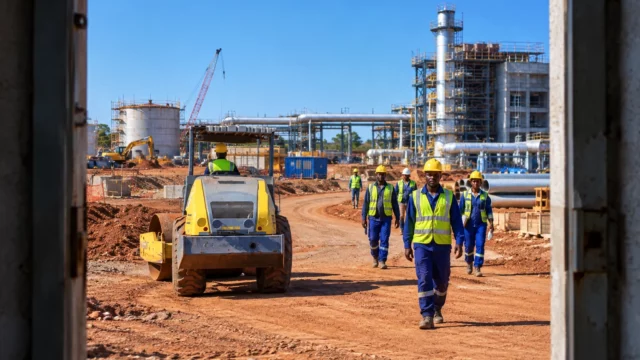
Against this backdrop, Vulcan, operator of the Moatize coal mine, has announced an investment of €140.6 million to electrify part of its operations. The company wants to replace the diesel-powered machinery in Section 3 with electric equipment and make the site an industrial showcase for Mozambique.
The stakes extend beyond the mine itself. Moatize is one of the country’s most strategic mining assets. Vulcan describes it as its main coal site, with reserves of around 2.3 billion tonnes and an integrated mine-rail-port system linking Mozambique’s interior to the Nacala terminal on the Indian Ocean. This logistics infrastructure helps explain why every technical decision taken in Tete has effects far beyond the district.
A project aligned with Mozambique’s mining and energy trajectory
Mozambique is a country in southern Africa and a member of SADC, the Southern African Development Community. Its capital is Maputo. But the focus of this article is far to the north-west of the capital, in a province where coal has shaped the local economy, infrastructure and social tensions.
Vulcan took over Moatize after Vale withdrew from the project. Since then, the group has sought to consolidate its position in the sector by focusing on productivity, logistics and, now, electrification. The strategy comes as international capital becomes more selective. Development banks, institutional investors and some industrial customers are demanding clearer emissions-reduction pathways, including for activities linked to fossil fuels.
The project is not starting from scratch. In July 2024, Vulcan began construction of a 300 MW thermal power plant at Moatize, described as being fuelled by waste coal from the mine. The facility is intended to supply some of the electricity needed for the newly electrified operations. The company therefore presents the project as a shift towards a mine less dependent on diesel, but still underpinned by coal.
What electrification changes in practice
Diesel accounts for a large share of costs at an open-pit mine. Trucks, excavators and other machinery operating around the clock drive up operating costs and complicate the carbon bill. At Moatize, replacing diesel-powered machines with electric equipment in Section 3 is primarily intended to reduce direct energy consumption.
The change is as much economic as environmental. Vulcan is seeking to reduce its dependence on an imported and volatile fuel. For a mining group, this shift can improve operating margins, particularly at a site where operations run continuously and logistics absorb a major share of expenditure. It may also reassure lenders seeking to avoid exposure to assets that are too carbon-intensive over the medium term.
On the ground, the effects will be more nuanced. For the company, electrification could streamline some operations, stabilise costs and strengthen the image of an operator able to adapt production to new market constraints. For employees and contractors, however, it will require new training, different maintenance and a technical transition that never happens without friction. For nearby communities, reducing diesel use will not by itself resolve issues around dust, water, noise, land and resettlement. At Moatize, these matters remain central to the relationship between the mine and its human environment.
The company also says it has a 912-kilometre rail corridor to Nacala. This network is critical. Without reliable rail, no industrial expansion can be sustained for long. In other words, electrifying the mine is just one part of a much broader system in which energy, transport and exports remain interdependent.
Regional significance for southern Africa
The case also matters because it offers a reflection of wider regional trends. SADC counts Mozambique among its 16 member states. Across the region, governments are seeking to develop transport corridors, secure mining revenues and attract capital on terms that reassure international markets. The Moatize case illustrates this tension: continuing to produce coal, but with a footprint more acceptable to financiers and public opinion.
This approach could also shape African debates on the energy transition. Pathways across the continent are not uniform. Some countries are accelerating towards solar power, hydropower or gas. Others continue to exploit coal or strategic minerals to fund their budgets and infrastructure. Mozambique sits squarely at this intersection: a resource-rich country still seeking a balance between exports, local industrialisation and the energy transition.
The next point to watch is implementation. An investment announcement does not yet show whether the equipment will be installed on schedule, whether the new electricity supply will be stable enough, or whether the 300 MW power plant will be completed at the promised pace. At Moatize, as elsewhere in southern Africa, a project’s real value is often determined by the ability to deliver. That is where Mozambique’s industrial credibility will be tested, far more than in its rhetoric.