Algeria
 Egypt
 Libya
 Morocco
 Sudan
 Tunisia
 Benin
 Burkina Faso
 Cabo Verde
 Côte d'Ivoire
 Ghana
 Guinea
 Guinea-Bissau
 Liberia
 Mali
 Mauritania
 Niger
 Nigeria
 Senegal
 Sierra Leone
 The Gambia
 Togo
 Cameroon
 Central African Republic
 Chad
 DR Congo
 Equatorial Guinea
 Gabon
 Republic of the Congo
 São Tomé and Príncipe
 Burundi
 Comoros
 Djibouti
 Eritrea
 Ethiopia
 Kenya
 Madagascar
 Malawi
 Mauritius
 Mozambique
 Rwanda
 Seychelles
 Somalia
 South Sudan
 Tanzania
 Uganda
 Angola
 Botswana
 Eswatini
 Lesotho
 Namibia
 Zambia
 Zimbabwe
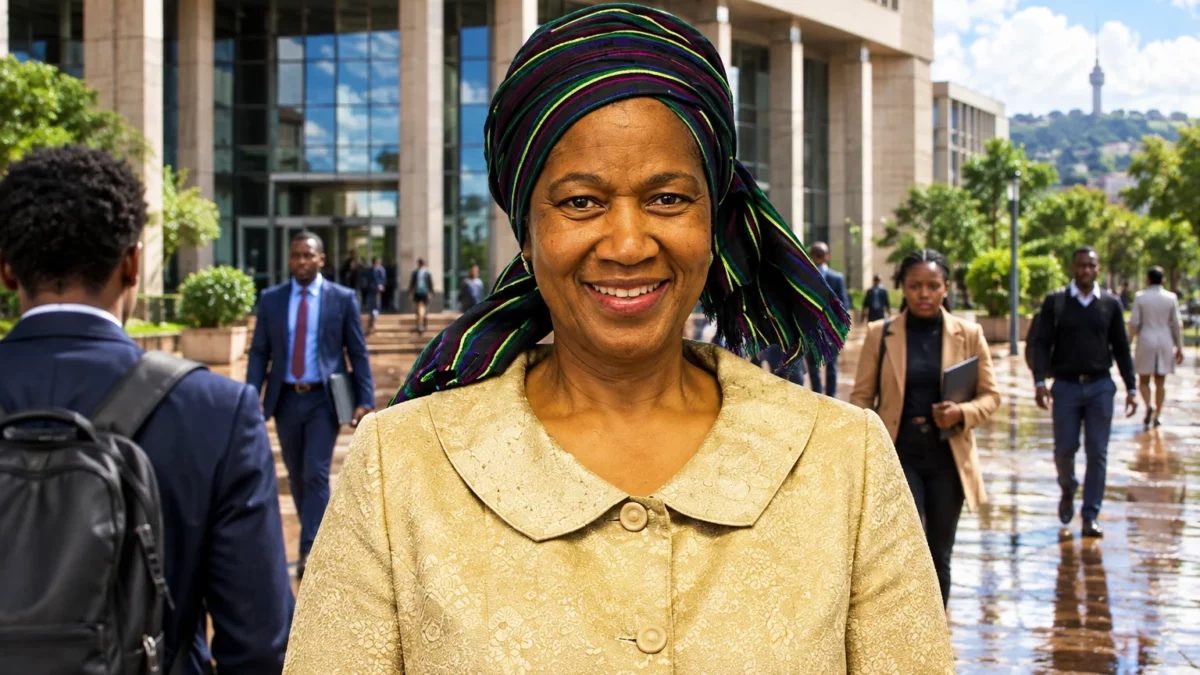
A place at the top of the state can open a door, without being enough to change the rules of the game. In South Africa, the death of Phumzile Mlambo-Ngcuka brings this question back to the fore: what remains of a historic advance when women’s access to power still depends on the political balance of the moment?
A political career rooted in South African democracy
Phumzile Mlambo-Ngcuka died on Friday 20 November 2026, aged 71, following complications linked to a recent medical procedure, according to South African authorities. Several public sources confirmed the date and her age. She will be buried at a Category 2 state funeral, scheduled for Saturday 28 November in Middledrift, in the Eastern Cape.
Born in KwaZulu-Natal, she entered political life after the end of apartheid. Elected to the first democratic parliament in 1994, she subsequently held ministerial posts, including trade and industry, and later mineral resources and energy. This career path took her to the vice-presidency under Thabo Mbeki.
On 22 June 2005, she became the first woman to hold the office in South Africa. She remained in the post until 2008. Her appointment came during a period of acute tensions within the governing ANC, after Jacob Zuma left the position of deputy president. The context is a reminder that a historic appointment is also shaped by party power struggles.
On Tuesday 24 November, a memorial service was held at Our Lady of Lourdes Church in Rivonia, in the Sandton area near Johannesburg. Vice-President Paul Mashatile paid tribute to her public service. Political leaders, former colleagues and friends and family were in attendance.
From economic policies to women’s rights
In government, Mlambo-Ngcuka championed two development initiatives launched in 2006. ASGISA aimed to accelerate economic growth and distribute it more widely. JIPSA sought to address shortages in skills deemed a priority. The programmes thus linked economic policy, employment and training, although their existence alone is not enough to measure their results.
Her career subsequently took on an international dimension. From 2013 to 2021, she led UN Women, the United Nations agency tasked with promoting gender equality and women’s empowerment. This role extended her commitment to women’s rights from South African institutions to global debates.
At the memorial, Brigalia Bam, former chair of the Independent Electoral Commission, spoke about her character and commitment. She also expressed regret that she had not seen her become president. This was a personal reflection; it is not evidence that such a succession was politically assured or would necessarily have taken place.
Mlambo-Ngcuka’s legacy is therefore about more than a single office or a slogan on representation. It connects women’s access to decision-making roles with tangible public policies: training, economic participation and the ability to influence institutions. For South African women, the challenge remains to turn symbolic precedents into lasting opportunities in political parties, the civil service and the private sector.
A legacy beyond national borders
South Africa belongs to the Southern African Development Community, or SADC, which brings together the region’s states. Its Protocol on Gender and Development calls for women’s effective representation in decision-making bodies and their participation in electoral processes. The career of a South African leader thus resonates within a regional framework where these commitments must be translated into measures and results.
At continental level, her path also links national political experience with international institutions. It is a reminder that African women are not merely affected by equality policies: they shape, implement and champion them in positions of power. This does not erase persistent obstacles or the differences between countries and political systems.
The next milestone will be the state funeral on 28 November. Until then, the official tributes underline the significance of her career, but her legacy will also be measured by the place South African and regional institutions continue to give women in public decision-making. The ceremony marks a milestone; it does not end the debate on political equality.