Algeria
 Egypt
 Libya
 Morocco
 Sudan
 Tunisia
 Benin
 Burkina Faso
 Cabo Verde
 Côte d'Ivoire
 Ghana
 Guinea
 Guinea-Bissau
 Liberia
 Mali
 Mauritania
 Niger
 Nigeria
 Senegal
 Sierra Leone
 The Gambia
 Togo
 Cameroon
 Central African Republic
 Chad
 DR Congo
 Equatorial Guinea
 Gabon
 Republic of the Congo
 São Tomé and Príncipe
 Burundi
 Comoros
 Djibouti
 Eritrea
 Ethiopia
 Kenya
 Madagascar
 Malawi
 Mauritius
 Mozambique
 Rwanda
 Seychelles
 Somalia
 South Sudan
 Tanzania
 Uganda
 Angola
 Botswana
 Eswatini
 Lesotho
 Namibia
 Zambia
 Zimbabwe
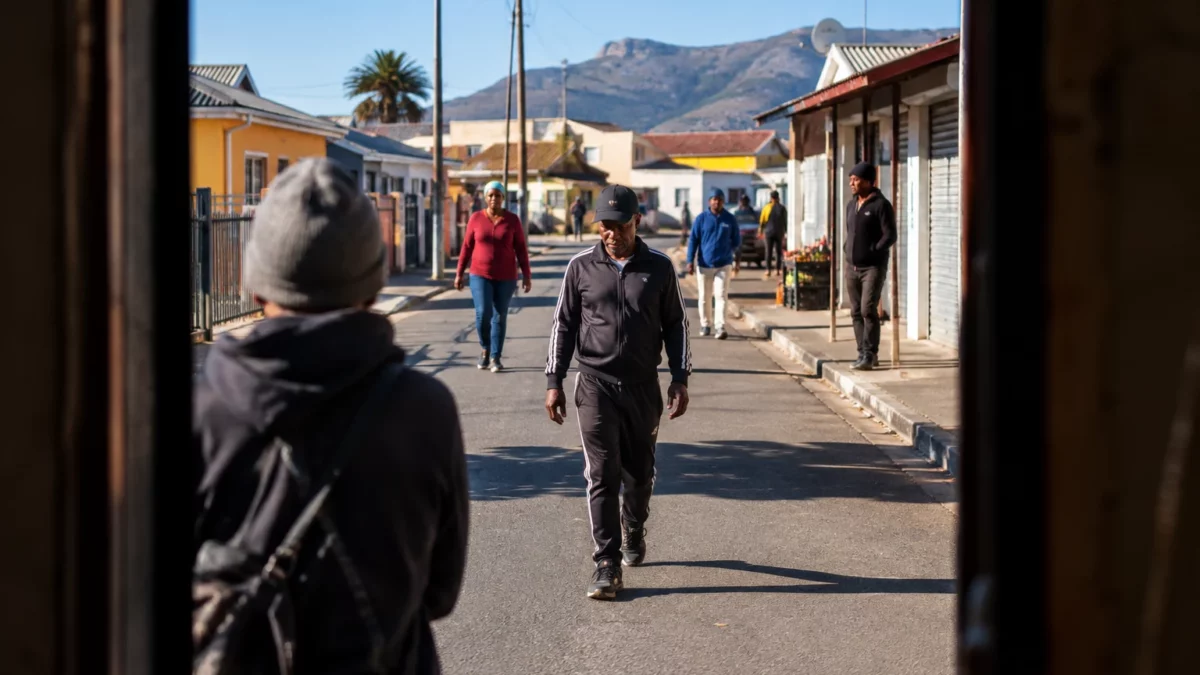
In Lavender Hill, in the Cape Flats, one family’s grief has become a 100-kilometre march. Mark Nicholson wants the death of his son Keenan not to be reduced to a statistic, but to raise a practical question: how can residents be protected when guns circulate even in residential neighbourhoods?
The father set out on a three-day journey in early November 2026, a few weeks after his son was shot dead. South African media reported that he began walking from Lavender Hill on Sunday 8 November. The SABC also reported a shooting that claimed Keenan’s life in October. The available information does not make it possible to specify the exact day of his death here.
A march through neighbourhoods where violence is taking root
Lavender Hill is in the Cape Flats, a vast area on the outskirts of Cape Town, in the Western Cape province. Several communities there face gang clashes, trafficking and the circulation of firearms. Violence affects not only people involved in these networks: residents, families and young people can be exposed to gunfire in their daily lives.
In an interview broadcast during his journey, Nicholson said his son had been with friends in a garden when four armed men opened fire. He explained that his family wanted to raise public awareness. The march was also, he said, a way to grieve. These circumstances have been reported by the media, but no further detail is needed to understand the significance of his appeal.
The journey was gruelling. On the second day, Nicholson said he had started walking at five in the morning and was around the 60-kilometre mark. Unable to afford a room, he had to find accommodation with local residents. These details give the initiative a tangible dimension: a mobilisation led by a family, without the resources of a large organisation.
The problem goes beyond a single incident. The Global Initiative Against Transnational Organized Crime’s Western Cape Gang Monitor, based in part on field information and South African police figures, indicates that gang-related murders in the province increased by 58 in the first half of 2025 compared with the same period in 2024. The report also describes the fragmentation of groups, which makes territorial rivalries more volatile. The monitoring of gangs in the Western Cape notes that violence is concentrated in certain areas, including Hanover Park, Manenberg, Mitchells Plain, Delft and Elsies River.
Public response, between military presence and police investigations
At national level, the government launched Operation Prosper, which brings together the South African National Defence Force, the SANDF, and the police service, the SAPS. Deployment in affected areas of Cape Town was announced in February 2026. In May, the presidency said the operation was intended, among other things, to combat gang-related criminal activity in the Cape Flats. The South African government later announced a follow-up visit to several neighbourhoods.
The presence of soldiers can temporarily bolster patrols and support police operations. It cannot, however, replace investigations, prosecutions or grassroots social work. In August 2026, parliamentarians who visited the region called for better co-ordination between the SANDF and the SAPS, as well as more effective intelligence-sharing. They also noted that arrests often involved drug dealers, while the networks’ most influential figures remained beyond reach. The parliamentary account of the visit stresses the need for a sustainable plan once the army withdraws.
These findings shed light on the concerns expressed by residents and community groups. Pastor Craven, who is involved in the fight against gang violence, said the effects of the operation would take time and that the authorities needed to work more closely with grassroots organisations. He also referred to allegations of police corruption. This claim must remain attributed: on its own, it is not proof that police officers supply guns to gangs.
Guns are central to the issue. Nicholson asked where they come from and who supplies them. This is a matter for investigators as well as a security concern: seizures on the streets are not enough if supply networks and those in positions of power are not identified. Conversely, the sustained use of the army calls for accountability safeguards and stronger police capacity, to prevent neighbourhood security from depending solely on a temporary military presence.
From Cape Town to Southern Africa: measuring results over time
For families, the impact is measured first by whether they can go out, attend school or gather without fearing a shooting. The consequences are particularly severe for young people, but also for small local businesses, which depend on safe travel and stable neighbourhood life. A fall in arrests or an increase in patrols therefore cannot, on its own, show whether the situation is improving in the long term.
South Africa is a member of the Southern African Development Community (SADC), a regional co-operation organisation. Criminal dynamics and arms markets do not stop at the boundaries of a city or even a country. The response in Cape Town remains primarily a national responsibility, but controlling arms flows and co-operation between services across the region also matter. Nicholson’s march offers no institutional solution. It does, however, remind us that residents are not mere witnesses to security policies: they see their effects and demand accountability.
The next test will be whether operations lead to a verifiable fall in homicides, successful investigations and local services capable of delivering over time. In Pretoria, the seat of government, the challenge is now to link security action to solutions proposed by communities and researchers. For Nicholson and his family, the urgency already has a face: Keenan’s, and the void left by his death.