Algeria
 Egypt
 Libya
 Morocco
 Sudan
 Tunisia
 Benin
 Burkina Faso
 Cabo Verde
 Côte d'Ivoire
 Ghana
 Guinea
 Guinea-Bissau
 Liberia
 Mali
 Mauritania
 Niger
 Nigeria
 Senegal
 Sierra Leone
 The Gambia
 Togo
 Central African Republic
 Chad
 DR Congo
 Equatorial Guinea
 Gabon
 Republic of the Congo
 São Tomé and Príncipe
 Burundi
 Comoros
 Djibouti
 Eritrea
 Ethiopia
 Kenya
 Madagascar
 Malawi
 Mauritius
 Mozambique
 Rwanda
 Seychelles
 Somalia
 South Sudan
 Tanzania
 Uganda
 Angola
 Botswana
 Eswatini
 Lesotho
 Namibia
 South Africa
 Zambia
 Zimbabwe
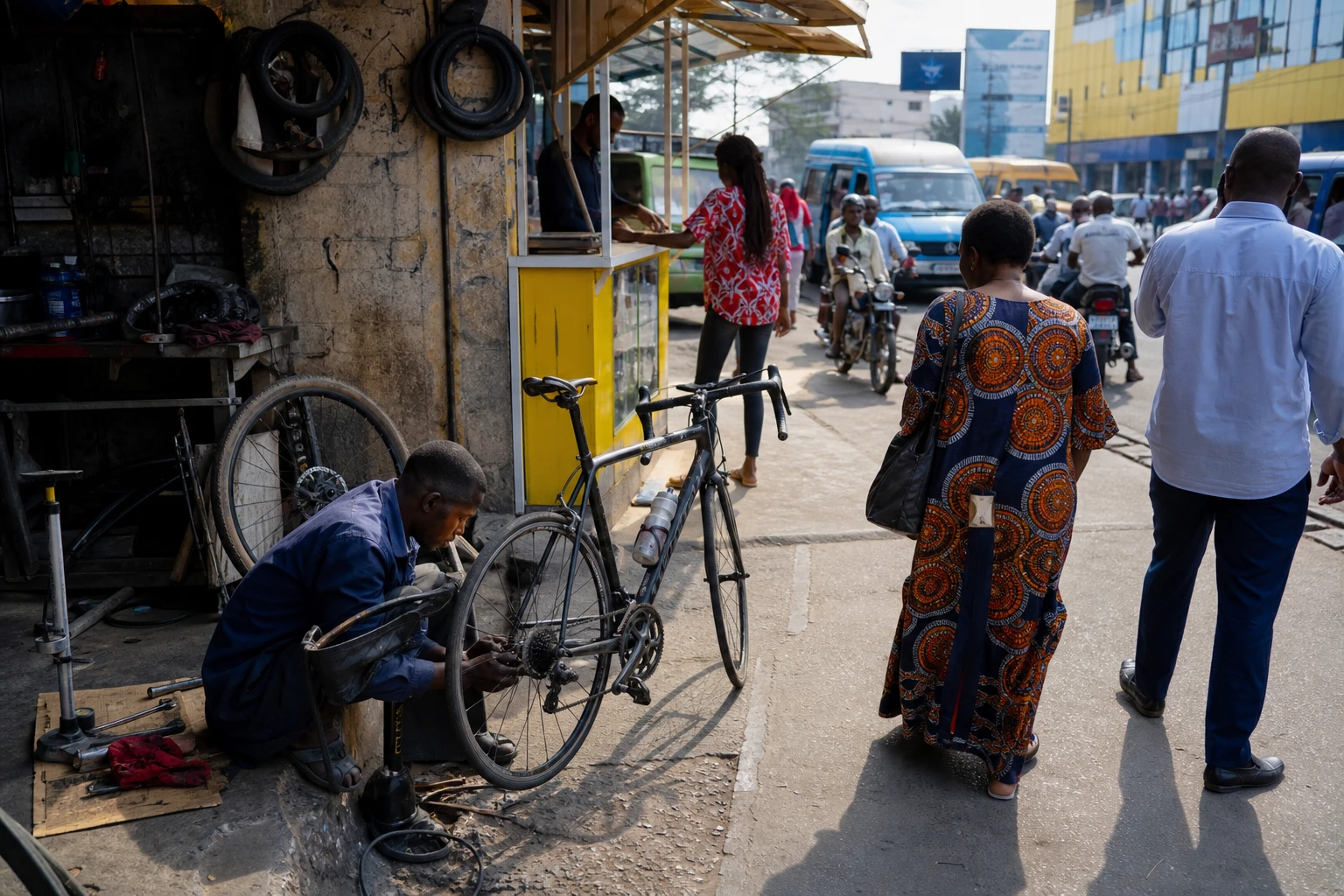
A journey conceived as a message, brought to a halt by the road
As war in the east of the Democratic Republic of the Congo continues to weigh on roads, families and the everyday economy, Miguel Masaisai’s story is a reminder that a sporting gesture can also become an act of civic engagement. The young Congolese cyclist wanted to ride from Goma to Rabat, carrying a simple message: peace, perseverance and the dignity of a young generation capable of creating narratives beyond those of violence. His journey ended abruptly in Ouesso, in the north of the Republic of the Congo, following a road accident confirmed by several sources that independently corroborated the reports.
His death comes as the DRC continues to face persistent security tensions in the east, while Kinshasa is still seeking to stabilise relations with its neighbours and reopen credible regional prospects. The country belongs to SADC and the East African Community, two regional frameworks often called upon on matters of security, mobility and economic integration. Against this backdrop, Miguel Masaisai’s route carried a symbolic significance far beyond a personal challenge.
What is known about the accident in Ouesso
Information corroborated by multiple sources indicates that Miguel Masaisai died on the afternoon of Friday 18 September 2026 in Ouesso, a town in the Sangha Department near the Cameroonian border. According to reports carried by several Congolese media outlets, he was trying to reach a workshop or relay point to have his bicycle repaired before continuing north. A taxi he was travelling in was then reportedly struck by a lorry. The reported death toll is four, including the cyclist, but for now this figure is attributed to the local sources cited.
One point calls for caution: reports consulted give different ages for the athlete. Some say he was 23, others 25. Such discrepancies are not uncommon in breaking news as information moves quickly between witnesses, local media and social networks. The firmly established fact is this: a Congolese athlete, already widely followed online, lost his life in the middle of a journey across Africa, after turning a personal challenge into a public campaign for peace.
His death was confirmed on the Congolese side by cycling figures and reported by the authorities in Kinshasa through official channels. This official confirmation matters, as it puts an end to the rumours that often emerge in the hours after a tragedy, especially when a traveller is far from their country of origin. It also confirms a simple reality: cross-border routes in Central Africa still rely on roads that can be long, uneven and exposed to traffic accidents.
Beyond the tragedy, the road reveals a shared vulnerability
The case goes beyond paying tribute to an athlete. It brings road safety back into focus, a public health issue that is often underestimated. The World Health Organization says the Republic of the Congo, like the DRC, continues to face the toll of road accidents, with prevention systems still not robust enough to meet needs. Across the continent, the human cost of road accidents runs to tens of thousands of lives each year. The tragedy in Ouesso is part of this reality, but does not on its own sum it up.
For the DRC, the image is twofold. On the one hand, a young man from Goma used sport to convey a positive message about a country too often defined solely by its conflicts. On the other, his story is a reminder of how fragile mobility in Africa remains, particularly along corridors linking capitals, major inland ports and border towns. The route he was taking crossed areas used by goods vehicles, taxis, buses, motorbikes and lorries. In such conditions, even a minor breakdown can become a major risk if emergency services, garages or roadside assistance are far away.
His journey also said something about Congolese youth. On social media, he had built a broad audience, with several reports putting his following at more than 200,000. This online support is not insignificant: it shows that alternative narratives are emerging in the DRC through sport, creativity and endurance. They do not replace public policy, but they challenge it. They remind us that a capital such as Kinshasa, a city such as Goma or a border post such as Ouesso can all belong to the same lived geography, shaped by movement, hope and risk.
A regional significance that goes beyond tribute
Miguel Masaisai’s death also resonates at regional level. It comes as the DRC seeks to reconcile peace, integration and mobility across Central and East Africa, where borders remain porous for people but are often difficult to cross safely. The message he carried, “cycling for peace”, speaks to the entire Great Lakes region: peace is not only a political agreement; it also depends on roads, services, infrastructure and states’ ability to protect everyday movement.
His story also invites us to look at African sport differently. Performance is often in the spotlight, while long-distance journeys, social commitment and civic expression receive less attention. Miguel Masaisai had chosen the bicycle as his language. His journey to Rabat was due to cross several African countries and symbolically link eastern Congo with the Maghreb. The road brought that story to a halt, but revealed its strength: that of a generation seeking to make its mark by creating its own horizons, rather than waiting for others to assign them.