Algeria
 Egypt
 Libya
 Morocco
 Sudan
 Tunisia
 Benin
 Burkina Faso
 Cabo Verde
 Côte d'Ivoire
 Ghana
 Guinea
 Guinea-Bissau
 Liberia
 Mali
 Niger
 Nigeria
 Senegal
 Sierra Leone
 The Gambia
 Togo
 Cameroon
 Central African Republic
 Chad
 DR Congo
 Equatorial Guinea
 Gabon
 Republic of the Congo
 São Tomé and Príncipe
 Burundi
 Comoros
 Djibouti
 Eritrea
 Ethiopia
 Kenya
 Madagascar
 Malawi
 Mauritius
 Mozambique
 Rwanda
 Seychelles
 Somalia
 South Sudan
 Tanzania
 Uganda
 Angola
 Botswana
 Eswatini
 Lesotho
 Namibia
 South Africa
 Zambia
 Zimbabwe
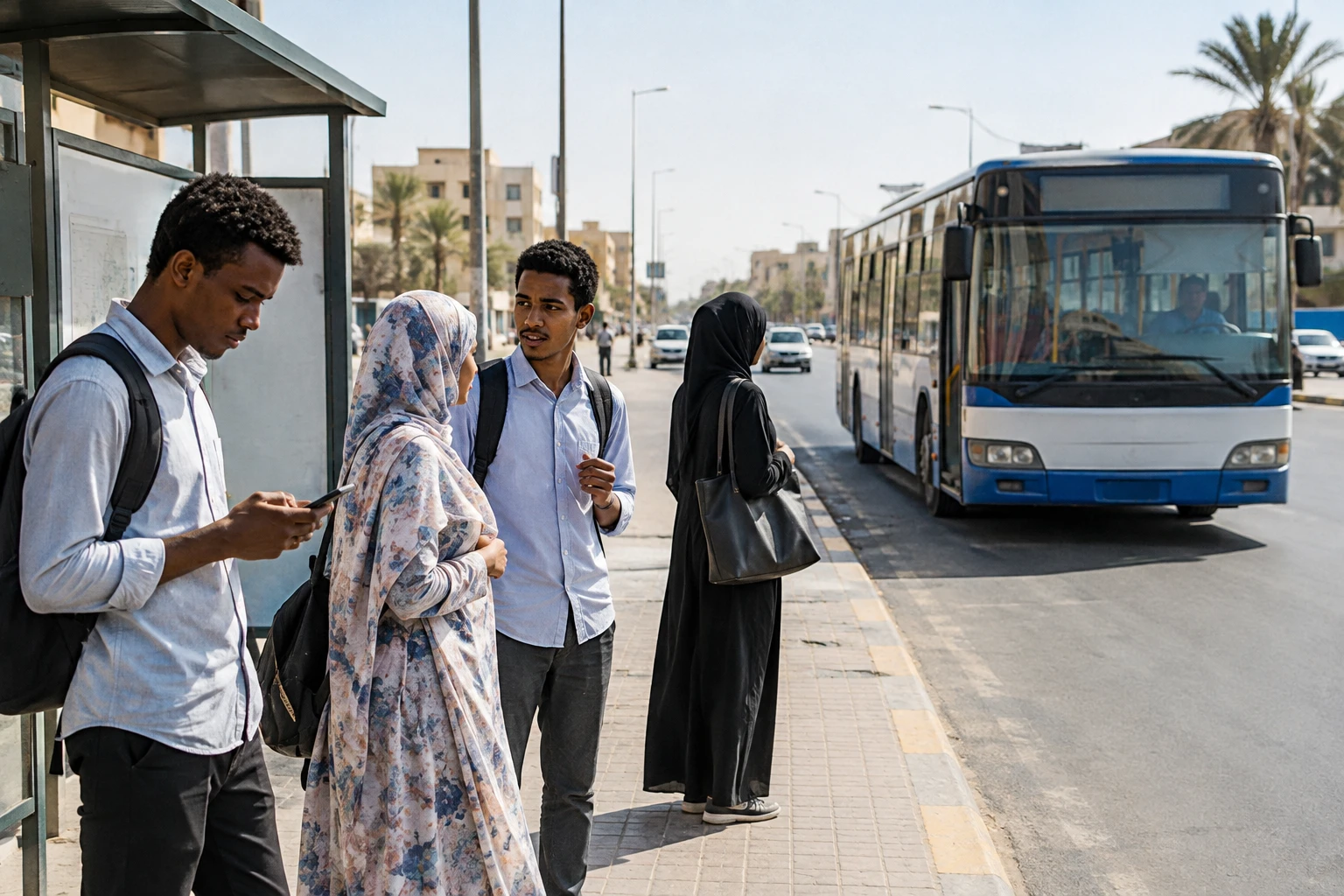
For a student who lives far from campus, the journey to university can determine whether they attend classes just as much as the amount of their grant. In Nouakchott, buses have become the starting point for protests that also concern accommodation, financial aid and students’ role in decisions affecting them.
A protest movement fuelled by several difficulties
On Thursday 22 October 2026, students demonstrated in the Mauritanian capital over difficulties with university transport. Gatherings took place in the Arafat area, among other locations. Police dispersed demonstrators, according to reports by Mauritanian media. Students are calling for more buses and journeys that are shorter and less costly.
The movement, however, is not solely about the journey to campus. Students are also denouncing a shortage of places in halls of residence, the loss of grants by some students and a lack of sufficient explanations for decisions taken. These grievances have been reported by student representatives; their scale and individual cases should be distinguished from the figures released by the ministry.
The dispute comes as higher education enrolments are rising. The ministry announced that 52,256 students were covered by the eligibility criteria for national grants for the 2026-2027 academic year. It says 22,730 meet those criteria. It also says it has allocated 3,900 of the 4,000 beds available at the Nouakchott university complex.
These figures describe administrative decisions, but do not answer all the questions raised: which students have lost aid, how were the criteria applied, and what solutions are available to those who did not get a place? Student unions are calling in particular for greater transparency and direct talks with the minister.
Transport: expanded services and higher costs
In response to the difficulties, the authorities have announced a reorganisation of services. Bus rapid transit (BRT) routes, a network designed to carry more passengers with increased frequency, are to be extended to the campus. The ministry also plans more frequent services at peak times and, from 26 October, the removal of some stops on traditional routes serving the university.
Cost remains at the heart of the protests. According to announcements reported by Mauritanian media, a monthly pass is set at 5,000 old ouguiyas, or 500 new ouguiyas. Students contesting the measure compare it with a previous fare of 2,800 old ouguiyas. Other beneficiaries, registered on the social register, are to have access to free transport under a public scheme.
The ministry presents rising demand as putting pressure on the network and proposes a response based on reorganising routes. Students, meanwhile, assess the scheme through their daily experience: actual service frequency, waiting times, the distance between stops and their accommodation, and monthly expenditure. The reform will ease the protests only if the promised buses actually run and the fare rules are understood.
The issue differs according to individual circumstances. A student living near campus does not face the same constraints as a student from another region with no family in Nouakchott. For low-income households, transport costs add to spending on accommodation and food. Delays can affect attendance and participation in classes, while students living far away are more dependent on regular services.
Demands that go beyond buses
Student organisations want to broaden the discussion to include grants, accommodation and university services. Four unions announced on 22 October that they were forming a common front to coordinate their efforts. The initiative gives collective structure to demands that had previously been voiced on several issues by different organisations.
The contrast between official figures and student accounts is not, on its own, enough to establish wrongdoing or invalidate the ministry’s decisions. It does, however, point to a need for clear appeals procedures: publication of the criteria, explanations for refusals and the handling of complaints. Likewise, announcing how many beds have been allocated does not show whether students living furthest from their families were given priority, as their representatives are demanding.
The next step will therefore be as much political as logistical. A meeting between the ministry and the unions could allow them to compare data, clarify the measures and identify unresolved cases. Without a timetable or a verifiable response on accommodation and financial aid, better transport is likely to resolve only part of the dispute.
A national issue in a distinctive regional setting
The protests are taking place in Mauritania, a West African country and member of the Arab Maghreb Union. Mauritania left ECOWAS, the West African economic integration organisation, in 2000, but concluded an association agreement with it in 2017. The university crisis is not a regional issue in itself; it nevertheless concerns a challenge shared by higher education systems across the continent: adapting services, infrastructure and financial aid to growing enrolments.
At national level, the immediate test will be practical: will services be strengthened from 26 October, and will students be able to access grants and accommodation under criteria they understand and can challenge? The answer will affect the return to classes and trust between student representatives and the authorities. For now, administrative announcements and student demands remain at odds.