Algeria
 Egypt
 Libya
 Morocco
 Sudan
 Tunisia
 Benin
 Burkina Faso
 Cabo Verde
 Côte d'Ivoire
 Ghana
 Guinea
 Guinea-Bissau
 Liberia
 Mali
 Mauritania
 Niger
 Nigeria
 Senegal
 Sierra Leone
 Togo
 Cameroon
 Central African Republic
 Chad
 DR Congo
 Equatorial Guinea
 Gabon
 Republic of the Congo
 São Tomé and Príncipe
 Burundi
 Comoros
 Djibouti
 Eritrea
 Ethiopia
 Kenya
 Madagascar
 Malawi
 Mauritius
 Mozambique
 Rwanda
 Seychelles
 Somalia
 South Sudan
 Tanzania
 Uganda
 Angola
 Botswana
 Eswatini
 Lesotho
 Namibia
 South Africa
 Zambia
 Zimbabwe
A shorter route on the map, but longer in reality
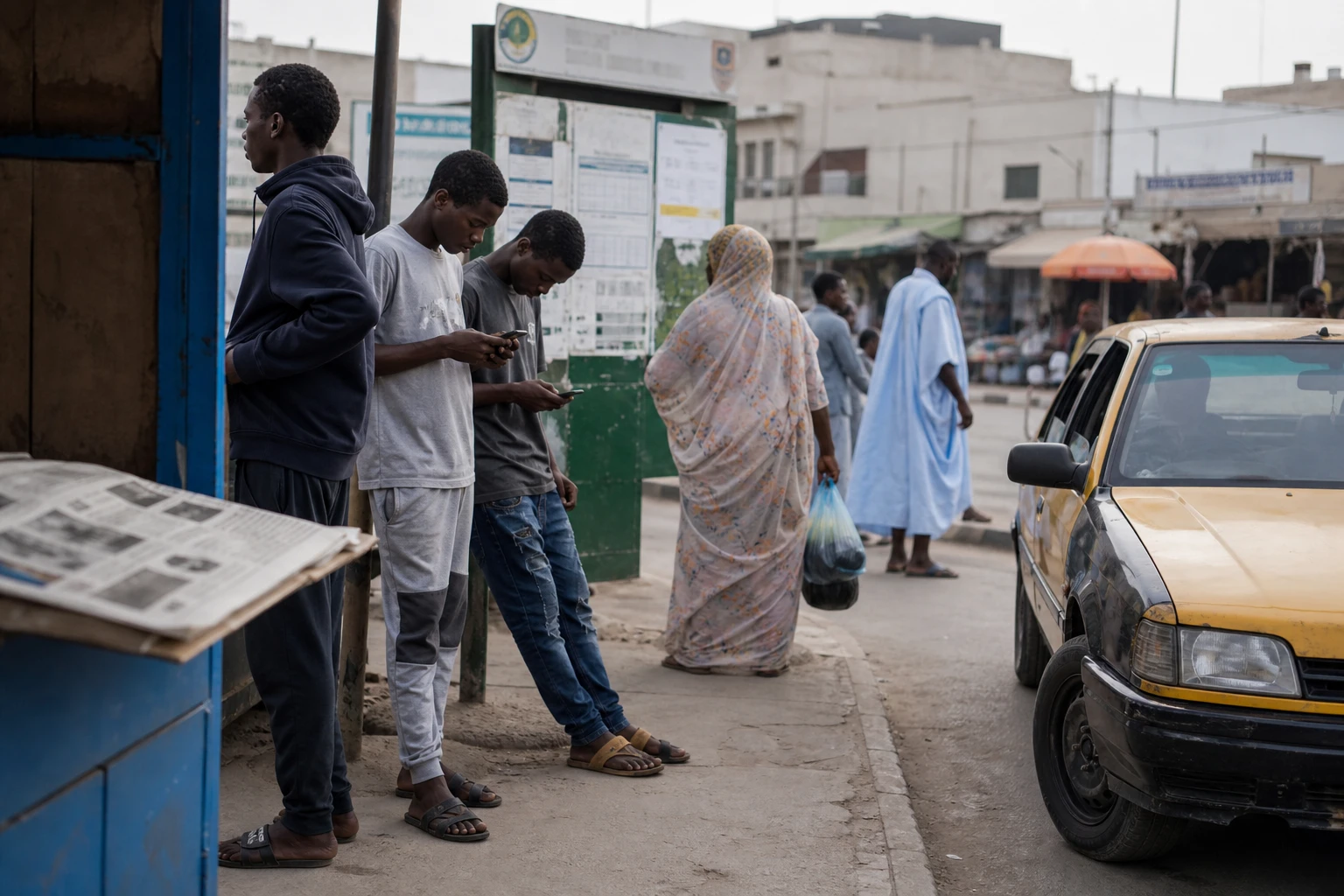
On Mauritania’s Atlantic coast, the sea is not merely a place for fishing and trade. It has also become a corridor of departure, waiting and, all too often, mourning. The week of 14 to 18 July, three rescue and disembarkation operations served as a stark reminder of what families already know: the crossing to the Canaries can end long before the Spanish archipelago comes into sight.
The toll announced on Monday 21 July 2026 by the United Nations High Commissioner for Refugees is grim: 144 people died or went missing off the coast of Mauritania after setting off from The Gambia. On one boat, adrift for nearly 25 days, 143 passengers were declared dead or missing and 38 survivors were rescued. Another operation reported one more death. In total, 387 people were brought to safety in Nouadhibou between 14 and 18 July.
Nouakchott and Nouadhibou, two pressure points on Mauritania’s coast
Mauritania occupies a distinctive position in West African migration. Its capital, Nouakchott, and especially Nouadhibou, a port hub in the north-west, have become points of passage, interception and disembarkation. UNHCR says 17 disembarkation operations have already been recorded in these two cities in 2026, with 2,147 people rescued. This situation forms part of a broader system for protecting and registering refugees and asylum seekers, as well as stepped-up maritime surveillance.
Mauritanian authorities have also taken a tougher line in recent months. A project to strengthen social cohesion and protect refugees, asylum seekers, migrants and host communities was launched in Nouakchott on 6 March 2026, with the support of UN agencies. This is an important signal: Mauritania’s response is not limited to interceptions at sea; it now combines security, reception and local management of a migrant presence that has become structural.
What the figures say, and what they do not
The July tragedy illustrates how the risks are shifting. Departures for the Canaries continue, but sometimes from points farther south, more than 2,000 kilometres from the final destination, according to UNHCR. The agency adds that arrivals in the archipelago were down 61% compared with 2025, with 4,400 arrivals by 15 July 2026. This statistical decline does not mean the danger has eased; it may also reflect changes in routes, departure times and coastal surveillance.
The contrast is stark between arrivals visible in Europe and disappearances at sea that go unseen. UNHCR says the Atlantic route remains one of the world’s deadliest mixed migration corridors, because of the long distances, unpredictable seas, overcrowded pirogues and difficult access to rescue services. The same warning had already been sounded in 2025, when the archipelago faced intense migratory pressure, with most departures observed from the Mauritanian coast.
For Mauritanians, a question of sovereignty, the economy and protection
Migratory pressure is not measured solely in interceptions. It also affects coastal towns, health services, humanitarian organisations, neighbourhoods where travellers settle temporarily, and the security forces managing disembarkations. In Nouadhibou, the state’s response is intended to be more organised than before, but remains under strain: it must balance border control, medical care and the management of vulnerabilities, particularly among minors and people exhausted after several days at sea.
This reality also affects the image of a country often portrayed as a transit point. In practice, Mauritania has become a place to stop along the way, but also a site of screening, rescue and sometimes return. UNHCR figures show that the country is not merely affected by a migration route originating elsewhere; it is a central link in it. This changes the usual way of looking at the issue: it is not solely a European question. It concerns West Africa first and foremost—its movements, employment inequalities and maritime borders.
A regional warning, beyond Mauritania’s coastline
The week’s tragedy goes beyond Mauritania alone. It points to a broader West African equation: departures from The Gambia, Senegal and sometimes farther afield; a Spanish destination still seen as within reach; and increasingly discreet routes that are therefore harder to monitor and rescue people from. For the region, the challenge is twofold: reduce departures driven by a lack of opportunities and make routes safer, without treating the loss of life at sea as commonplace.
The continental implications are clear. Across Africa, the issue brings together freedom of movement, the protection of people on the move, and cooperation between coastal states and countries of departure. In Mauritania, it highlights a delicate balance: to receive, rescue and manage people while preventing the Atlantic coast from becoming an invisible cemetery. The coming months will show whether the reinforcement announced in Nouakchott and Nouadhibou is enough to contain a route that continues to claim lives despite the controls.