Algeria
 Egypt
 Libya
 Morocco
 Sudan
 Tunisia
 Benin
 Burkina Faso
 Cabo Verde
 Côte d'Ivoire
 Ghana
 Guinea
 Guinea-Bissau
 Liberia
 Mauritania
 Niger
 Nigeria
 Senegal
 Sierra Leone
 The Gambia
 Togo
 Cameroon
 Central African Republic
 Chad
 DR Congo
 Equatorial Guinea
 Gabon
 Republic of the Congo
 São Tomé and Príncipe
 Burundi
 Comoros
 Djibouti
 Eritrea
 Ethiopia
 Kenya
 Madagascar
 Malawi
 Mauritius
 Mozambique
 Rwanda
 Seychelles
 Somalia
 South Sudan
 Tanzania
 Uganda
 Angola
 Botswana
 Eswatini
 Lesotho
 Namibia
 South Africa
 Zambia
 Zimbabwe
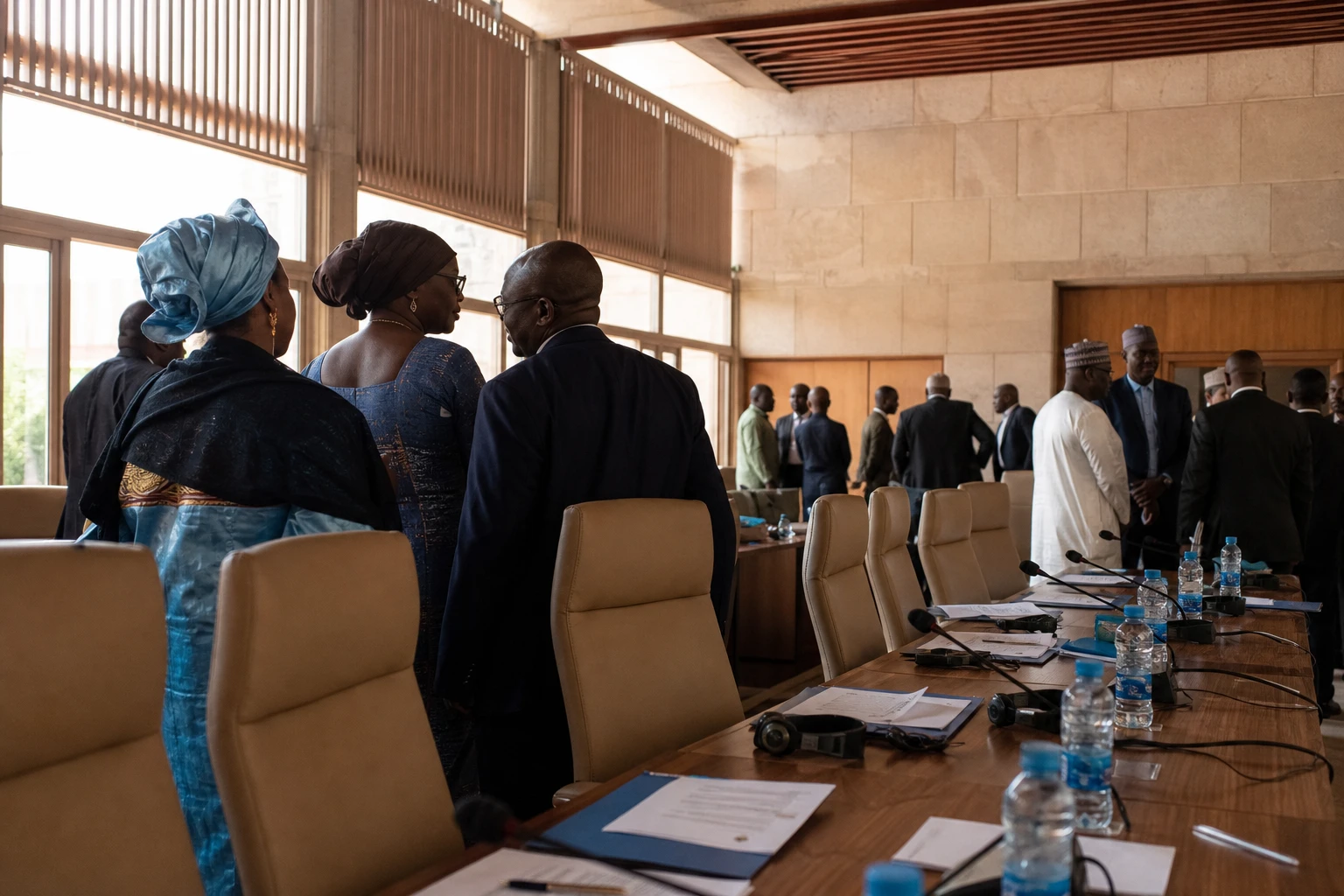
In Bamako, this year’s national holiday comes amid a climate in which the sovereignty claimed by the Malian authorities is measured above all by their ability to protect the population. For the 66th anniversary of independence, Assimi Goïta therefore framed his message around two imperatives: maintaining military pressure on jihadist groups and reopening space for reconciliation among Malians.
A call for unity in a country under strain
In his address to the nation on 22 September 2026, Mali’s head of state said he remained “open to dialogue and reconciliation among Malian brothers”. In the same passage, he reaffirmed his determination to defend territorial integrity and national unity. This wording brings together two positions that now shape the transitional authorities’ communications: refusing to compromise on state authority while seeking a political way out of internal divisions.
The official speech, published by the Malian government, also recalls that the celebration coincides with the fifth year of the “Rectification of the Transition”. The authorities present this period as a cycle of reforms and a reassertion of control over the country’s strategic choices.
The meaning of reconciliation, however, remains to be clarified. Bamako has already advocated the idea of an inter-Malian dialogue aimed at addressing the roots of community and intercommunal conflicts. The authorities, by contrast, officially rule out any negotiations with groups they describe as terrorist. The distinction between political dialogue, local mediation and talks with armed organisations therefore remains central.
Security remains the main test
This caution is explained by the deteriorating military situation. Jama’at Nasr al-Islam wal Muslimin, affiliated with Al-Qaeda, and the Azawad Liberation Front, made up mainly of Tuareg independence fighters, carried out coordinated operations in several parts of Mali in 2026. The attacks targeted military positions and increased pressure on routes linking the north, the centre and the capital.
On 19 September 2026, the Associated Press reported, in particular, that a group linked to Al-Qaeda had claimed an attack on a Malian army camp. The death toll cited by the organisation has not been independently confirmed and should therefore be treated with caution. Nevertheless, this sequence of events illustrates the continuing difficulty Malian forces face in securing urban centres, logistics corridors and areas far from Bamako at the same time.
In April 2026, the African Union’s Peace and Security Council had already expressed concern over coordinated attacks, killings and population displacement in Mali. In its communiqué, the African body also called for regional communication channels to be preserved. This position highlights a reality: the security response does not depend solely on military operations. It also relies on intelligence, justice, public services and the trust of communities.
The consequences for residents vary from one area to another. In Bamako, the crisis puts pressure on prices, fuel and transport when convoys are disrupted. In the central and northern regions, it directly affects movement, access to markets, schooling and farming. Traders, transport operators and herders thus bear part of the cost of insecurity, even when fighting takes place far from the capital.
Malian sovereignty and the regional challenge
The presidential message also comes amid a reshaping of West Africa. Mali, Burkina Faso and Niger officially left the Economic Community of West African States (ECOWAS) on 29 January 2025. The regional organisation co-ordinates movement, trade and some collective responses to political and security crises.
Since their withdrawal, the three countries have prioritised the Alliance of Sahel States, a form of co-operation centred on defence, sovereignty and political co-ordination. This approach responds to a genuine demand for strategic autonomy expressed by some sections of public opinion. It nevertheless presents a practical challenge: combating mobile armed groups requires intelligence-sharing, open roads and regular cross-border co-operation.
Bamako’s position is to prioritise partnerships chosen by the Malian authorities, notably with members of the Alliance of Sahel States and Russia. The government presents this policy as a break with past dependencies. Critics, for their part, argue that the concentration of power and shrinking political space make it harder to seek a national compromise. These two interpretations must be distinguished in order to understand the tensions surrounding the transition.
The reference to reconciliation in the 22 September speech can therefore be read as a political signal as well as a social appeal. It is addressed to communities affected by violence, local leaders, political actors and armed movements that claim to represent a Malian cause. But its reach will depend on the mechanisms that follow: regional representation, safeguards for civilians, the handling of longstanding grievances and clarity about the conditions for dialogue.
An opening that must deliver results
The independence celebration gives Mali’s authorities an opportunity to bring people together. It does not, however, resolve either the security crisis or the question of the political transition. The call for fraternity can have practical significance only if it leads to a reduction in violence, better access to public services and broader participation by the regions in national decisions.
At the regional level, Mali remains a pivotal country. Its position links the Sahel to West Africa’s trade routes. Any change in the situation in Gao, Kidal, Mopti or areas near Bamako can affect neighbouring countries, markets and population movements.
The next indicator will therefore be less the force of the declarations than how they are put into practice. It will be necessary to monitor the evolution of attacks, the security of economic routes, the role given to local mediation and the authorities’ ability to maintain dialogue with Malian actors not involved in armed groups. For Bamako, the challenge is now to hold sovereignty, security and national cohesion together.