Algeria
 Egypt
 Libya
 Morocco
 Sudan
 Tunisia
 Benin
 Burkina Faso
 Cabo Verde
 Côte d'Ivoire
 Ghana
 Guinea
 Guinea-Bissau
 Liberia
 Mauritania
 Niger
 Nigeria
 Senegal
 Sierra Leone
 The Gambia
 Togo
 Cameroon
 Central African Republic
 Chad
 DR Congo
 Equatorial Guinea
 Gabon
 Republic of the Congo
 São Tomé and Príncipe
 Burundi
 Comoros
 Djibouti
 Eritrea
 Ethiopia
 Kenya
 Madagascar
 Malawi
 Mauritius
 Mozambique
 Rwanda
 Seychelles
 Somalia
 South Sudan
 Tanzania
 Uganda
 Angola
 Botswana
 Eswatini
 Lesotho
 Namibia
 South Africa
 Zambia
 Zimbabwe
Judicial pressure is narrowing public debate in Bamako
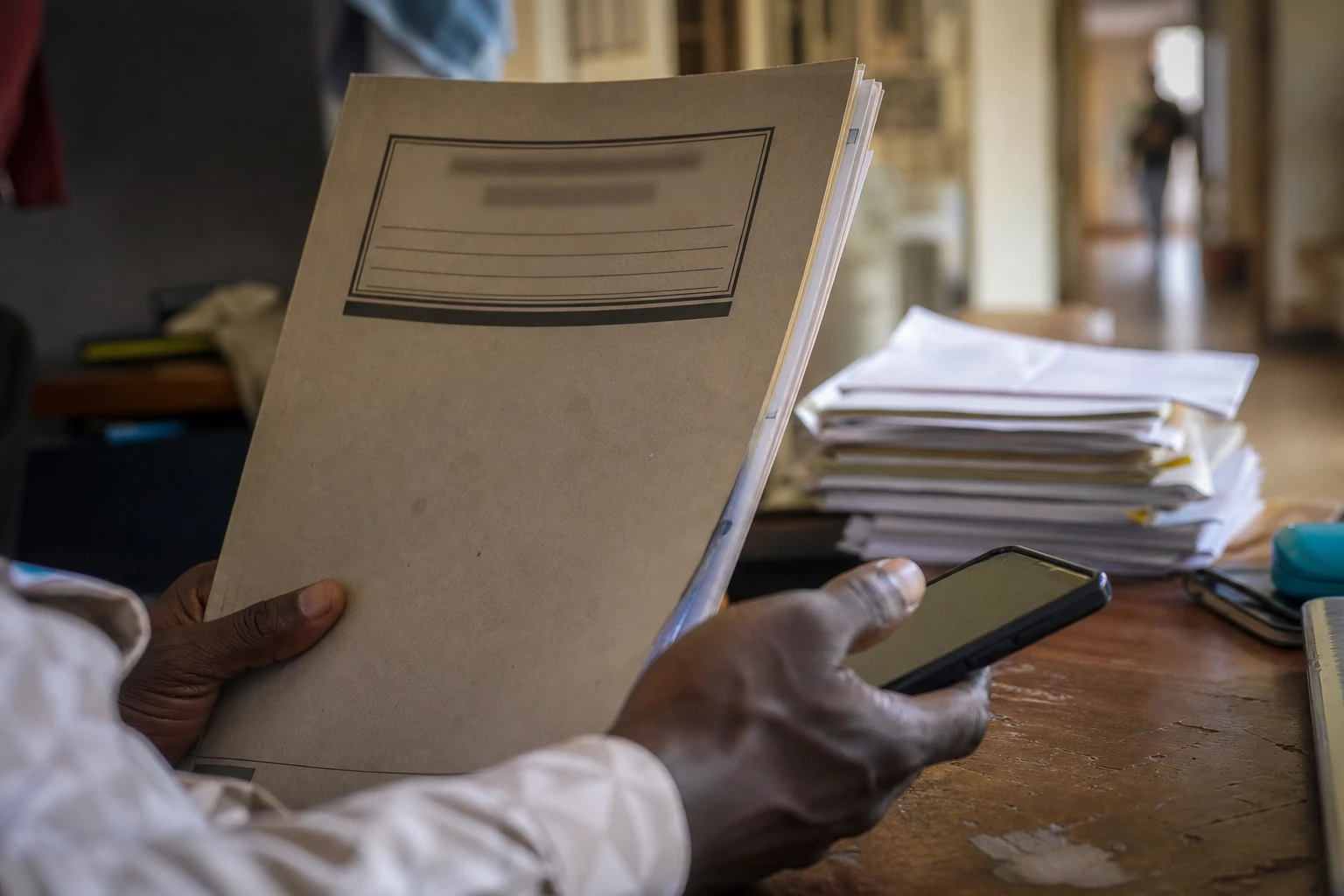
In Mali, speaking out can mean a court hearing, a cell, sometimes months of waiting. In a country where the junta promises order and stability, the battle is also being fought on another front: public debate, the media and social networks. For several months, journalists, commentators, activists and political leaders have been operating in an atmosphere of extreme caution. Cybercrime proceedings have become a central instrument of this pressure.
This hardening is not confined to the capital, Bamako. It also affects political life, civic debate and the flow of information in a country already weakened by insecurity, military transition and tensions with several regional partners. In the Sahel, Mali is moving further away from regional standards of pluralism, even as the Alliance of Sahel States, comprising Mali, Niger and Burkina Faso, asserts greater sovereignty.
Legal cases send a message to the entire public sphere
The case of Moussa Mara has become emblematic. The former prime minister was released after a year in detention, following a sentence handed down in October 2025 of two years in prison, one year of which was to be served, and a fine of 500,000 CFA francs. Amnesty International said he was arrested on 1 August 2025 and regained his freedom after a year in detention, which it considers arbitrary.
His case dates back to public statements in support of figures who were themselves detained. The charges against him included undermining the credibility of the state and inciting a disturbance of public order. In practice, the case chiefly served as a reminder of an unwritten rule: in Mali, openly expressing solidarity with critical voices can also be criminalised.
The same logic is evident in the case of Chahana Takiou, editor of the newspaper 22 Septembre and president of the press employers’ association. Malian media reported in early July 2026 that the National Cybercrime Unit had maintained his pre-trial detention and postponed his trial. Human Rights Watch said he was arrested after a public appearance in Bamako during which he criticised the use of the cybercrime law against media professionals.
This is a crucial point. In Mali’s current judicial framework, digital offences are increasingly being used to deal with remarks made in the public sphere. The result is familiar: speech that belongs to political or journalistic debate is reclassified as a criminal case. The National Cybercrime Unit, created to address digital risks, has emerged as one of the main instruments of this shift.
A press under pressure in a country where security is the overriding priority
This trend has not emerged in a vacuum. Mali continues to face armed violence, the expansion of jihadist groups in some areas and an institutional apparatus profoundly reshaped since the coups of 2020 and 2021. In this context, the authorities regularly invoke national security, civic discipline and the fight against disinformation to justify restrictions. RSF nevertheless notes that press freedom in Mali continues to deteriorate, with the country ranked 121st worldwide in 2026 and the situation in the Sahel considered worrying.
The debate goes beyond journalists alone. It also affects political opponents, influencers, radio commentators and civil society activists. They all know that a remark deemed critical can trigger a summons, followed by pre-trial detention. In such an atmosphere, the line between regulating the digital sphere and silencing criticism becomes blurred. It is precisely this ambiguity that worries human rights organisations and several local newsrooms.
Moussa Mara’s release therefore carries significance beyond the conclusion of a personal ordeal. It is a reminder that a former head of government, despite coming from within the institutional sphere, can be subject to the same repressive logic as less prominent voices. It also shows that the Malian authorities are seeking to maintain a tight grip on the public narrative even as the country tries to consolidate a new political and security framework.
What Mali is telling the rest of the continent
The case in Mali resonates far beyond Bamako. In several African countries, cybercrime and national security laws are now being used to regulate online speech. But Mali has become a particularly harsh testing ground for this trend. At the heart of the Sahel, the country is sending a clear message to its AES neighbours and to West Africa as a whole: in some contexts, political sovereignty can go hand in hand with a shrinking civic space.
For ECOWAS, which remains West Africa’s principal regional organisation, the issue is sensitive. Mali has distanced itself from several regional cooperation frameworks, but the effects of its choices are still being felt in the areas of freedoms, mobility and political balance. In the months ahead, the next cybercrime trials, the situation of journalists still in detention and the way the Malian justice system handles ongoing proceedings will all need to be watched.
Ultimately, the issue is not simply who speaks or who stays silent. It is whether Mali can still preserve space for dissent without making dissent itself a criminal offence. Beyond the individual cases, this is where a crucial part of Mali’s democratic balance is at stake.