Algeria
 Egypt
 Libya
 Morocco
 Sudan
 Tunisia
 Benin
 Burkina Faso
 Cabo Verde
 Côte d'Ivoire
 Ghana
 Guinea
 Guinea-Bissau
 Liberia
 Mauritania
 Niger
 Nigeria
 Senegal
 Sierra Leone
 The Gambia
 Togo
 Cameroon
 Central African Republic
 Chad
 DR Congo
 Equatorial Guinea
 Gabon
 Republic of the Congo
 São Tomé and Príncipe
 Burundi
 Comoros
 Djibouti
 Eritrea
 Ethiopia
 Kenya
 Madagascar
 Malawi
 Mauritius
 Mozambique
 Rwanda
 Seychelles
 Somalia
 South Sudan
 Tanzania
 Uganda
 Angola
 Botswana
 Eswatini
 Lesotho
 Namibia
 South Africa
 Zambia
 Zimbabwe
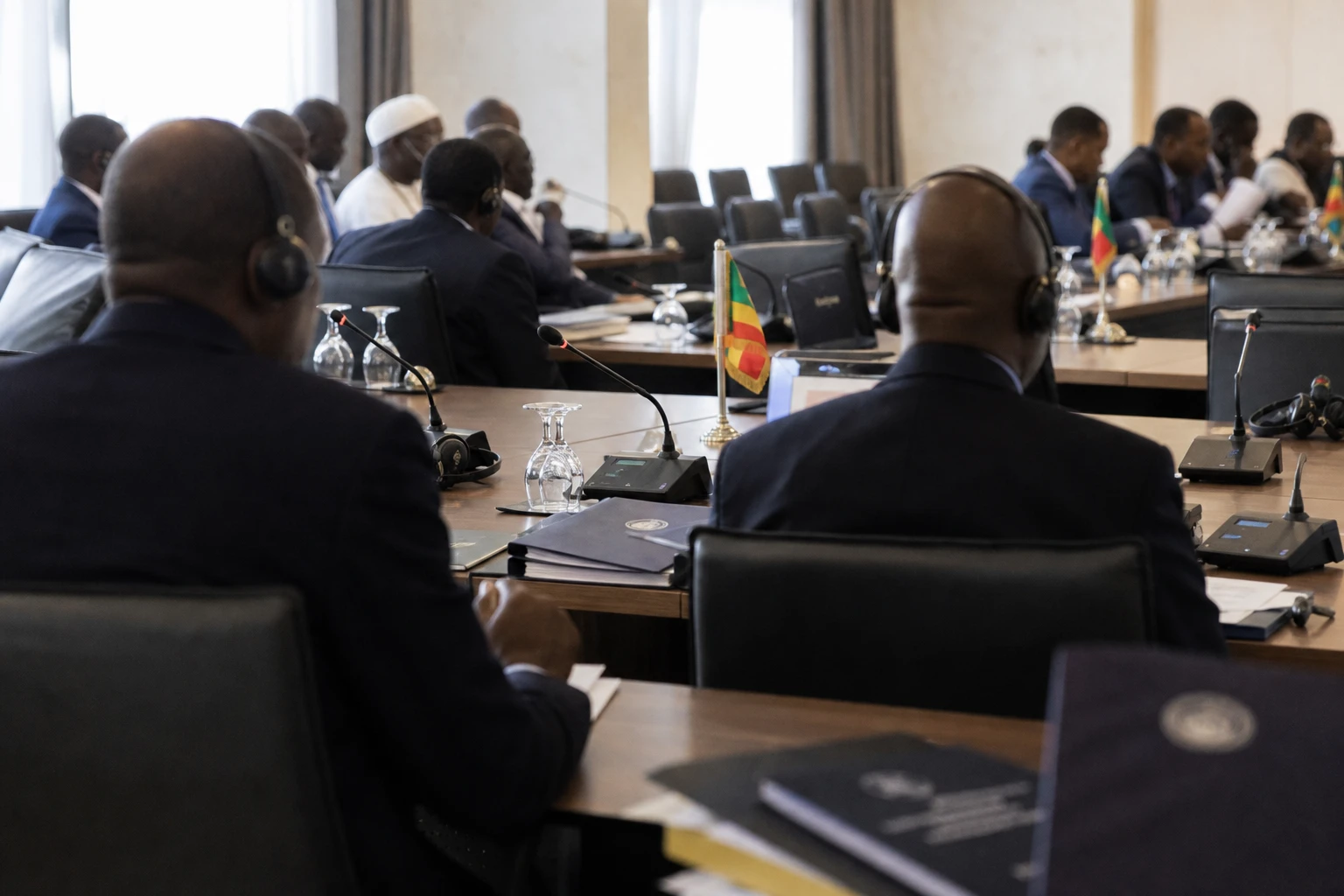
In central Mali, a local battle exposes a national vulnerability
In Dioura, in the Mopti region, the stakes go beyond a simple assault on a military camp. An attack on a garrison quickly becomes a test of resilience for Bamako, the Malian Armed Forces and the security balance in the centre of the country. In the Sahel, a few hours of fighting can redistribute weapons, prisoners, routes and prestige.
Mali is facing this pressure in an already fractured regional environment. The country has left ECOWAS, following the withdrawal of Burkina Faso, Mali and Niger, which took effect on 29 January 2025. Since then, Bamako has had fewer West African institutional sources of support, at a time when armed groups retain considerable capacity to disrupt routes in the centre and north.
What the tolls say, and what remains attributed
According to military, security and local sources cited by AFP, at least 100 Malian soldiers and five Russian paramilitaries from Africa Corps were killed on 10 September during the attack on the Dioura camp. The same sources report more than 80 prisoners. The agency notes that these figures are based on cross-checking, not on a detailed official toll from Bamako.
The Malian army confirmed the assault. It later said in a statement carried by the Malian News and Publicity Agency that its units had continued targeted strikes against enemy positions around the garrison and on the outskirts of Dioura. The general staff also referred to an air-and-ground operation that enabled the evacuation of two FAMa companies, while acknowledging losses in its ranks without giving a figure.
This caution over casualty figures matters. In Malian military communications, the language emphasises the response, the enemy’s disorganisation and the continuation of the fighting. But the absence of an official figure leaves cross-checked sources to shape the immediate reading of the event. This is a key point in a war where the battle for information goes hand in hand with the battle on the ground.
Why Dioura matters more than a point on the map
Dioura lies west of Mopti, in a pivotal area between the centre and the north. The attack is part of a broader sequence. In late April 2026, JNIM, also known as GSIM, carried out coordinated attacks with the Azawad Liberation Front, or FLA, against several Malian positions. Reuters and the AP reported that these offensives had struck Bamako, Kati, Sévaré and other towns, in what was described as one of the largest coordinated operations in recent years.
This precedent matters. It shows that armed groups are not merely seeking to hold territory. They are also targeting supply lines, military posts, psychological pressure points and the approaches to the capital. In other words, the strategy combines mobility, harassment and shows of force. For people in the centre, this means more dangerous roads, more vulnerable trade and costlier travel. For the state, it means more resources concentrated around centres of power, at the risk of leaving other gaps exposed.
The role of Africa Corps adds a political dimension. AFP reported the deaths of five of its paramilitaries in Dioura. Le Monde noted that the Russian contingent is now integrated into Mali’s security apparatus, as Moscow and Bamako showcase their military cooperation. The issue therefore goes beyond counterterrorism alone. It also concerns the security alliances chosen by the junta and their actual effectiveness on the ground.
A critical period for Bamako and the Sahel
The stakes for Mali’s junta are twofold. It must show that the army can still hold its ground, while also convincing people that its current strategy is delivering lasting results. Yet the repeated attacks around Dioura, Konna and Sévaré are prompting a different reading: armed groups retain the initiative in the centre and can strike targets of high symbolic or logistical value. This perception matters as much as the losses themselves, because it affects local communities, traders, military families and foreign partners.
Central Mali thus remains one of the Sahel’s barometers. If attacks there gain depth, they could disrupt trade towards the north, raise transport costs, weaken the markets of Mopti and Sévaré and complicate travel to Bamako. At continental level, the issue is a reminder that no purely military solution has yet closed off the space available to groups affiliated with al-Qaeda or Islamic State across the Sahel belt. The coming hours will show above all whether Dioura marks a tactical turning point or just another stage in a war of attrition that has not slowed.