Algeria
 Egypt
 Libya
 Morocco
 Sudan
 Tunisia
 Benin
 Burkina Faso
 Cabo Verde
 Côte d'Ivoire
 Ghana
 Guinea
 Guinea-Bissau
 Liberia
 Mauritania
 Niger
 Nigeria
 Senegal
 Sierra Leone
 The Gambia
 Togo
 Cameroon
 Central African Republic
 Chad
 DR Congo
 Equatorial Guinea
 Gabon
 Republic of the Congo
 São Tomé and Príncipe
 Burundi
 Comoros
 Djibouti
 Eritrea
 Ethiopia
 Kenya
 Madagascar
 Malawi
 Mauritius
 Mozambique
 Rwanda
 Seychelles
 Somalia
 South Sudan
 Tanzania
 Uganda
 Angola
 Botswana
 Eswatini
 Lesotho
 Namibia
 South Africa
 Zambia
 Zimbabwe
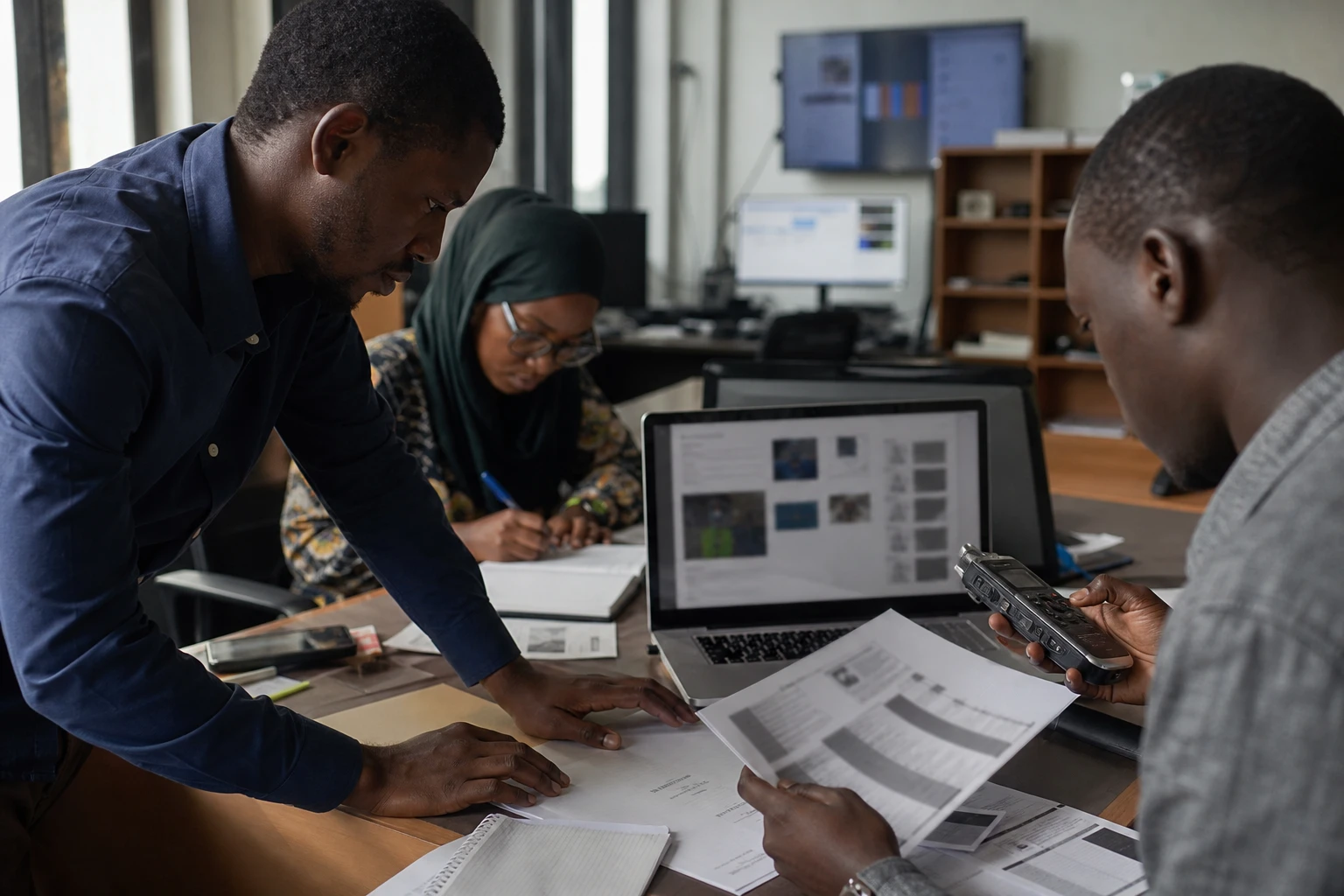
When war is also fought on screens
In Mali, the battle is no longer confined to roads, military bases and northern cities. It is also fought on phones, in news feeds and at the pace of images that circulate faster than they can be checked. This is where generative artificial intelligence is taking hold, not as a gadget, but as an accelerator of narratives, fear and influence.
This shift is unfolding in a country where the media space has narrowed considerably. Reporters Without Borders notes that Mali has seen the sustained suspension of RFI and France 24, followed by further restrictions targeting critical media outlets and journalists. The High Authority for Communication, the regulatory body, has also stepped up its sanctions in recent years. In this context, information circulates less freely, while fabricated content finds fertile ground.
A Malian conflict already awash with propaganda
A report by the Timbuktu Institute, a research centre based in Dakar, describes differing uses of AI among the actors in Mali’s conflict. JNIM, affiliated with al-Qaeda, is still at an early experimental stage. The group reportedly uses it mainly to generate propaganda visuals around real operations or to test simple applications, such as packaging messages and translating them. The report describes this phase as “limited, but with the potential to evolve”.
The Azawad Liberation Front, meanwhile, is also said to use unofficial accounts to circulate synthetic characters presented as fighters or supporters of the movement. The Timbuktu Institute cites the figure of “Azzghim” in particular, a wholly fabricated character credible enough to fuel narratives hostile to Russia’s Africa Corps. The study shows how AI is used to “humanise” a cause, target specific audiences and reduce the exposure of actual activists.
By contrast, the report identifies a much more structured adoption of AI by the Malian state and its Russian partners. It describes the use of generative AI as “state-led, professionalised and systemic”, embedded in a broader chain of wartime communications, automated comments, fake videos and anti-Western content. This assessment echoes that of other researchers on the intensification of influence operations in the Sahel.
The shock of April 2026 shifted the balance
The shift observed by the Timbuktu Institute is also explained by the military developments of 25 April 2026. On that day, coordinated attacks targeted several locations in Mali, including Kati, Bamako, Gao, Kidal and Sévaré. International media outlets including the Associated Press, Reuters and Al Jazeera confirmed the scale of the offensive, which was carried out by JNIM with the support of FLA fighters in some areas.
Mali’s defence ministry then announced the death of General Sadio Camara, a development subsequently reported by several newsrooms and agencies. This is significant because it illustrates the fragility of Mali’s command centre and the symbolic impact of an attack on locations considered secure. In the north, the recapture of Kidal by forces hostile to Bamako carried considerable political as well as military weight.
Human Rights Watch later documented, in a report published in June 2026, civilians killed and injured in the fighting, as well as forced displacement and abuses in several localities. The NGO recorded 13 civilians killed and at least 25 wounded in clashes in Kidal and Gao. These figures show that information warfare does not exist apart from reality: it accompanies a very real conflict, with its victims, rumours and manipulation.
What AI means for Bamako, armed groups and the population
For the transitional authorities in Bamako, the stakes are twofold. On the one hand, AI can strengthen state communications seeking to maintain national cohesion and promote the Alliance of Sahel States, which became the Confederation of Sahel States in July 2024. On the other, it exposes the government to a proliferation of narratives it cannot always control, especially as security deteriorates and trust in the media erodes. The AES has also made the fight against disinformation a political hallmark of its communications.
For armed groups, the benefits are clear. JNIM can save time, test formats and obscure its tracks. The FLA can create a sense of identity and emotion without exposing its leaders. Support networks, meanwhile, can flood social media with content that is fast to produce, low-cost and difficult to attribute. AI thus becomes a force multiplier in a war where images matter as much as territorial gains.
For the population, the consequences are more serious. In Bamako and in the regions of Gao, Kidal, Mopti and Sévaré, access to reliable information is becoming more difficult. Community radio stations, often the only outlets covering some localities, also face direct pressure from armed groups. RSF reported in 2026 the destruction of Radio Naata in Labbezanga, in the tri-border area. When local information is undermined, fabricated content fills the vacuum.
A Sahelian laboratory, with pan-African effects
Mali’s experience extends beyond its national borders. Across the Sahel, armed conflicts, military transitions and the growing closure of civic space have created an environment in which disinformation has become a weapon of war in its own right. Mali, Burkina Faso and Niger now form a single political bloc, but also a shared space exposed to digital influence, disinformation campaigns and narratives legitimising armed action.
The stakes are high for West Africa. ECOWAS, long a framework for mediation and diplomatic pressure, has lost some of its leverage on Mali since the successive political ruptures. In this vacuum, the AES is seeking to impose its own narrative, while armed groups exploit every breach in public trust. The battle is therefore also being fought over narrative sovereignty.
The lesson extends beyond Mali. Across the continent, states facing security crises will now have to treat the spread of AI-generated content as an issue of public security, press freedom and social cohesion. In Mali, the next challenge will be the ability of the authorities, local media and African researchers to document these uses without conflating information, propaganda and intimidation.