Algeria
 Egypt
 Libya
 Morocco
 Sudan
 Tunisia
 Benin
 Burkina Faso
 Cabo Verde
 Côte d'Ivoire
 Ghana
 Guinea
 Guinea-Bissau
 Liberia
 Mali
 Mauritania
 Niger
 Nigeria
 Senegal
 Sierra Leone
 The Gambia
 Togo
 Cameroon
 Central African Republic
 Chad
 DR Congo
 Equatorial Guinea
 Gabon
 Republic of the Congo
 São Tomé and Príncipe
 Burundi
 Comoros
 Djibouti
 Eritrea
 Ethiopia
 Kenya
 Madagascar
 Malawi
 Mauritius
 Mozambique
 Rwanda
 Seychelles
 Somalia
 South Sudan
 Tanzania
 Uganda
 Angola
 Botswana
 Eswatini
 Namibia
 South Africa
 Zambia
 Zimbabwe
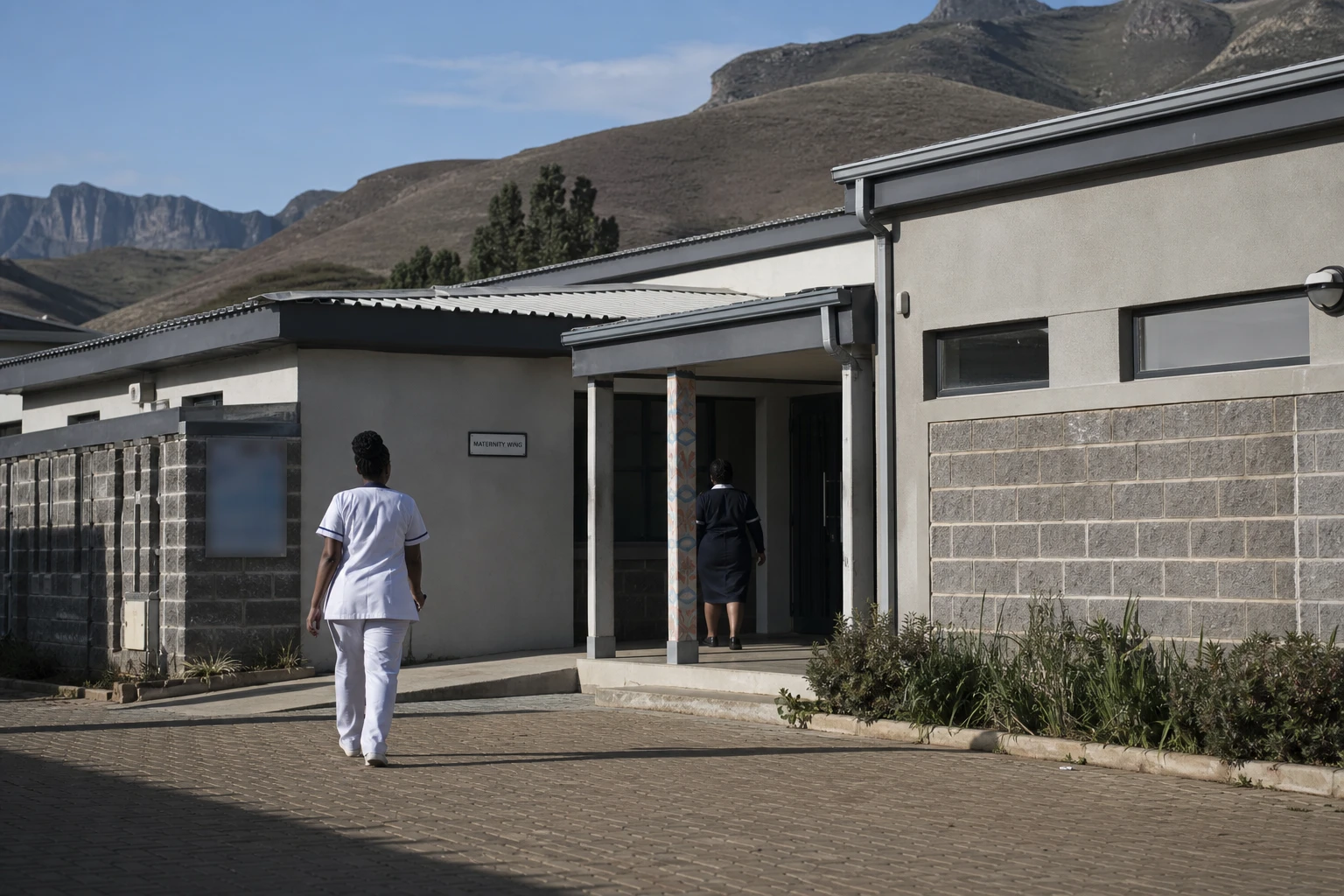
In Basotho villages, access to maternity care is still a matter of distance
In Lesotho, childbirth often begins long before a woman reaches the delivery room. It starts on mountain tracks, in villages far from the capital, Maseru, where families still contend with distance, a lack of transport and staff shortages. In this landscape, the presence of a qualified health professional can mean the difference between a routine birth and a life-threatening emergency.
The country has made measurable progress. UNICEF says that 92% of births are now attended by a skilled health professional, while maternal mortality remains high, at 530 deaths per 100,000 live births, according to the latest country profile. These two realities coexist. They point both to the expansion of care and to the continuing fragility of its quality, particularly outside urban centres.
A profession long associated with women, now open to other profiles
Against this backdrop, a still small but growing number of men are choosing midwifery: the medical care of women during pregnancy and childbirth. Estimates cited by international agencies put the number of male midwives in Lesotho at about 300. Worldwide, the WHO estimates that men account for less than 1% of midwives. Their rarity makes the trend visible, but above all it highlights a broader reality: health systems are short of trained staff.
Lesotho’s Ministry of Health presents nursing and midwifery as a pillar of its decentralisation reforms. Its dedicated directorate says it aims to provide care that is “equitable, accessible, competent and evidence-based”. In other words, the debate is not only social. It is also organisational: how can care be brought closer to communities, especially in a country of more than two million people where rural health posts remain understaffed?
What male midwives are changing in rural health centres
The example of Ntlhane Sehloho, who has worked at Mpharane Health Centre for two decades, shows that this shift often begins with personal experience. Many future health workers saw women, when they were children, travel long distances to give birth or deliver at home for lack of a timely alternative. In a mountainous country such as Lesotho, this reality still weighs more heavily on rural households than on people in areas with better services.
The presence of men in the profession also challenges long-standing social norms. But it is not imposed as a provocation. It takes root through trust. Some patients remain reluctant. Others say they value the availability, continuity of care and opportunity to speak freely about their pregnancies. The issue is therefore not a simple opposition between tradition and modernity. Rather, it shows how care practices are gradually adapting to conditions on the ground, where urgency and scarce resources dominate.
This trend also has practical implications for pregnant women in rural areas. When clinics are short-staffed, the question is not only the caregiver’s gender. It is also one of access, waiting time and continuity of antenatal care. UNFPA emphasises the midwife’s psychosocial role in supporting a woman from early pregnancy through to childbirth. In widely dispersed communities, that support matters as much as technical expertise.
A signal for Lesotho and southern Africa
Lesotho’s experience reflects a broader tension across southern Africa. The region, within SADC, continues to face inequalities in access to maternal healthcare despite progress in health coverage. Like several neighbouring countries, Lesotho must contend with staff shortages, the burden of rural distances and constrained public budgets. The problem is therefore not only cultural. It is also structural.
At continental level, this story highlights a central challenge for the African Union and public health goals: strengthening local skills, diversifying recruitment and retaining teams in remote areas. The WHO and UNICEF have for years called for more midwives, both men and women, to reduce preventable deaths related to pregnancy and childbirth. Lesotho illustrates this pragmatic choice: when the healthcare system is short of hands, opening the profession to trained men is not a symbol but a public health response.
One question remains: what comes next? Recent data show progress, but also a maternal mortality rate that remains very high for the country. The next challenge is therefore not only to increase the number of births attended by skilled professionals. It is also to improve the quality of care, the availability of medicines, transport to health centres and the consistent presence of qualified staff in districts furthest from Maseru. Only then can midwifery make a lasting difference to the survival of mothers and newborns in Lesotho.