Algeria
 Egypt
 Libya
 Morocco
 Sudan
 Tunisia
 Benin
 Burkina Faso
 Cabo Verde
 Côte d'Ivoire
 Ghana
 Guinea
 Guinea-Bissau
 Liberia
 Mali
 Mauritania
 Niger
 Nigeria
 Senegal
 Sierra Leone
 The Gambia
 Togo
 Cameroon
 Central African Republic
 Chad
 DR Congo
 Gabon
 Republic of the Congo
 São Tomé and Príncipe
 Burundi
 Comoros
 Djibouti
 Eritrea
 Ethiopia
 Kenya
 Madagascar
 Malawi
 Mauritius
 Mozambique
 Rwanda
 Seychelles
 Somalia
 South Sudan
 Tanzania
 Uganda
 Angola
 Botswana
 Eswatini
 Lesotho
 Namibia
 South Africa
 Zambia
 Zimbabwe
Closer scrutiny of oil accounts
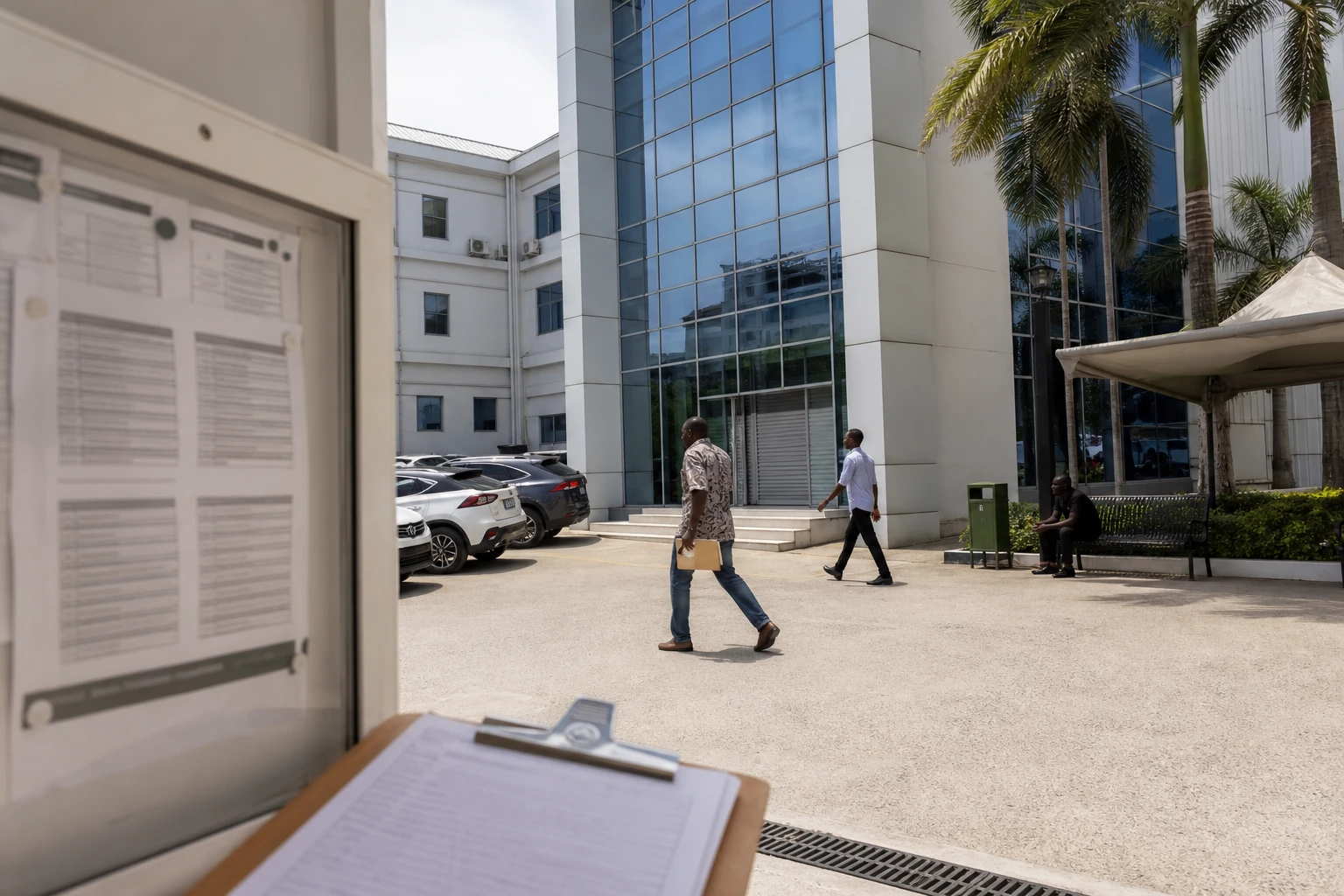
In Malabo, the question is no longer simply how much oil earns. It has become more specific: who receives funds linked to the sector, when, and for what actual purpose? In Equatorial Guinea, the demand for traceability is growing as the state seeks to reduce its dependence on hydrocarbons, which remain central to public revenue and the economy.
This episode is also part of a broader effort to bring state-owned companies and entities with state participation under closer control. At the beginning of 2026, the authorities launched an audit of several public bodies; the first wave covered 27 entities, with the stated aim of improving their profitability and increasing non-oil revenue. In a CEMAC member state facing continuing budgetary pressure, this tightening of the control chain is significant.
The facts: technical and training funds under scrutiny
On Wednesday 16 September 2026, Vice-President Teodoro Nguema Obiang Mangue made public the findings of a review of several accounts belonging to the Ministry of Hydrocarbons, Mines and Electricity. According to the report, irregularities were identified involving CFAF 2.596 billion, or just over $4 million. A local investigation confirmed that the findings were presented at the People’s Palace in Malabo on Tuesday 15 September, and specified that the amounts related to technical fees and staff training funds at the ministry.
The review covered two periods. First, the years 2023 to 2026, during which the managers concerned reportedly flagged several anomalies. Second, the financial years 2017 to 2022, when these payments passed through the account of the former Société Générale de Banques en Guinée équatoriale, now VistaBank GE. The oversight commission identified more than CFAF 867 million in payments whose origin had not been justified, even though the transactions had been authorised by authorised signatories.
The report also cites the case of Equatorial Atlantic S.A. In this case, payments linked to a contract were said to have passed through the technical fees and training fund accounts, amounting to CFAF 89 million and CFAF 1.2 billion respectively. After the findings were presented, the authorities ordered the full repayment of the funds concerned as well as payment to the technicians. An earlier warning had already been raised in July 2026 over more than CFAF 500 million claimed by the same technicians.
What the case says about Equatorial Guinea’s economy
This case goes beyond disciplinary matters. It concerns a sector that still largely shapes public life and the country’s finances. The World Bank estimates that hydrocarbons still account for more than 80% of revenue in Equatorial Guinea, while a report published in Malabo in 2025 said oil revenue had fallen by 19.7% in budget execution, despite an increase in non-oil revenue. In other words, every franc that cannot be traced weighs more heavily on a state seeking to broaden its tax base.
International financial institutions, meanwhile, describe an economy still under pressure. The AfDB says activity contracted by 6.0% in 2025 after growth of 0.9% in 2024, amid falling hydrocarbon production. The IMF, for its part, estimated that the 2024 recovery had been modest, at 0.9%. In this context, audits are not merely a matter of political messaging: they also help secure scarce resources and prevent public entities from becoming centres of recurring losses.
The regional significance is clear. In Central Africa, several economies remain exposed to dependence on commodities and mining or oil revenue. By strengthening its controls, Equatorial Guinea is also sending a signal to its CEMAC partners and the BEAC: fiscal sustainability depends on better governance of public funds, not only on a rebound in crude prices.
An episode resonating far beyond Malabo
The case also comes amid heightened vigilance over corruption. Transparency International gives Equatorial Guinea a score of 15 in the 2025 Corruption Perceptions Index, ranking it 172nd out of 182 countries and territories. This low score does not tell the whole story of a system, but it underscores the fragility of institutional safeguards and the need for the executive to turn audit announcements into lasting, verifiable procedures that are followed through.
The authorities face a twofold challenge. On the one hand, they must reassure economic partners and lenders about the management of public accounts. On the other, they must respond to a more tangible domestic expectation: a state able to pay its employees, fund its services and make its financial flows transparent. In Malabo, this battle is being fought as much in ministries as in bank accounts. And in an economy still dominated by black gold, financial credibility is itself becoming a strategic resource.
Across the continent, Equatorial Guinea is a reminder of a familiar truth that is often put off: diversification cannot be decreed through speeches alone. It requires reliable accounts, functioning oversight institutions and public discipline capable of surviving the hydrocarbon cycle. The real significance of this inquiry will be measured by that in the months ahead.