Algeria
 Egypt
 Libya
 Morocco
 Sudan
 Tunisia
 Benin
 Burkina Faso
 Cabo Verde
 Côte d'Ivoire
 Ghana
 Guinea
 Guinea-Bissau
 Liberia
 Mali
 Mauritania
 Niger
 Nigeria
 Senegal
 Sierra Leone
 The Gambia
 Togo
 Cameroon
 Central African Republic
 Chad
 DR Congo
 Equatorial Guinea
 Gabon
 São Tomé and Príncipe
 Burundi
 Comoros
 Djibouti
 Eritrea
 Ethiopia
 Kenya
 Madagascar
 Malawi
 Mauritius
 Mozambique
 Rwanda
 Seychelles
 Somalia
 South Sudan
 Tanzania
 Uganda
 Angola
 Botswana
 Eswatini
 Lesotho
 Namibia
 South Africa
 Zambia
 Zimbabwe
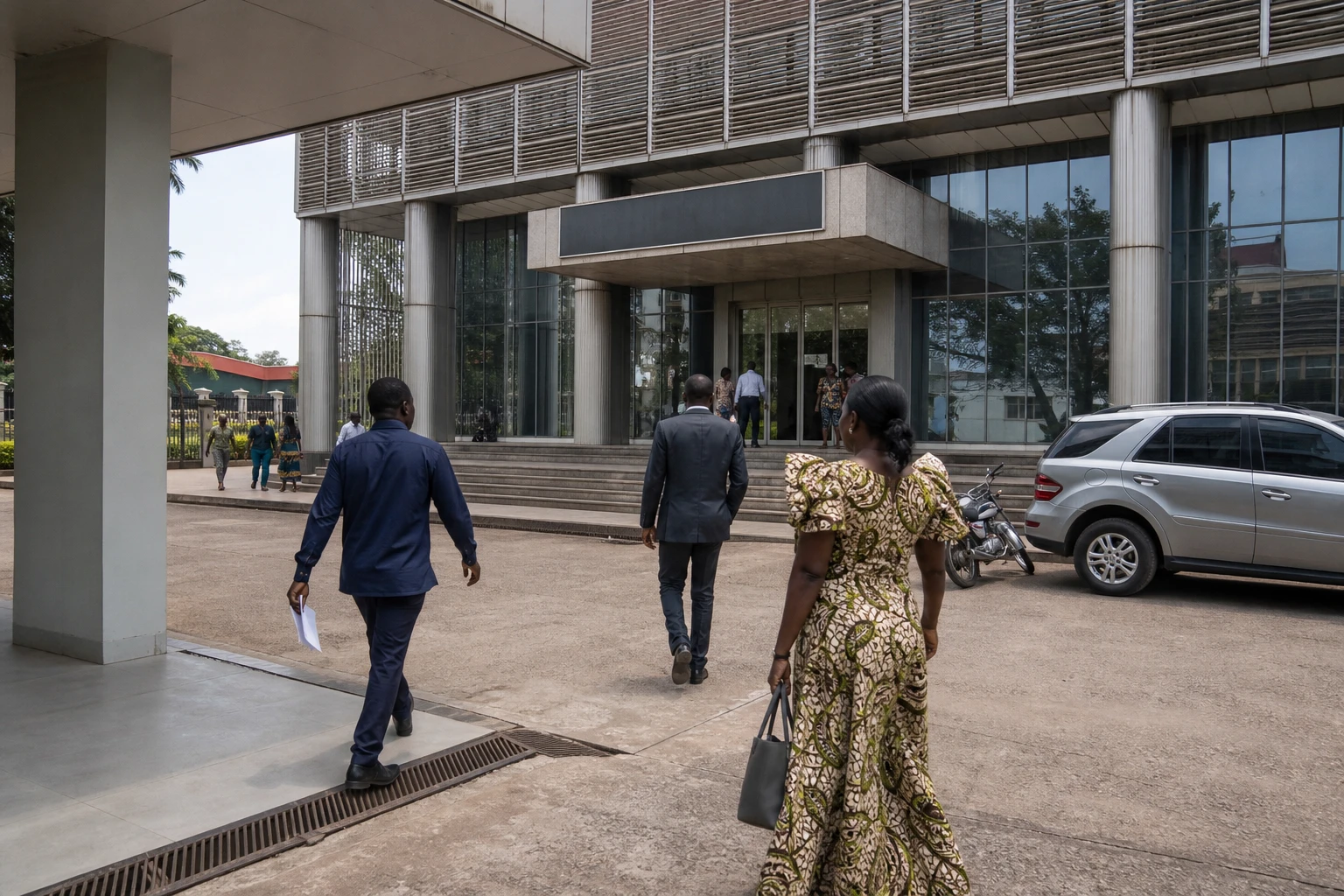
When the river ceases to be a link
On the Congo River, the border can seem invisible from the banks. It is nonetheless real, with its posts, patrols and blind spots. At Makotimpoko, in the Nkéni-Alima department, this shared space between the Republic of the Congo and the Democratic Republic of the Congo showed in late August that a simple river clash can quickly become a matter of state.
In this area, the stakes go beyond security alone. They affect the movement of people, fishing, control of the islands and the daily lives of families who live on both sides of the river. In the Congo Basin, the continent’s second-longest river and a natural border between the two Congos, every incident also raises questions about the ability of states to protect without confining, and to monitor without using excessive force.
What happened at Makotimpoko
On the night of 26–27 August 2026, a river patrol from the Republic of the Congo and members of the forces of the Democratic Republic of the Congo clashed on the river near Makotimpoko and Yumbi. Several sources in the Republic of the Congo and Kinshasa describe an incident involving naval forces and river patrols, in which members of the public forces of Congo-Brazzaville were temporarily detained, two people were wounded and treated in Brazzaville, and two members were still reported missing when the first reports emerged.
The authorities in both capitals then sought to contain the matter. In Brazzaville, Prime Minister Anatole Collinet Makosso visited the wounded on 29 August at the Brazzaville Central Military Hospital, according to the national press and official sources cited locally. The government also adopted a conciliatory tone, calling it a “regrettable incident” and condemning the circulation of images deemed humiliating. Kinshasa, for its part, said an investigation had been opened and that contacts had taken place between the relevant ministries.
This was followed by a hearing of the Congolese ministers of defence and the interior before the National Assembly’s Defence and Security Committee on 31 August and 1 September, according to Brazzaville media. Before MPs, the government recalled that several river islands belonging to the Republic of the Congo are inhabited by nationals of the DRC, in a “spirit of good neighbourliness”. The authorities also cited old texts to support the Congolese position on certain islets.
Civil society demands answers
In Brazzaville, the response was not limited to the institutions. Civil society actors, including the Human Rights and Development Circle, called for clear explanations about the fate of the two missing agents and the conditions in which the wounded were being held. Their message is simple: good relations between neighbours must not be built on silence imposed on victims or on families being erased.
This demand for truth touches a sensitive point. In a border incident, governments’ first instinct is often diplomatic. But on the ground, families await identified bodies, treated wounded people, established responsibilities and, if necessary, compensation. This is also what Congolese law and regional commitments on the protection of people and the prevention of violence at borders underscore.
In practice, there are two demands. First, the chain of events on the river must be clarified. Second, the state must say what it intends to do for its own agents, especially when they have been wounded or exposed publicly. The compensation sought by civil society is part of this logic: recognising the harm rather than dissolving it in the language of a diplomatic incident.
Why this episode matters beyond Makotimpoko
The Republic of the Congo and the DRC share a long, porous and densely populated border. The riverbanks are home to long-standing movements of people, informal economic exchanges and communities established well before today’s administrative boundaries were drawn. In this context, securing the border is not just a matter of deploying uniformed personnel. It also means marking waterways, co-ordinating patrols and reducing the grey areas where misunderstanding can turn into confrontation.
The issue is regional before it is bilateral. The Republic of the Congo belongs to ECCAS, which brings together 11 Central African states, and to CEMAC, where Brazzaville plays a central role in subregional exchanges. In 2025, ECCAS also launched work on integrated border governance in Central Africa and on police and judicial co-operation. The Makotimpoko incident shows that these mechanisms are not abstract: they are precisely intended to prevent river disputes from escalating.
For Brazzaville, the domestic stakes are political too. The government wants to project control, restraint and protection for its agents. But it must also answer concrete questions: why does the area remain vulnerable, what resources are actually deployed on the river, and how can national patrols be prevented from being isolated in the face of a neighbouring force? The answers will affect the confidence of riverside communities, as well as the credibility of the state in its outlying areas.
Diplomatically, the episode is a reminder that stability between Brazzaville and Kinshasa depends as much on political dialogue as on technical arrangements. Both capitals have an interest in preserving their relationship, but they also have an interest in documenting the incident, investigating swiftly and clarifying the rules for movement on the water. Only then can the river remain a passageway rather than a lasting fault line.