Algeria
 Egypt
 Libya
 Morocco
 Sudan
 Tunisia
 Benin
 Burkina Faso
 Cabo Verde
 Côte d'Ivoire
 Ghana
 Guinea
 Guinea-Bissau
 Liberia
 Mali
 Mauritania
 Niger
 Nigeria
 Senegal
 Sierra Leone
 The Gambia
 Togo
 Cameroon
 Central African Republic
 Chad
 DR Congo
 Equatorial Guinea
 Gabon
 Republic of the Congo
 São Tomé and Príncipe
 Burundi
 Comoros
 Djibouti
 Eritrea
 Ethiopia
 Madagascar
 Malawi
 Mauritius
 Mozambique
 Rwanda
 Seychelles
 Somalia
 South Sudan
 Tanzania
 Uganda
 Angola
 Botswana
 Eswatini
 Lesotho
 Namibia
 South Africa
 Zambia
 Zimbabwe
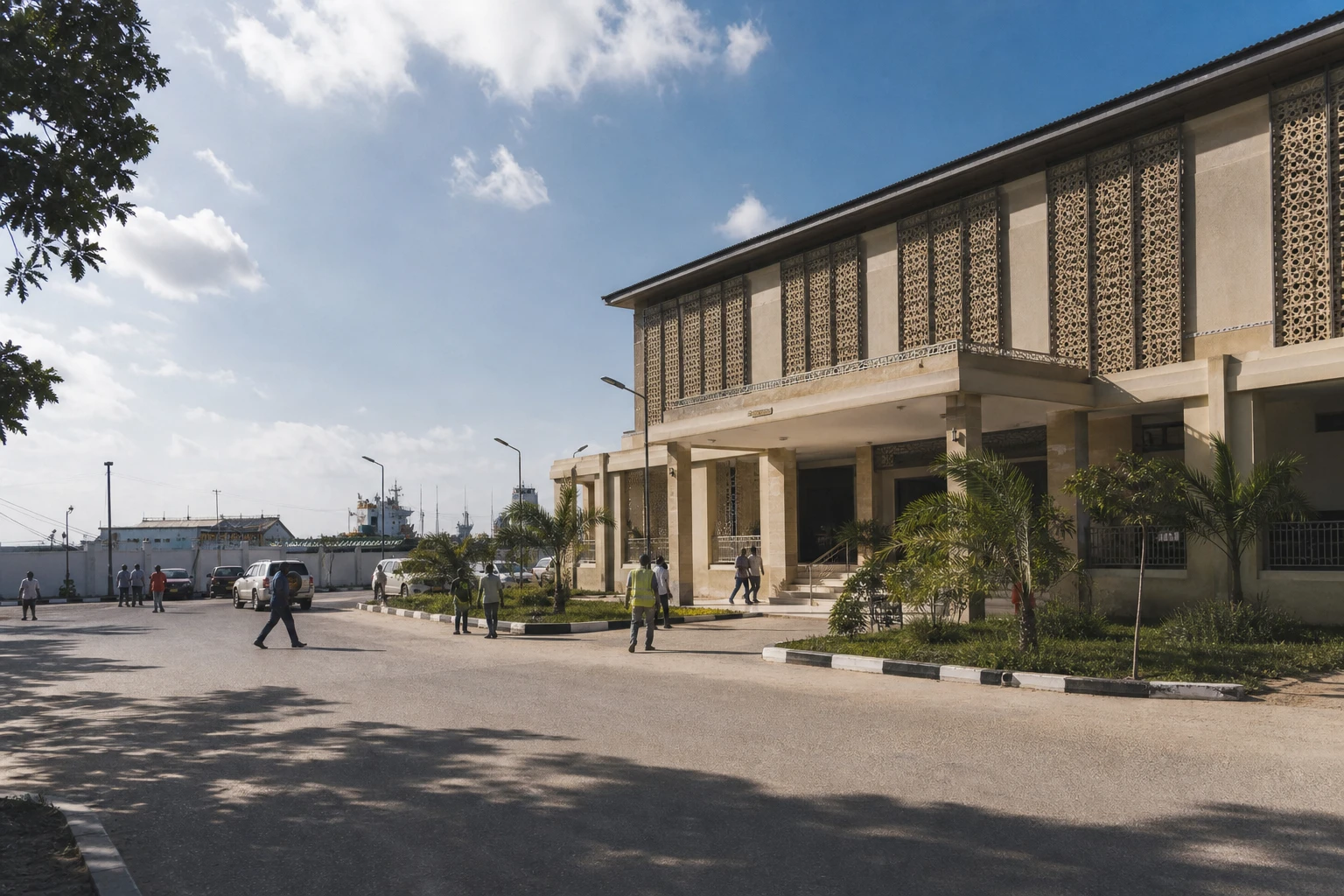
In Lamu, Kenya wants to turn its maritime access into an industrial asset. But work on the future Dangote refinery begins with an immediate question: who can decide the future of land occupied and cultivated for generations?
A Kenyan project designed for all of East Africa
Nigerian group Dangote began work on its future refinery in Lamu, on Kenya’s north-eastern coast, on Wednesday 30 September 2026. The ceremony took place in the port area, in the presence of Kenyan President William Ruto, Aliko Dangote and several African leaders.
The project represents a stated investment of $16bn. Construction is expected to take about 40 months. Once operational, the facility could process up to 700,000 barrels of crude oil a day, placing it among the continent’s largest refining facilities.
The refinery is expected to produce diesel, petrol and aviation fuel. These products would be sold in Kenya and in neighbouring markets. The stated aim is to reduce East Africa’s dependence on imports of refined products.
The complex is also expected to include a 1,000-megawatt power station, desalination units and water-recycling facilities. Dangote estimates that the project could generate up to 60,000 direct and indirect jobs.
For Nairobi, the stakes therefore extend beyond fuel production. The project is intended to strengthen industrial activity in Lamu and expand the role of its deep-water port. It is also part of the LAPSSET corridor, a vast infrastructure network linking Kenya with Ethiopia and South Sudan.
The corridor aims to connect regional trade to Kenya’s coastline. It includes roads, port infrastructure, oil pipelines and logistics hubs. The refinery could thus become an entry point for crude and a distribution centre for several East African countries.
Ceremony goes ahead despite court proceedings
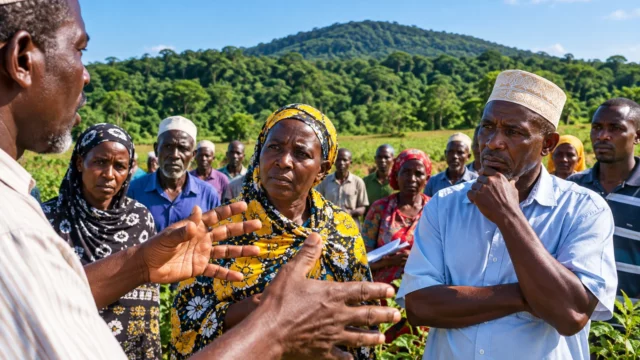
The launch is taking place even as a land dispute is before the Kenyan courts. One hundred and thirty-three residents of Chandavai, in Lamu county, are contesting the use of a plot earmarked for the project.
The claimants say their families have occupied, farmed and developed the land for generations. They cite homes, places of worship, agricultural land and burial grounds. They are seeking recognition of their rights, as well as compensation and clarity on the terms of any potential resettlement.
The Environment and Land Court in Malindi has ordered that the status quo be maintained on the plot in question. A hearing between the parties is scheduled for 14 October 2026. The order does not explicitly prevent the launch ceremony, but it places limits on operations that could alter the land.
Dangote has therefore gone ahead with the event. The company says it is ready to respond to the proceedings. The Kenyan authorities also support the project’s continuation. President William Ruto has described the refinery as an opportunity to transform the coastal region and attract more investment.
This position, however, highlights an important distinction between the political launch and the start of major construction work. A ceremony can take place without resolving disputes over ownership, occupation or compensation. The industrial timetable will depend on how the authorities and the company comply with court orders.
Land remains a sensitive issue in Lamu’s major projects
The current dispute recalls tensions that have already emerged around major infrastructure projects in Lamu. In this area, port, energy, military and logistics plans overlap with spaces used by local communities.
The issue is therefore not limited to the amount of compensation. It concerns recognition of long-standing occupation, the value of land, access to fishing grounds and livelihoods. It also involves residents’ participation in decisions that will permanently transform their territory.
For Lamu’s residents, the promised benefits will not automatically be shared equally. Skilled jobs could initially go to workers from other regions or abroad. Informal activities, fishing and agriculture, by contrast, could be affected by access restrictions or rising land prices.
The project will also have to address environmental concerns. A refinery of this size will require substantial amounts of water, energy and transport infrastructure. It will need to limit risks to coastal ecosystems and set out monitoring arrangements for emissions, discharges and industrial accidents.
Regional ambitions face several uncertainties
The economic case rests on significant regional demand. Kenya, Uganda, Ethiopia, Rwanda, Burundi, Tanzania and South Sudan still import a large share of their petroleum products. A refinery in Lamu could reduce some logistics costs and bring supply closer to consumer markets.
It will nevertheless have to secure crude supplies. Kenya does not yet have sufficient commercial production to supply a 700,000-barrel-a-day facility on its own. Dangote plans to rely on Kenyan oil, as well as crude from Uganda and other African producers.
This regional dependence makes neighbouring infrastructure crucial. Pipelines, roads, port capacity and purchase agreements will have to progress at the same pace as the refinery. Without firm contracts and co-ordination between states, the planned capacity could exceed the volumes actually available.
The project is also unfolding amid competition between national strategies. Uganda wants to retain its ambition to build a smaller refinery to process some of its crude locally. President Yoweri Museveni has said East Africa may need several facilities rather than a single regional centre.
For the East African Community, the challenge will be to ensure that shared infrastructure does not become merely a private asset without genuine regional integration. Questions will include pricing, access to products for neighbouring countries, equity participation and transparency over public commitments.
The next test will be judicial as well as industrial
The 30 September launch gives the project political visibility. It resolves neither the land dispute nor the conditions for its implementation. The 14 October hearing will be the next major milestone.
At that hearing, judges will examine arguments from residents, land authorities, the Kenyan government and the companies concerned. The ruling could clarify the rights attached to the plot and the limits placed on construction work.
Nairobi’s challenge is now to reconcile industrial appeal with respect for constitutional protections. Dangote’s success will depend as much on financing and logistics as on local acceptance. For Lamu, the question is whether the promise of a regional energy hub can go hand in hand with recognised rights and tangible benefits for nearby communities.