Algeria
 Egypt
 Libya
 Morocco
 Sudan
 Tunisia
 Benin
 Burkina Faso
 Cabo Verde
 Côte d'Ivoire
 Ghana
 Guinea
 Guinea-Bissau
 Liberia
 Mali
 Mauritania
 Niger
 Senegal
 Sierra Leone
 The Gambia
 Togo
 Cameroon
 Central African Republic
 Chad
 DR Congo
 Equatorial Guinea
 Gabon
 Republic of the Congo
 São Tomé and Príncipe
 Burundi
 Comoros
 Djibouti
 Eritrea
 Ethiopia
 Kenya
 Madagascar
 Malawi
 Mauritius
 Mozambique
 Rwanda
 Seychelles
 Somalia
 South Sudan
 Tanzania
 Uganda
 Angola
 Botswana
 Eswatini
 Lesotho
 Namibia
 South Africa
 Zambia
 Zimbabwe
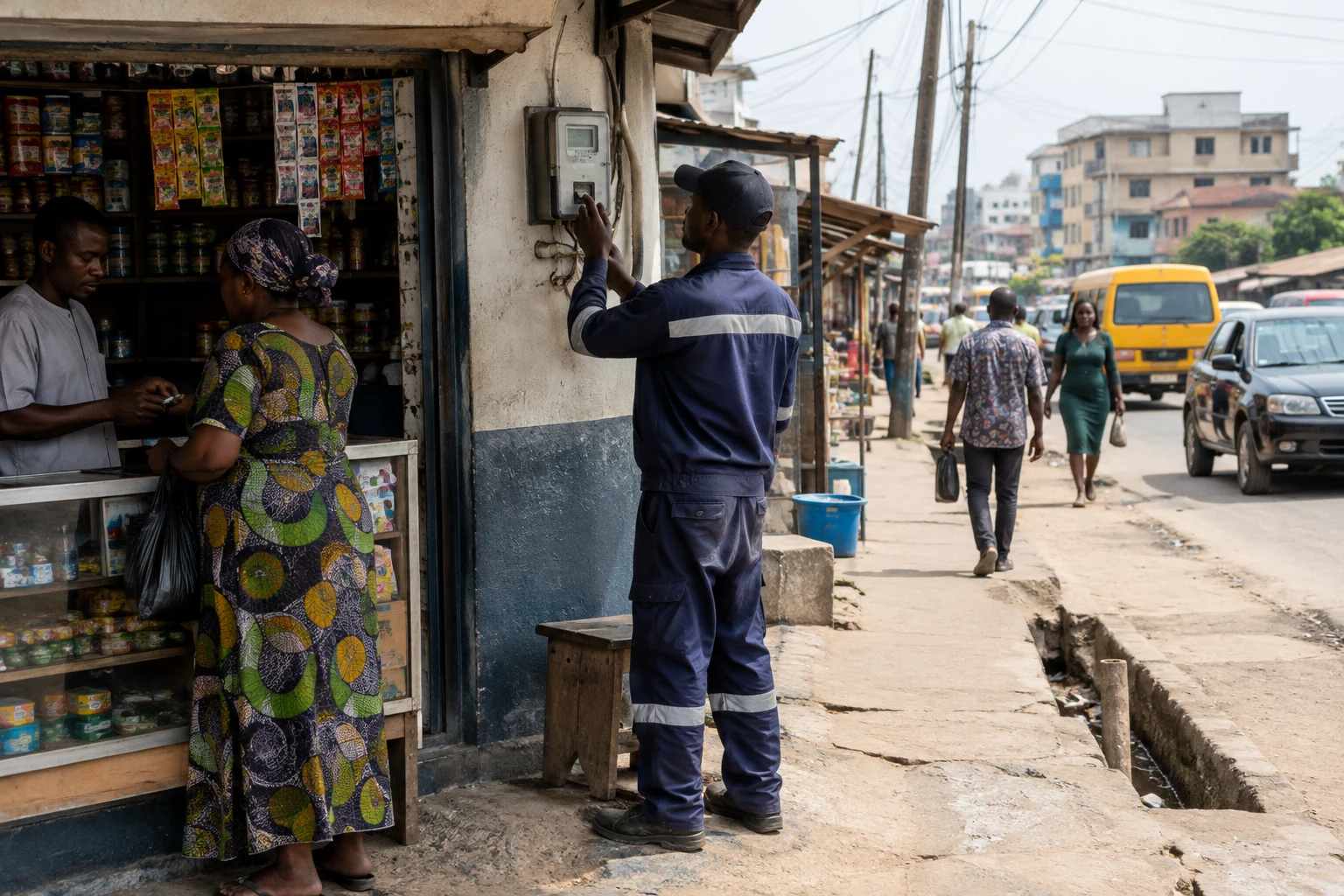
In Lagos, power cuts weigh on workshops, businesses and essential services. The state government is now banking on multiple suppliers and its new regulatory powers. But announcing more megawatts is not enough: they must also be generated, transmitted and distributed reliably.
An ambitious target, still to be turned into projects
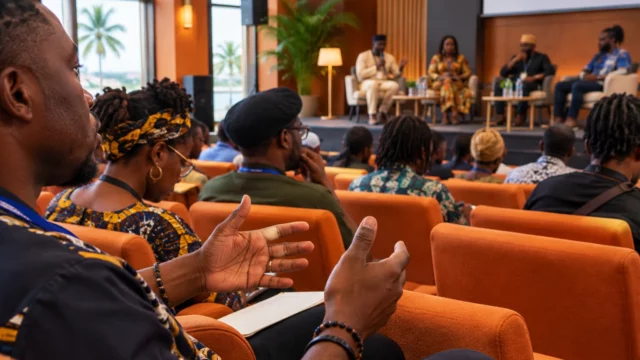
Governor Babajide Sanwo-Olu has set a target: to exceed 3,000 megawatts (MW) of electricity available in Lagos by March 2027, compared with less than 1,000 MW currently. He announced the goal on Saturday 10 October at the fourth Africa Energy Conference at Lagos Business School. His deputy, Kadri Obafemi Hamzat, represented him. The statement was reported by several Nigerian media outlets, including Premium Times and Punch.
To add about 2,000 MW, the state wants to combine electricity from the national grid with independent power plants, generation units close to consumers, power barges and other arrangements it describes as energy hubs or energy traders. However, the government has yet to provide details for each of these channels on expected capacity, financing or commissioning schedules.
The announced plan therefore does not rely on a single large power plant. It requires several projects and operators to be co-ordinated. The governor also cited seven priorities: developing the Lagos electricity market, increasing generation, strengthening transmission and distribution networks, improving metering, securing gas supplies and better monitoring operations through digital tools.
Decentralisation opens a new route
The strategy is part of a national reform. The Electricity Act 2023 enabled Nigerian states to establish electricity markets and regulate activities within their borders. Lagos adopted its own legal framework in 2024. In December that year, the federal Nigerian Electricity Regulatory Commission (NERC) transferred oversight of the intrastate market to the Lagos State Electricity Regulatory Commission (LASERC), according to the official transfer order.
Lagos’s remit does not replace that of the federal regulator. NERC retains oversight of activities that cross state borders, including transactions involving the national grid. This division matters for the announced target: Lagos wants to mobilise local resources, but also plans to receive more electricity from the shared grid. Success will therefore depend on co-ordination between state authorities, operators and federal institutions.
The first private contracts give an indication of the tools being used. On 26 April 2026, Lagos signed power purchase agreements with Mainland Power, Fenchurch Power and Viathan Engineering. The state government confirmed the signing in a statement on its energy partnerships. The agreements draw on existing capacity and aim to expand it. On their own, they will not be enough to close the gap between current supply and the new target.
The challenge also lies in the networks
Generating more power does not guarantee that electricity will reach households and businesses. The governor himself acknowledged the need to improve the entire chain: generation, transmission, distribution and gas supplies to power plants. Substations, lines and distribution equipment must be able to handle the new volumes. Without these investments, an increase in capacity on paper may not translate into a more reliable service in neighbourhoods.
Measuring consumption is another challenge. Lagos plans to expand the installation of meters to reduce estimated bills and make payments more transparent. For small shops and businesses, more accurate billing can help with expense planning. But the impact will also depend on the actual quality of service and households’ ability to pay the applicable tariffs.
The government has also reported solar projects at public infrastructure sites: about 42,000 streetlights are said to have been converted to solar power out of a planned 50,000, while installations are progressing in schools. These figures were provided by the state executive and have not been independently verified here. They nevertheless illustrate a separate strand of the strategy: reducing the dependence of some facilities on the grid, without replacing the needs of the metropolis as a whole.
An experiment with implications beyond Lagos
Lagos is Nigeria’s main economic centre, but its choices form part of a national debate. Electricity decentralisation gives states a more direct role in generation and distribution. It could bring some decisions closer to local needs. It also raises questions about financing, regulation, tariffs and the division of responsibilities, particularly when electricity flows between territories.
Across West Africa, the issue is linked to discussions about grid reliability and regional trade, notably within ECOWAS, the Economic Community of West African States. But Lagos’s target is first and foremost a national test: announced capacity must translate into operational facilities and electricity actually delivered. By March 2027, the clearest indicators will be whether contracts are implemented, new generation comes online and network upgrades are completed. These results, rather than the announced figure, are what users will be able to judge progress by.