Algeria
 Egypt
 Libya
 Morocco
 Tunisia
 Benin
 Burkina Faso
 Cabo Verde
 Côte d'Ivoire
 Ghana
 Guinea
 Guinea-Bissau
 Liberia
 Mali
 Mauritania
 Niger
 Nigeria
 Senegal
 Sierra Leone
 The Gambia
 Togo
 Cameroon
 Central African Republic
 Chad
 DR Congo
 Equatorial Guinea
 Gabon
 Republic of the Congo
 São Tomé and Príncipe
 Burundi
 Comoros
 Djibouti
 Eritrea
 Ethiopia
 Kenya
 Madagascar
 Malawi
 Mauritius
 Mozambique
 Rwanda
 Seychelles
 Somalia
 South Sudan
 Tanzania
 Uganda
 Angola
 Botswana
 Eswatini
 Lesotho
 Namibia
 South Africa
 Zambia
 Zimbabwe
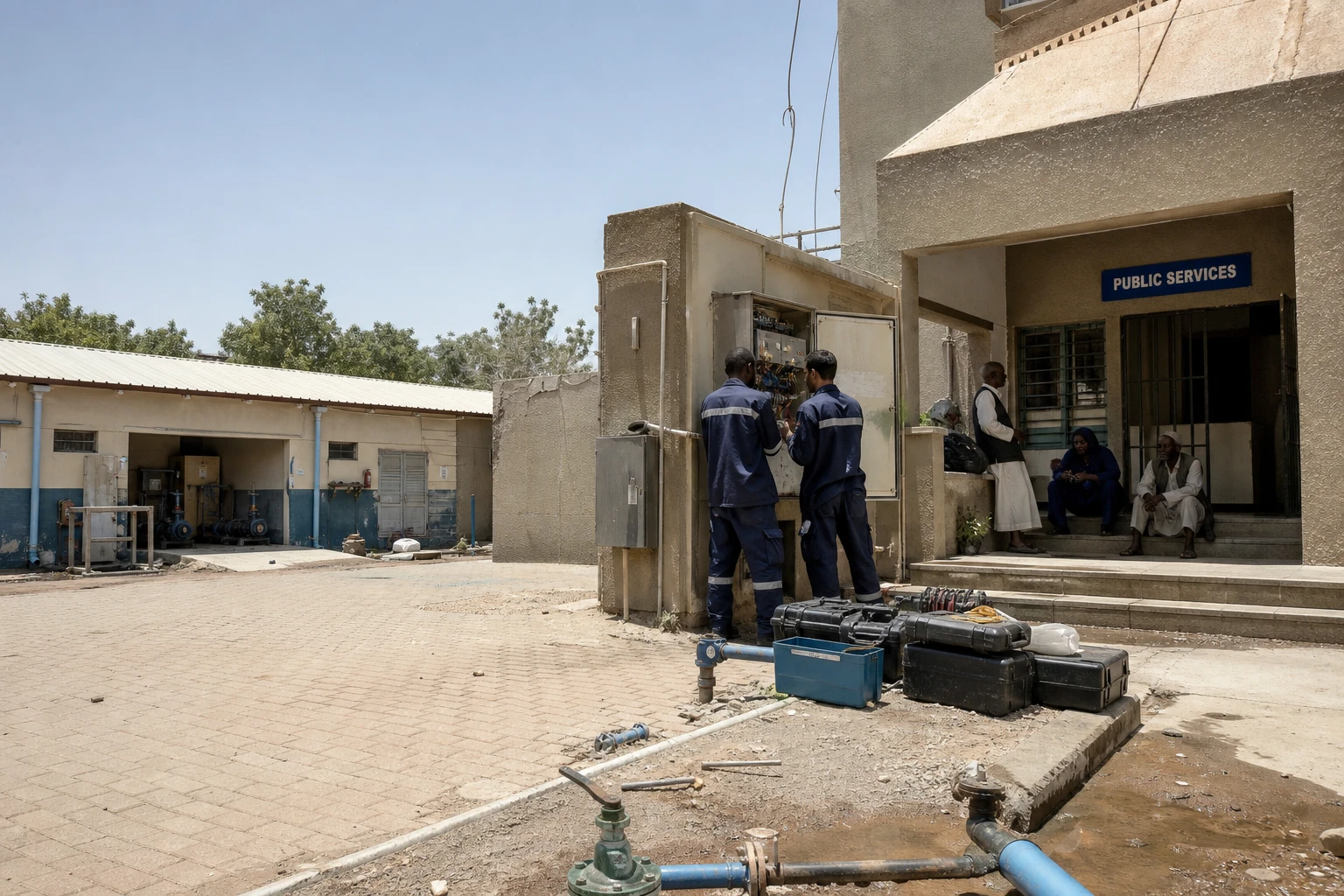
In Khartoum, returning does not yet mean getting back to a normal life. Sudanese families are coming back to the capital after months or years of displacement. They sometimes find their homes, but rarely the services that made those homes habitable.
The city still bears the scars of destruction, water and electricity cuts, medicine shortages and low incomes. Return is therefore a stage in reconstruction, but also a new ordeal for a population exhausted by war.
A capital at the heart of an ongoing conflict
The war broke out in April 2023 between the Sudanese Armed Forces, led by General Abdel Fattah al-Burhan, and the Rapid Support Forces, a paramilitary group commanded by Mohamed Hamdan Dagalo, known as Hemetti.
The fighting has progressively fragmented Sudan. Khartoum, Omdurman and Bahri, the three cities that make up the capital’s main urban area, have suffered bombardments, looting and extensive damage to civilian infrastructure.
The Sudanese army regained control of the capital during 2025, after an offensive that enabled it to push back the Rapid Support Forces. This advance did not, however, bring the conflict to an end. Fighting continues in Darfur, Kordofan and several states in the centre and east of the country.
The Sudanese government has gradually moved its administrations back to Khartoum. The decision is intended to reassert the capital’s political role. It comes, however, as public networks in the city are still operating very unevenly.
At regional level, the conflict directly involves the Intergovernmental Authority on Development, or IGAD, an organisation that brings together several East African countries. It also affects Egypt, Chad, South Sudan and Libya, which host refugees or serve as transit routes.
Return meets the realities of daily life
Nearly four million people had left Khartoum state since the start of the war. According to data cited by the International Organization for Migration, about 2.7 million people have returned since the army recaptured the capital.
This figure should be treated with caution. A recorded return does not always mean a lasting resettlement. Some families come back to check the condition of their homes, recover belongings or restart a business. Others leave again when conditions become too difficult.
The Sudanese authorities are encouraging these returns. Work has begun on roads, water facilities and electricity networks. Domestic flights have also resumed, while markets and some shops have reopened.
Essential services, however, remain fragile. In several neighbourhoods, electricity can be cut off for days. Access to drinking water often depends on pumps, generators or makeshift solutions. These difficulties make it harder to preserve food and medicines.
The health situation remains particularly worrying. Many health facilities have been damaged or looted. Those still open lack staff, equipment and medicines. Families sometimes have to visit several pharmacies before finding an available medicine.
Keeping insulin and other temperature-sensitive products in storage poses an additional problem. Without a stable electricity supply, medical refrigerators cannot operate normally. This constraint directly affects people with chronic illnesses, who cannot interrupt their treatment.
The risks are not limited to visible ruins. Unexploded ordnance remains in homes, near schools and along some roads. The UN and its partners stress that mine clearance and informing civilians are essential before any lasting resettlement.
The cost of living adds constant pressure. Food prices are rising while wages and informal incomes remain low. Many families lost their furniture, work tools and savings during the fighting or looting.
Economic recovery still short of jobs
The reopening of markets is not enough to revive the economy. Shops may operate for a few hours, but customers have less and less cash. Transport, catering, construction and small-scale trading are resuming irregularly.
This recovery mainly benefits people who still have capital, a family network or access to goods. By contrast, households that have lost their homes or livelihoods remain dependent on aid and money sent from abroad.
Families who returned from Egypt are already choosing to leave again. Nearly half a million Sudanese are reported to have returned from Egypt, where the cost of living, arrests and deportations have increased pressure on exiles. However, those who can afford it sometimes prefer to stay abroad rather than return to a capital that is not fully secure.
This choice is creating a mixed picture. Some neighbourhoods are repopulating quickly, while others remain almost empty. The first households to return often have to live without a functioning school, a nearby clinic or regular work.
Education illustrates this tension. The authorities want to resume in-person classes, particularly at the University of Khartoum. But buildings, equipment and student accommodation have been affected by the war. Teachers and students fear that a rushed return could expose young people to further risks.
Rebuilding Khartoum without forgetting the rest of Sudan
The challenge goes beyond repairing buildings. Water networks, electricity, hospitals, schools and municipal services must be restored. Neighbourhoods also need to be made safe, and residents must be able to recover their documents, belongings and livelihoods.
The United Nations Development Programme has stepped up its operations in Khartoum to support the restoration of water, electricity, healthcare and economic activity. The organisation warns, however, that the return of millions of people is placing considerable pressure on resources that are already limited.
Reconstruction will remain impossible without improved security in other regions. Displacement continues in Darfur and Kordofan. Families returning to Khartoum may therefore be forced to leave again if fighting blocks roads, destroys crops or disrupts supplies.
Khartoum’s case is a reminder that a military advance does not amount to peace. The capital can reopen its markets and welcome residents back while remaining vulnerable. For Sudanese people, the challenge now is to turn a return driven by exhaustion or necessity into genuine resettlement.
The next stage will depend as much on security as on the ability of the authorities and humanitarian partners to provide regular services. It will also depend on developments on the fronts in Darfur, Kordofan and the country’s other regions. As long as the war continues, Khartoum will remain a capital under reconstruction, but not yet a city fully reclaimed.