Algeria
 Egypt
 Libya
 Morocco
 Sudan
 Tunisia
 Benin
 Burkina Faso
 Cabo Verde
 Côte d'Ivoire
 Ghana
 Guinea
 Guinea-Bissau
 Liberia
 Mali
 Mauritania
 Niger
 Nigeria
 Senegal
 Sierra Leone
 The Gambia
 Togo
 Cameroon
 Central African Republic
 Chad
 DR Congo
 Equatorial Guinea
 Gabon
 Republic of the Congo
 São Tomé and Príncipe
 Burundi
 Comoros
 Djibouti
 Eritrea
 Ethiopia
 Madagascar
 Malawi
 Mauritius
 Mozambique
 Rwanda
 Seychelles
 Somalia
 South Sudan
 Tanzania
 Uganda
 Angola
 Botswana
 Eswatini
 Lesotho
 Namibia
 South Africa
 Zambia
 Zimbabwe
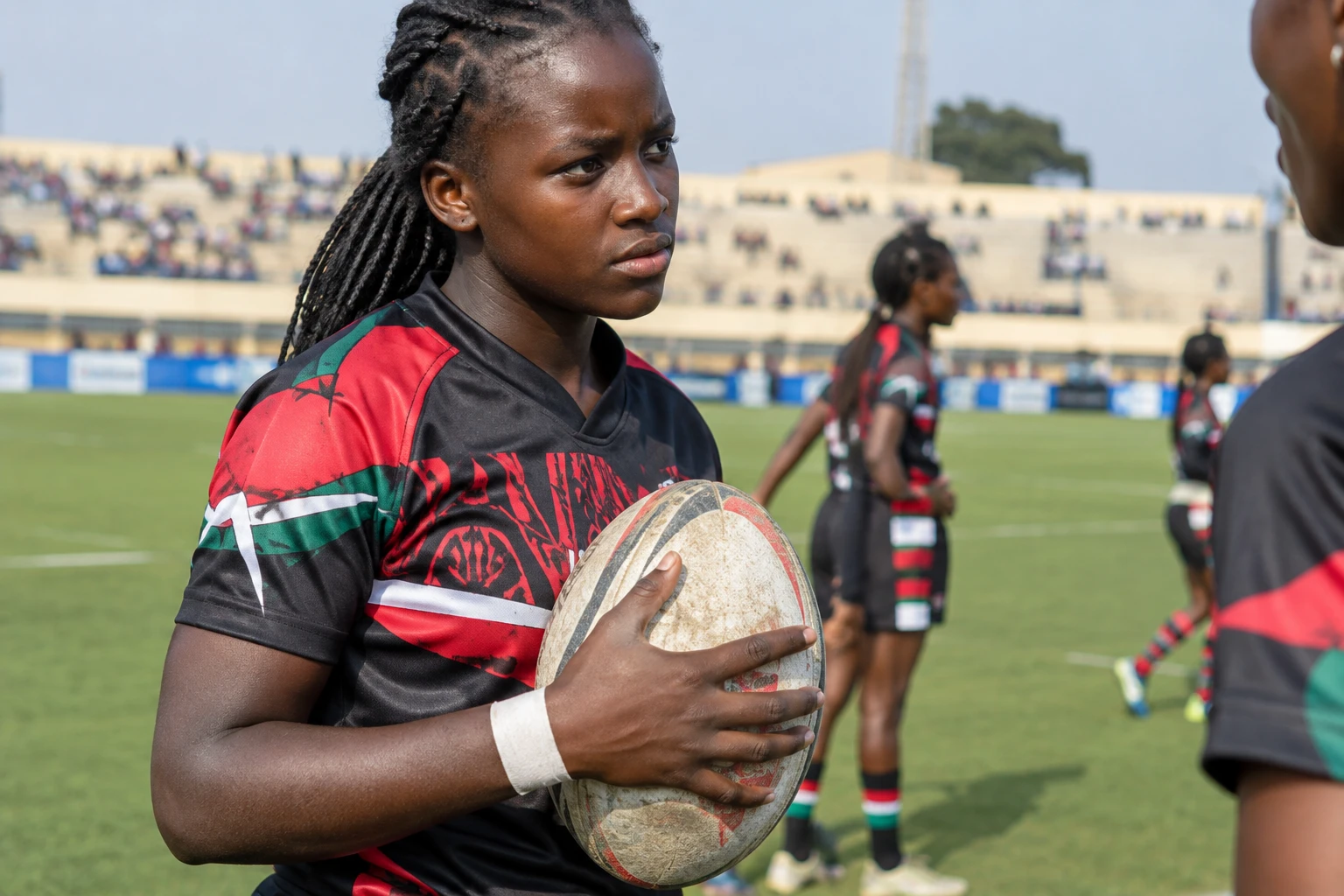
In Dakar, sevens rugby gives young Kenyan women a rare stage: the chance to represent their country in an Olympic competition against opponents from several continents. For this team, the stakes go beyond the immediate result. It is also an opportunity to show that Kenya’s place in the sport is being built by women and nurtured from the youth ranks.
A short tournament and a tough pool
The rugby sevens events at the Youth Olympic Games (YOG) take place from 1 to 3 November 2026 at the Iba Mar Diop complex in Dakar. Sixteen teams, eight women’s and eight men’s, are competing. The women’s tournament includes Kenya, Australia, China and Senegal in Pool A. The Kenyan team must therefore face both a recognised Australian side and two opponents playing in front of their regional home crowd. The pool line-up is confirmed by the Senegalese Press Agency and World Rugby.
The women’s opening day is Monday 2 November. The schedule features Kenya v China, followed by Kenya v Senegal. The next day, the Kenyans are due to face Australia before the finals. The schedule published by Rugby Africa gives the times in GMT; the French team’s results platform lists the fixtures in French time. The two sources make it possible to cross-check the order of the matches and the tournament’s progression. At the time of publication, the day’s pool matches are listed as completed, but detailed results are not included here because they could not be reliably cross-checked.
The format demands quick decisions. Sevens rugby is played seven-a-side on a pitch of dimensions comparable to that used for 15-a-side rugby. Each match lasts 14 minutes, divided into two seven-minute halves. This brevity rewards speed, stamina and the ability to capitalise immediately on a mistake or open space. As the APS notes, the women play their pool matches on 2 November, before the finals and placement matches scheduled for 3 November.
Kenya’s next generation in an established sport
Kenya is not new to sevens rugby in Dakar. The senior national teams, both men’s and women’s, have helped establish the sport in the country’s sporting landscape. But the Lionesses, the nickname of the senior women’s team, should not be confused with this youth side. The YOG puts a new generation in the spotlight, and its participation also depends on the scouting, development and coaching work done beforehand.
In September, the Kenyan daily The Star reported that the under-16 players would prepare for the tournament with a training camp in Tunisia. The same outlet said the federation wanted to draw on the national sevens circuit to identify talent. This preparation offers a concrete glimpse of the pathway required: playing more matches, providing a training environment and giving young players the chance to test themselves against other teams. However, no detailed account of the camp or verified information on the final squad is available in the material cross-checked here.
This caution matters. A national tradition does not automatically guarantee success for a junior team. The young Kenyans must turn that legacy into collective habits while experiencing the pressure of an international event. For the players, the competition is a high-level experience. For the federation, it can also help assess the needs of women’s rugby: playing time, access to facilities, and continuity between clubs, schools and national teams.
Dakar, an African meeting point and sporting showcase
The competition is part of a wider event. The Dakar 2026 YOG run from 31 October to 13 November. They are the first edition of the Youth Olympic Games to be held on the African continent, according to World Rugby and the International Olympic Committee. Sevens rugby brings together teams from several regions of the world, but Africa is strongly represented: in addition to Kenya and host nation Senegal, South Africa, Uganda and Madagascar are competing. Rugby Africa lists six African teams across the two tournaments.
For Senegal, hosting the competition gives the matches against the Kenyans a particular significance. The Lioncelles are playing at home, while their East African neighbours arrive with a strong national track record in sevens rugby. This context creates a visible regional contest without reducing the event to a clash between countries. The matches also bring together different styles of play and give young athletes a chance to compare themselves, in front of a Senegalese crowd.
The YOG do not, however, replace senior competitions or the day-to-day work of clubs. Their impact is also measured after the medal ceremony: a player identified, experience passed on to local teams or growing interest in women’s sections can extend the tournament’s effect. These outcomes are not automatic. They depend on the resources available in Kenya and on sports organisations’ ability to maintain a pathway for players once they return to Nairobi and other parts of the country.
What Dakar could change for women’s rugby
The event therefore offers two perspectives. On the pitch, the pool results and placement matches will show how far the Kenyan team can go. In the longer term, the question will be whether this exposure is accompanied by regular opportunities to play and improve. A strong performance in Dakar would be an encouraging sign for Kenya; on its own, it would not be enough to guarantee a new generation of players.
At regional level, the presence of several African teams is a reminder that sevens rugby is developing in different national contexts, each with its own resources and trajectory. Dakar puts this diversity at the heart of an Olympic event. The next milestone is close: the decisive women’s matches are scheduled for 3 November. They will determine the tournament standings, while the continuity of player development will show whether this generation can become a lasting part of Kenyan rugby’s future.