Algeria
 Egypt
 Libya
 Morocco
 Sudan
 Tunisia
 Benin
 Burkina Faso
 Cabo Verde
 Côte d'Ivoire
 Ghana
 Guinea
 Guinea-Bissau
 Liberia
 Mali
 Mauritania
 Niger
 Nigeria
 Senegal
 Sierra Leone
 The Gambia
 Togo
 Cameroon
 Central African Republic
 Chad
 DR Congo
 Equatorial Guinea
 Gabon
 Republic of the Congo
 São Tomé and Príncipe
 Burundi
 Comoros
 Djibouti
 Eritrea
 Ethiopia
 Madagascar
 Malawi
 Mauritius
 Mozambique
 Rwanda
 Seychelles
 Somalia
 South Sudan
 Tanzania
 Uganda
 Angola
 Botswana
 Eswatini
 Lesotho
 Namibia
 South Africa
 Zambia
 Zimbabwe
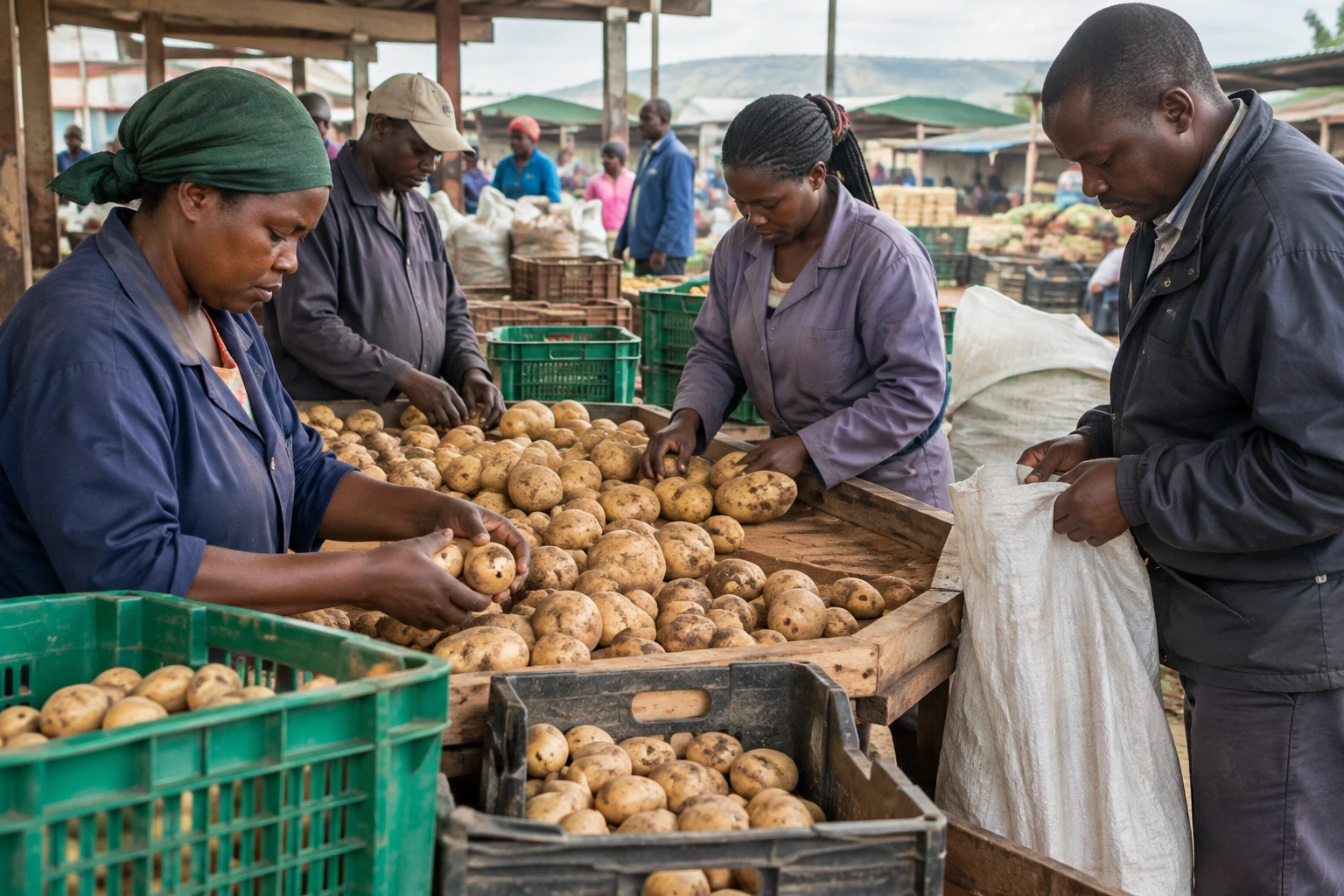
For a potato grower, the harvest begins long before planting. It first depends on healthy seeds, available at the right time and at an affordable price. In Kenya and Tanzania, this remains a major constraint. Two professional organisations now want to coordinate their efforts across the border.
A regional sector held back by seed shortages
Kenya and Tanzania are neighbours in East Africa and members of the East African Community (EAC), an integration bloc that facilitates economic cooperation among its member states. Potatoes feed local markets there and support activities ranging from production to processing. But neither country yet has a sufficient supply of certified seeds, meaning seeds checked for quality and plant health.
In Kenya, annual demand for certified seeds is estimated at about 150,000 tonnes. Production stands at around 24,000 tonnes, according to figures presented in August 2026 by the Kenya Agricultural and Livestock Research Organization (KALRO). The shortfall is therefore about 126,000 tonnes. With formal supply insufficient, some growers reuse tubers from previous harvests. This practice can increase the risk of disease and limit yields.
In Tanzania, certified seeds are estimated to cover only about 2% of national needs, according to figures cited in connection with the agreement. The exact level of demand is not specified in the available information. This indicator should therefore be treated as an attributed estimate, not as an exhaustive measure.
A five-year agreement to be put into practice
On 28 October 2026, in Naivasha, Kenya, the Tanzania Potato Council and the National Potato Council of Kenya signed a five-year memorandum of understanding. The signing took place during the 13th World Potato Congress, held from 26 to 30 October in the town in Nakuru County.
The two councils plan to work on sharing seed technologies, quality standards and phytosanitary rules, which aim to prevent the spread of pests and diseases. They also want to facilitate trade and direct links between growers and markets. Preparation of the first joint work plan is due to begin in November 2026.
Abdalla Luvanda, a member of the Tanzania Potato Council’s board, presented the harmonisation of standards and the development of direct trading channels as ways to help farmers in both countries benefit from regional market opportunities. These are, however, announced objectives: the agreement alone does not guarantee a rapid increase in production or lower prices.
National investment, local obstacles
Kenya has taken several steps to strengthen seed production. In August 2026, the government commissioned the Marindas centre in Nakuru County. Under KALRO’s responsibility, the facility is intended for seed multiplication, research and grower training. Kenya News Agency reports that the site covers about 600 acres, or nearly 243 hectares, part of which will be devoted to rotational production.
At the same time, the National Potato Council and partners developed a seed roadmap for 2025-2030. The document sets out ways to expand supply and improve small-scale growers’ access to quality seeds. However, the available information does not confirm its formal adoption by the Ministry of Agriculture.
In Tanzania, reported measures include monitoring growers and structuring the seed sector. The bilateral agreement could facilitate the exchange of experience between the two countries, but certification will remain the responsibility of national institutions. The relevant authorities and organisations will therefore have to translate any convergence into procedures that can be applied in each country.
The challenges go beyond producing more. Seeds must also be transported to growing areas, their purchase financed and their availability matched to planting schedules. Large farms and growers close to distribution centres do not necessarily face the same constraints as small, remote farms. Likewise, quality seeds improve results only when accompanied by agronomic advice and access to markets.
Implementation will be the test
For Kenyan and Tanzanian growers, the issue is a practical one: gaining access to reliable planting material without depending solely on costly or irregular supply channels. Better coordination could open up markets for seed producers and bring farming organisations closer to buyers. It will nevertheless require clear rules, effective inspections and suitable transport infrastructure.
At regional level, the agreement is part of a broader question: how can agricultural products and innovations circulate while crops are protected from disease? The announced harmonisation will have to respect the certification systems of Kenya and Tanzania. It will also need to take account of the actual capacity of growers, laboratories and inspection services.
The next observable step will therefore be the content of the work plan expected from November 2026. Its priorities, those responsible for it and the resources allocated will show whether the agreement becomes an operational tool or remains a general framework. Cooperation can be assessed through concrete results: volumes of certified seeds available, growers trained, distribution times and trade effectively facilitated.
For now, the closer ties between the two councils address a shared need, but the shortfalls will not disappear through the signing of an agreement alone. Local production, national investment and the ability to get seeds to farms will determine the real impact of this cooperation.