Algeria
 Egypt
 Libya
 Morocco
 Sudan
 Tunisia
 Benin
 Burkina Faso
 Cabo Verde
 Côte d'Ivoire
 Ghana
 Guinea
 Guinea-Bissau
 Liberia
 Mali
 Mauritania
 Niger
 Nigeria
 Senegal
 Sierra Leone
 The Gambia
 Togo
 Cameroon
 Central African Republic
 Chad
 DR Congo
 Equatorial Guinea
 Gabon
 Republic of the Congo
 São Tomé and Príncipe
 Burundi
 Comoros
 Djibouti
 Eritrea
 Ethiopia
 Madagascar
 Malawi
 Mauritius
 Mozambique
 Rwanda
 Seychelles
 Somalia
 South Sudan
 Tanzania
 Uganda
 Angola
 Botswana
 Eswatini
 Lesotho
 Namibia
 South Africa
 Zambia
 Zimbabwe
A partnership taking a new direction
In Nairobi, the debate is no longer merely diplomatic. It concerns how Kenya intends to produce, train and export in the future. When a country seeks to move from development aid to investment, technology and skills transfer, it is really talking about skilled jobs, local value chains and economic sovereignty. It is against this backdrop that Kenya has put South Korea back at the heart of its transformation strategy.
The relationship between the two countries is not starting from scratch. It is rooted in longstanding cooperation, marked by training, technical support and several major projects. But Nairobi now wants to anchor it in a more ambitious approach: further industrialising the Kenyan economy by drawing on a partner that itself turned the international aid it received after the war into a foundation for industrialisation, innovation and exports. This perspective also reflects the current direction of Kenyan diplomacy, which is seeking to link its foreign commitments to national priorities for growth and job creation.
What Nairobi and Seoul are already putting in place
The most visible sign is at Konza Technopolis, south of Nairobi. This smart city project brings together several ambitions: digital infrastructure, a data centre, digital media and advanced research. The Kenyan government estimates that Konza could eventually contribute 2% of the country’s gross domestic product. This target was reaffirmed by the ministry responsible for digital technologies, which presents Konza as a driver of growth and industrialisation.
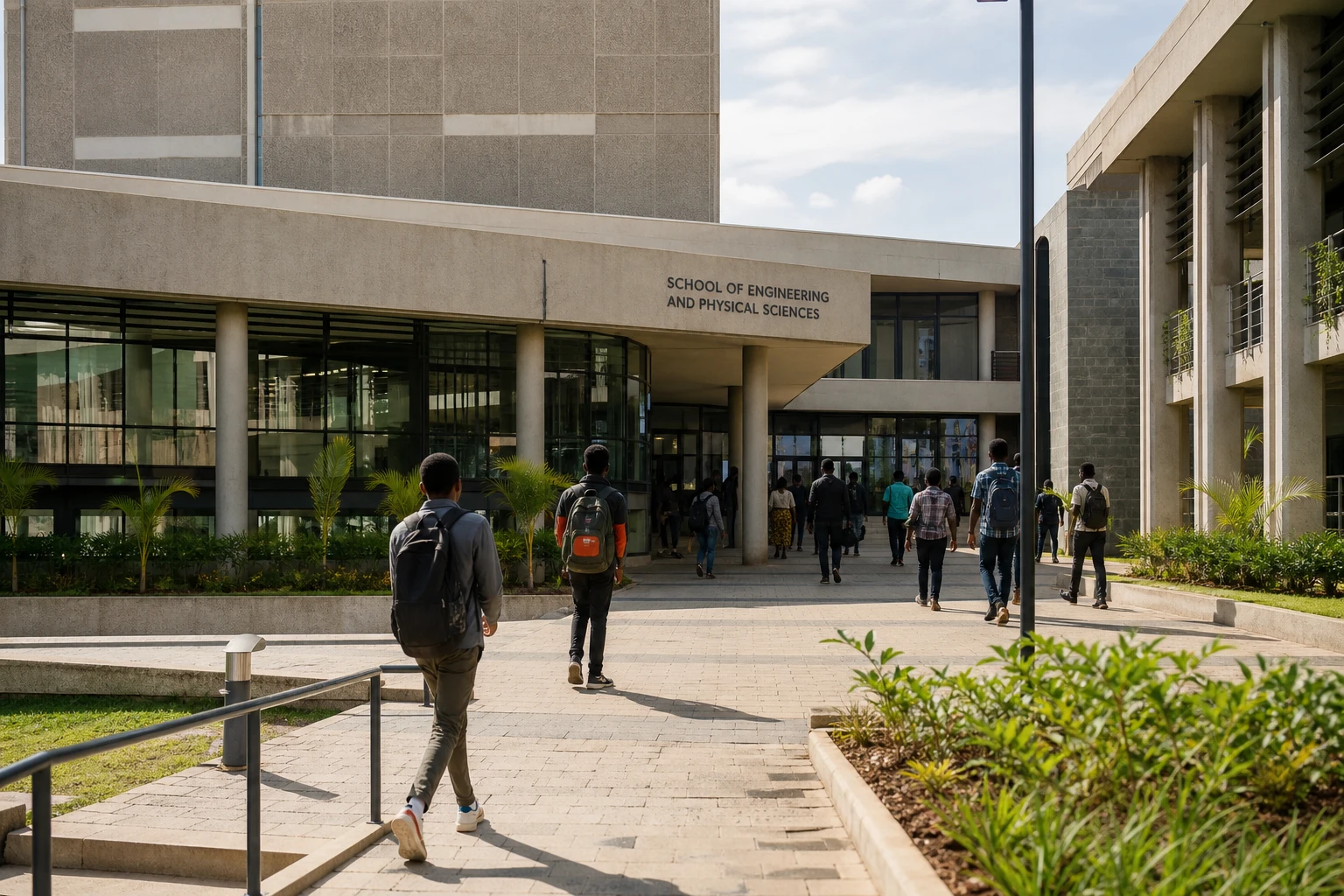
At the heart of the site, the Kenya Advanced Institute of Science and Technology, or Kenya-AIST, plays a strategic role. The institution is modelled on South Korea’s KAIST, a global benchmark in science and engineering. Kenya-AIST received its charter on 14 May 2026 at State House, Nairobi. Its status as a chartered institution gives it a firmer basis for recruitment, teaching and research. Above all, it is expected to train a new generation of engineers, researchers and innovators able to support the upgrading of Kenyan industry.
The project is not merely for show. Kenya-AIST plans postgraduate and applied research programmes, with a clear purpose: to develop skills that serve the real economy. The Kenyan parliament had considered the charter bill in spring 2026, a sign that the initiative has entered the regular institutional process. In a country where demand for skilled jobs far exceeds supply, this link between universities, industry and innovation matters more than general announcements.
Cooperation is also advancing at the political level. In June 2026, Kenya took part in the first Korea-Africa foreign ministers’ meeting in Seoul. The 2024 Korea-Africa Summit had already put digital transformation, smart infrastructure, science and technology at the centre of the dialogue. Seoul also announced its intention to expand its official development assistance and cooperation instruments with Africa.
Why this shift matters for Kenya’s economy
For Nairobi, the challenge is easy to state but difficult to meet: ensuring international cooperation does not stop at funding infrastructure or training without having a lasting effect on local production. The real test will be Kenya’s ability to foster companies, subcontractors, laboratories and services capable of absorbing imported technology and turning it into local added value. This is where the relationship with Seoul becomes significant: South Korea built its industrial strength through sustained investment in education, research, skills and innovation.
Musalia Mudavadi placed this ambition in the domestic debate about the country’s future beyond Vision 2030. This nationwide discussion is intended to define Kenya’s next phase of development. The message is clear: external partnerships must now align with the needs of an economy seeking to move from consuming technology to producing some of it, and then adapting it locally.
But this transition will not benefit everyone equally. In the capital and in areas already connected to digital networks, the gains may emerge sooner: service-sector jobs, start-ups, subcontracting and applied research. In rural regions or counties further from Nairobi, the impact will depend on the actual spread of skills, access to electricity, broadband, finance and markets. Without these connections, the technopole risks remaining a bright enclave, useful but insufficiently connected to the rest of the economy. This view aligns with Kenya’s own priorities, which also emphasise regional integration through the East African Community, the country’s natural economic space.
A regional perspective beyond Kenya
The Kenyan case resonates more widely across East Africa. Several countries in the region are seeking partnerships capable of upgrading their university systems, digital administrations and industrial base. Rwanda, too, has developed technology cooperation with Seoul. Egypt, for its part, is pursuing a strategy of investment and technology transfers. The trend is therefore continental: the aim is no longer simply to obtain aid, but to negotiate access to expertise, equipment and production networks.
This shift also reflects broader discussions between South Korea and Africa, where technology value chains, training and digital transformation have gained prominence since the 2024 summit. For Kenya, the challenge is to turn this diplomatic opening into lasting industrial capacity. If Konza, Kenya-AIST and future South Korean investments work together, Nairobi could strengthen its position as East Africa’s technology hub. If they remain fragmented, the country will have gained infrastructure, but not yet the leap in production it is seeking.