Algeria
 Egypt
 Libya
 Morocco
 Sudan
 Tunisia
 Benin
 Burkina Faso
 Cabo Verde
 Côte d'Ivoire
 Ghana
 Guinea
 Guinea-Bissau
 Liberia
 Mali
 Mauritania
 Niger
 Nigeria
 Senegal
 Sierra Leone
 The Gambia
 Togo
 Cameroon
 Central African Republic
 Chad
 DR Congo
 Equatorial Guinea
 Gabon
 Republic of the Congo
 São Tomé and Príncipe
 Burundi
 Comoros
 Djibouti
 Eritrea
 Ethiopia
 Madagascar
 Malawi
 Mauritius
 Mozambique
 Rwanda
 Seychelles
 Somalia
 South Sudan
 Tanzania
 Uganda
 Angola
 Botswana
 Eswatini
 Lesotho
 Namibia
 South Africa
 Zambia
 Zimbabwe
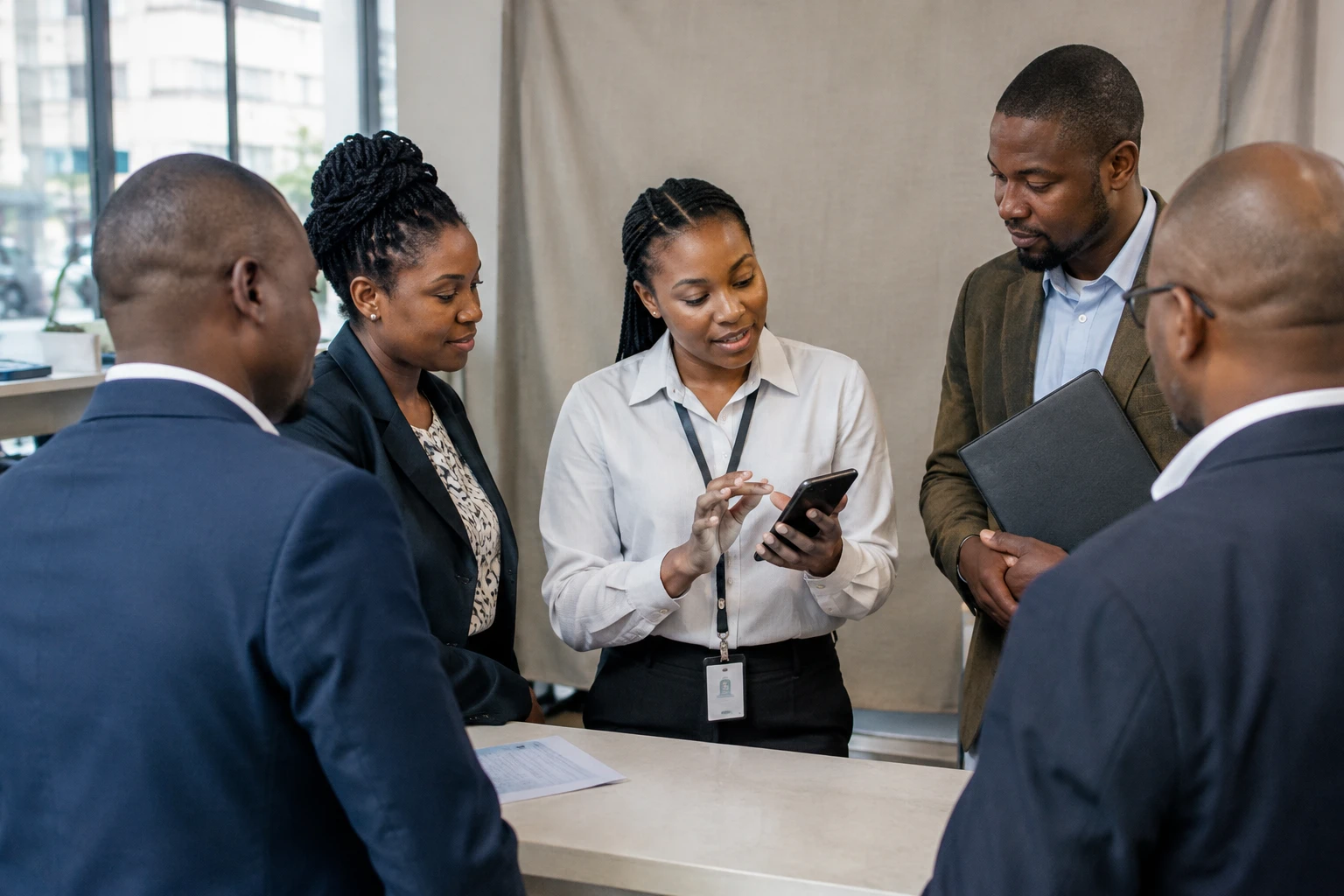
In Nairobi and Kenya’s smaller towns, smartphones do much more than make calls: they open access to mobile payments, online services and sales on social media. But when paying the full price upfront becomes too costly, phones are now paid for in small sums, day after day. This easier access comes at a price: it also turns a device into a long-term financial commitment.
The phone becomes an ongoing expense
In early November, Mogo, an equipment finance company, announced an agreement with manufacturer ZTE and its local distributor RSC. The brand’s devices are to be offered through a network of partner shops, with repayment by instalments. Two Kenyan media outlets reported the announcement on 3 November 2026.
However, the published terms do not fully agree. One account refers to a deposit starting at 100 Kenyan shillings and payments over a period of up to 12 months. Another states a deposit of 2,500 shillings, followed by daily payments of 100 shillings. In the absence of an independent, detailed contract schedule, these figures cannot be presented as a uniform offer: they may vary according to the model or financing terms. Applications are reportedly subject to checks, including the presentation of an identity document and a six-month M-Pesa statement. M-Pesa is the mobile payment service widely used in Kenya.
The Communications Authority of Kenya (CA) counted 50.2 million smartphones connected to mobile networks at the end of March 2026, compared with 48.7 million at the end of December 2025. These figures measure connected devices, not the number of distinct people who own a smartphone. Some users have several SIM cards or devices.
Digital access remains uneven
The increase in connections is taking place in a market where the cost of phones weighs more heavily on households unable to pay upfront. According to Canalys data reported by Kenyan technology outlet Techish, the average selling price of a smartphone rose from 5,955 shillings in 2019 to 18,979 in the second quarter of 2025. The increase reflects, among other things, pressure on device prices and the dwindling availability of the cheapest models.
The widespread presence of smartphones on networks does not mean that all Kenyans use mobile internet. Connections, actual usage and coverage are different indicators. Moreover, the cost of the device is only one obstacle: people must also be able to pay for data, have sufficient coverage and know how to use digital tools.
Financing can reduce the amount required upfront. It may help a woman vendor photograph her products, a craftworker communicate with clients or a small shopkeeper accept digital payments. But daily repayments can weigh on irregular incomes. The total cost, any fees, the consequences of late payment and the terms governing device lockout are therefore just as important as the low deposit advertised.
Credit as an opportunity, but also a risk
Mogo says it has helped more than 400,000 Kenyans acquire a smartphone since entering this market segment, about a year before the agreement with ZTE and RSC. The figure comes from the company and has not been independently confirmed in the sources consulted. It nevertheless points to the growth of a model in which distributors, manufacturers and finance providers seek to expand their customer base by splitting payments.
The scheme forms part of an already well-established digital ecosystem. The CA counted 53.4 million mobile money service subscriptions at the end of March 2026. A connected device can therefore be used to communicate, as well as to receive money or manage a business. However, a subscription does not necessarily correspond to a unique individual, and owning a phone does not guarantee regular access to data or safe use.
Rural areas and workers in the informal economy may benefit from paying in instalments, but their circumstances warrant particular attention. Seasonal or variable incomes can make daily payments harder to meet. By contrast, urban shops and consumers with more predictable incomes do not face the same constraints. An offer available nationwide does not therefore automatically ensure equal access.
An issue that extends beyond the Kenyan market
Kenya is a member of the East African Community (EAC), a regional bloc that brings its markets and economies closer together, among other things. The question of affordable devices also arises for its partners: access to digital services depends on networks, device prices and users’ ability to sustain their spending. Kenya’s experience illustrates a commercial response to one of these barriers, without solving the others on its own.
Across the continent, the challenge is to distinguish digital inclusion from the simple proliferation of connected devices. The partnership announcement offers an indication of how the market is trying to make smartphones accessible. What happens next will depend on the actual credit terms, their transparency and households’ ability to keep their devices without accumulating an excessive repayment burden.
Data from the Communications Authority of Kenya indicate the pace of device adoption and usage. Public information on contracts will make it possible to assess whether financing genuinely broadens access or mainly shifts costs into prolonged payments. That distinction will show whether the model strengthens Kenya’s digital inclusion over the long term.