Algeria
 Egypt
 Libya
 Morocco
 Sudan
 Tunisia
 Benin
 Burkina Faso
 Cabo Verde
 Côte d'Ivoire
 Ghana
 Guinea
 Guinea-Bissau
 Liberia
 Mali
 Mauritania
 Niger
 Nigeria
 Senegal
 Sierra Leone
 The Gambia
 Togo
 Cameroon
 Central African Republic
 Chad
 DR Congo
 Equatorial Guinea
 Gabon
 Republic of the Congo
 São Tomé and Príncipe
 Burundi
 Comoros
 Djibouti
 Eritrea
 Ethiopia
 Madagascar
 Malawi
 Mauritius
 Mozambique
 Rwanda
 Seychelles
 Somalia
 South Sudan
 Tanzania
 Uganda
 Angola
 Botswana
 Eswatini
 Lesotho
 Namibia
 South Africa
 Zambia
 Zimbabwe
A fast railway, but not a free one
In Nairobi, the debate over major infrastructure projects is no longer just about what has been built. It is also about what these assets cost Kenya’s public finances year after year. The standard-gauge railway between Mombasa and Nairobi remains one of the most visible projects of the past decade. It is also one of the most expensive to repay.
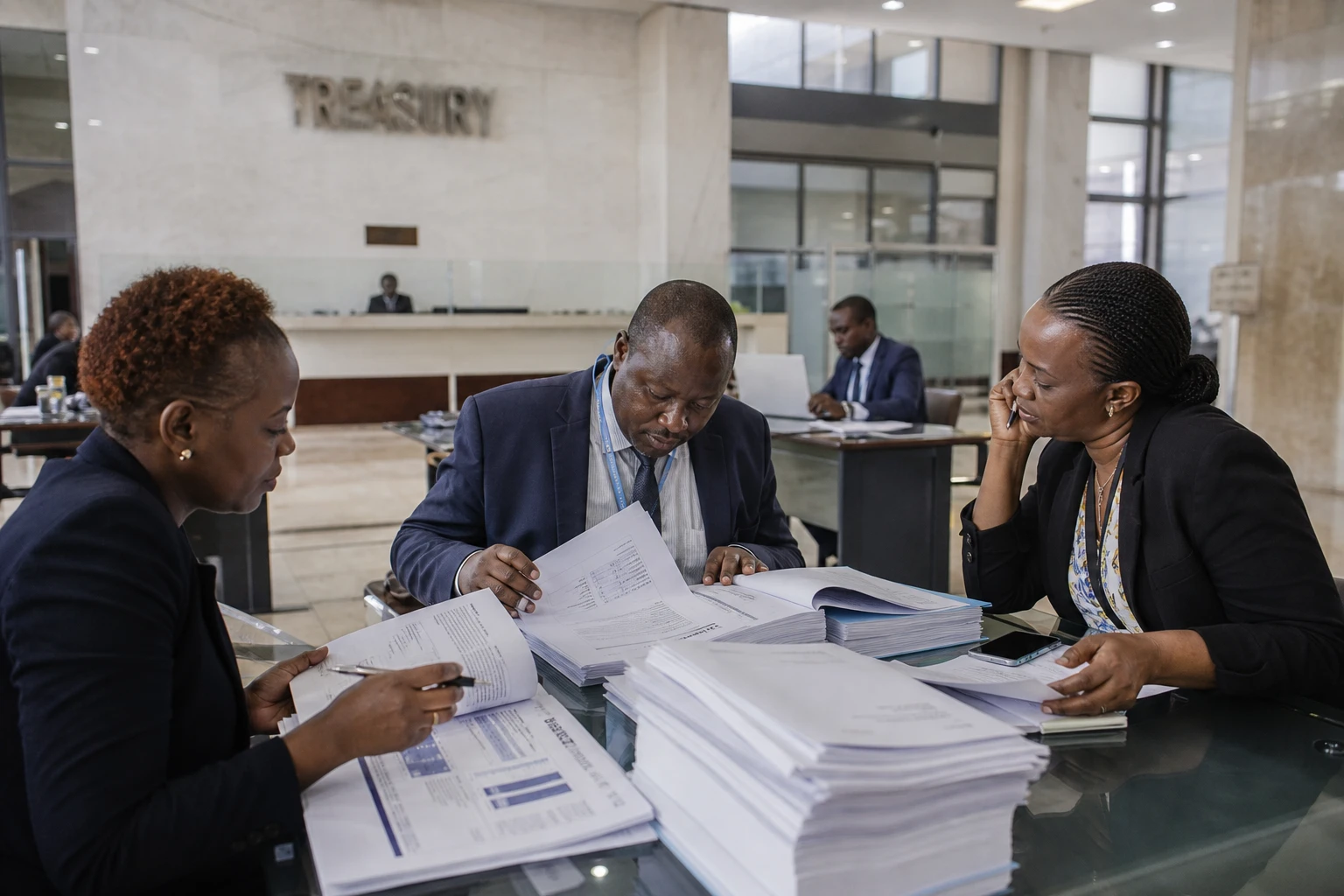
In a country where debt servicing absorbed 71.2% of ordinary revenue in the 2024/25 financial year, every project financed through borrowing is ultimately judged by its actual returns. This budgetary pressure affects not only the Treasury in Nairobi. It also weighs on decisions about roads, health, education, rail and transfers to counties.
The SGR bill in Kenya’s financial landscape
Kenya borrowed about $5.08bn from the Export-Import Bank of China to build the first phase of the SGR, which began operating in 2017 between Mombasa and Nairobi. The project was later extended to Naivasha. The official external debt register confirms that China remains a key creditor to the country, although total exposure has shifted slightly over time as a result of refinancing and repayments.
Kenyan budget documents show above all the scale of the annual burden. In the 2024/25 financial year, total debt servicing reached KSh1,722.1bn, or 71.2% of ordinary revenue. External debt servicing alone amounted to KSh580.2bn, according to the Public Debt Management Office’s dashboard. The government therefore had to devote a massive share of its revenue to repayments before it could even fund public policies.
In this context, financial relations with Beijing have political significance. In 2025, Nairobi secured an extension of repayment deadlines on several SGR-related loans to 2040, easing the schedule of payments. The renegotiation does not erase the debt. It postpones it and makes it somewhat more manageable in the short term.
The issue is all the more sensitive because the Auditor-General, in its work on Kenya Railways, flagged penalties and interest on the SGR loan that it considered avoidable. An audit reported by the Kenyan press cited KSh34.1bn in accumulated charges, including KSh5.3bn in penalties and KSh28.85bn in interest. This shows that the cost of a public project is not limited to its construction. It continues to have an impact long after the inauguration.
Between logistics performance and unequal access
The SGR is not an empty asset. Kenya Railways says the line carried 2,508,521 passengers in the financial year ended 30 June 2025, while acknowledging that the fare increase in January 2024 weighed on passenger numbers. Passenger revenue rose, but the service became more expensive for households. An economy-class ticket from Nairobi to Mombasa rose from KSh1,000 to KSh1,500, and a first-class ticket from KSh3,000 to KSh4,500.
For urban travellers, families moving between the coast and the capital, or small operators who relied on the train, this changes the equation. Rail remains more reliable and faster than road transport on some routes. But its use is becoming segmented. Those who can afford it continue to use it. Others turn to alternatives that are longer, more tiring or less safe.
On freight, the picture is mixed. Official statements highlight the volume of goods transported since the line opened. Yet the structural problem remains: without a more profitable regional extension, the Mombasa–Nairobi–Naivasha corridor is not always enough to generate the traffic needed to recoup the investment. This is where the issue extends beyond Kenya alone. The line was conceived as an artery for East Africa, with a regional role linking to Uganda and, beyond that, to the inland markets of Central Africa.
Kenya is a member of the East African Community, a bloc where cross-border infrastructure is often presented as a driver of economic integration. In practice, such projects depend on political agreements, financial guarantees and sufficient trade volumes. When one of these elements is missing, a project becomes a national burden while its regional benefits remain unrealised.
What Kenya’s case reveals about the region
The SGR case illustrates a tension that has become familiar across the continent. African states need major infrastructure to support trade, connect markets and ease logistical bottlenecks. But financing arrangements often rely on long-term external borrowing backed by future revenues that may be overly optimistic. Kenya is not an isolated case. It is one of the best-documented.
The issue also matters to the African Union and regional institutions that champion integration through corridors. A train can connect ports, capitals and industrial zones. It can also lock a budget in place if its business model is not robust. The question, then, is not whether the infrastructure is modern. It is whether it creates enough value to repay its own debt without permanently constraining the state’s room for manoeuvre.
In the short term, the next decisions will remain financial. The Kenyan authorities have already shown that they favour extending maturities, converting some loans and seeking more flexible repayment terms. In the medium term, the real question will be traffic. Without a sustained increase in freight and better regional links, the SGR will remain both a symbol of state capacity and a reminder of its constraints.