Algeria
 Egypt
 Libya
 Morocco
 Sudan
 Tunisia
 Benin
 Burkina Faso
 Cabo Verde
 Côte d'Ivoire
 Ghana
 Guinea
 Guinea-Bissau
 Liberia
 Mali
 Mauritania
 Niger
 Nigeria
 Senegal
 Sierra Leone
 The Gambia
 Togo
 Cameroon
 Central African Republic
 Chad
 DR Congo
 Equatorial Guinea
 Gabon
 Republic of the Congo
 São Tomé and Príncipe
 Burundi
 Comoros
 Djibouti
 Eritrea
 Ethiopia
 Madagascar
 Malawi
 Mauritius
 Mozambique
 Rwanda
 Seychelles
 Somalia
 South Sudan
 Tanzania
 Uganda
 Angola
 Botswana
 Eswatini
 Lesotho
 Namibia
 South Africa
 Zambia
 Zimbabwe
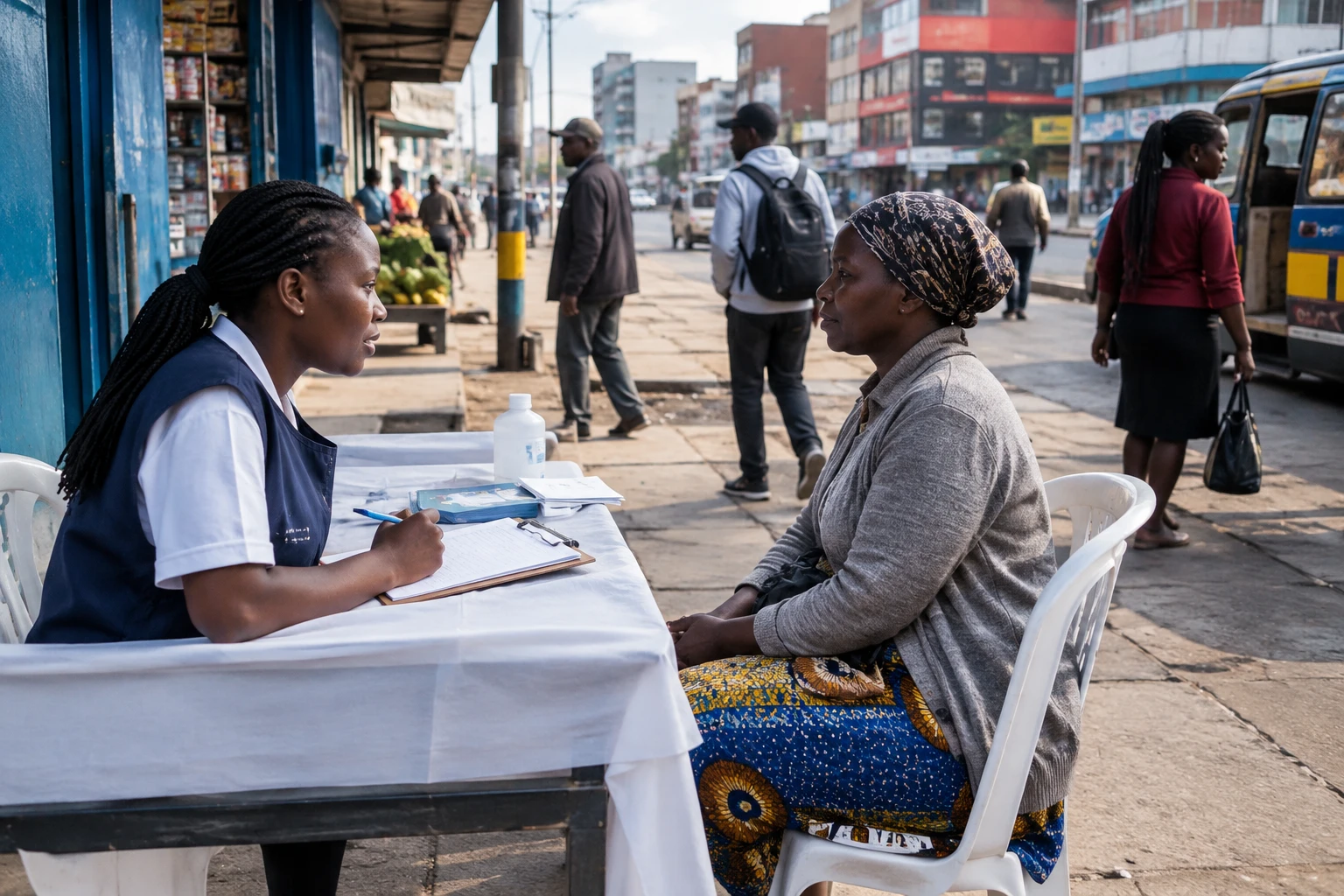
The second confirmed Ebola case in Kenya was detected in a man who was already in quarantine. This is significant: it shows that contact tracing helped identify the infection, but also serves as a reminder that exposure can lead to transmission despite initial control measures.
Case detected during quarantine
Kenya’s Ministry of Health announced on 14 October 2026 that a 39-year-old man, a close relative of the first patient, had tested positive for the Bundibugyo virus. He developed symptoms the previous day while under daily monitoring. The news was reported by the Kenya News Agency and the Associated Press.
The first patient, a 40-year-old Kenyan who had returned from the Democratic Republic of the Congo (DRC), died in Nairobi on 5 October. The authorities linked the two infections. At the time the second case was announced, they said they had found no community transmission. This assessment reflects the information available at that date: tracing and monitoring must continue to confirm it.
According to figures released by the Kenyan authorities and reported by the Associated Press, about 128 people had been identified as contacts of the first patient. Of these, 108 were in quarantine. Five contacts were outside Kenya, and the countries concerned had been informed. The second patient was among those being monitored.
Centralised response, with no restrictions announced
Nairobi has stepped up screening at the country’s points of entry and asked travellers to declare their health status and recent movements. Transport operators must report suspected cases. The authorities are also urging the public to contact health services if symptoms develop. The system aims to identify infections quickly and trace people who have been exposed.
Two public health laws adopted in 2026 provide the framework for Kenya’s response to the disease. They set out national coordination of surveillance, alerts, testing and contact tracing. The Ministry of Health statement describes this approach as a way to bring teams and information together under a single coordinating body.
The government had not announced any general restrictions on travel, gatherings or trade in the information available when the second case was confirmed. This approach seeks to contain the health risk without disrupting daily activity. It is particularly important in a country where travel between counties, public transport and regional trade play a major role in economic life.
Compliance with health rules also matters for effective tracing. But sanctions alone are not enough to secure early reporting: people who have been exposed must be able to seek help without fear of being publicly identified or ostracised. The Kenya Medical Association has warned against stigmatising travellers and people tested for the virus. If fear of judgement delays the reporting of symptoms, the system loses some of its effectiveness.
A crisis that extends beyond Kenya’s borders
The initial case is part of the virus’s regional spread. The patient had lived in the DRC before returning to Kenya via Uganda. This route highlights a practical challenge for the authorities: health borders do not align with daily travel, people seeking care in a neighbouring country or air links between major cities.
The Bundibugyo strain is a form of the Ebola virus. The disease is transmitted mainly through direct contact with the bodily fluids of a sick or deceased person. Identifying the strain matters for the medical response and surveillance. The World Health Organization (WHO) confirmed the first imported case in Kenya and is supporting control efforts. The Kenyan ministry says samples were analysed by national reference laboratories and the Kenya Medical Research Institute.
The authorities’ task now is to maintain regular monitoring of contacts, ensure cases are isolated and treated, and quickly detect any chain of transmission. In Nairobi, hospitals and laboratories account for a large share of specialist capacity. In border counties and rural areas, rapid access to testing and the flow of information are just as important.
Kenya is a member of the East African Community (EAC), which brings together several countries linked by significant movements of people and goods. The response therefore cannot rely solely on checks at Nairobi’s airports. Coordination with neighbouring countries, local health systems and regional surveillance networks remains essential, particularly to ensure authorities are informed promptly when a contact crosses a border.
Next indicator: how contact tracing progresses
The detection of the second case in quarantine is evidence that monitoring worked for this person. It is not, on its own, enough to conclude that the risk has passed. The development of symptoms among contacts, test results and the identification of any unrecorded exposures will provide a clearer picture of the situation.
Kenya therefore faces a twofold challenge: to maintain strong vigilance without turning travellers or patients into suspects, and to ensure information flows quickly across national borders. For the EAC and other regional actors, the quality of this coordination will be as important as checks at border posts in preventing wider spread.