Algeria
 Egypt
 Libya
 Morocco
 Sudan
 Tunisia
 Benin
 Burkina Faso
 Cabo Verde
 Côte d'Ivoire
 Ghana
 Guinea
 Guinea-Bissau
 Liberia
 Mali
 Mauritania
 Niger
 Nigeria
 Senegal
 Sierra Leone
 The Gambia
 Togo
 Cameroon
 Central African Republic
 Chad
 DR Congo
 Equatorial Guinea
 Gabon
 Republic of the Congo
 São Tomé and Príncipe
 Burundi
 Comoros
 Djibouti
 Eritrea
 Ethiopia
 Madagascar
 Malawi
 Mauritius
 Mozambique
 Rwanda
 Seychelles
 Somalia
 South Sudan
 Tanzania
 Uganda
 Angola
 Botswana
 Eswatini
 Lesotho
 Namibia
 South Africa
 Zambia
 Zimbabwe
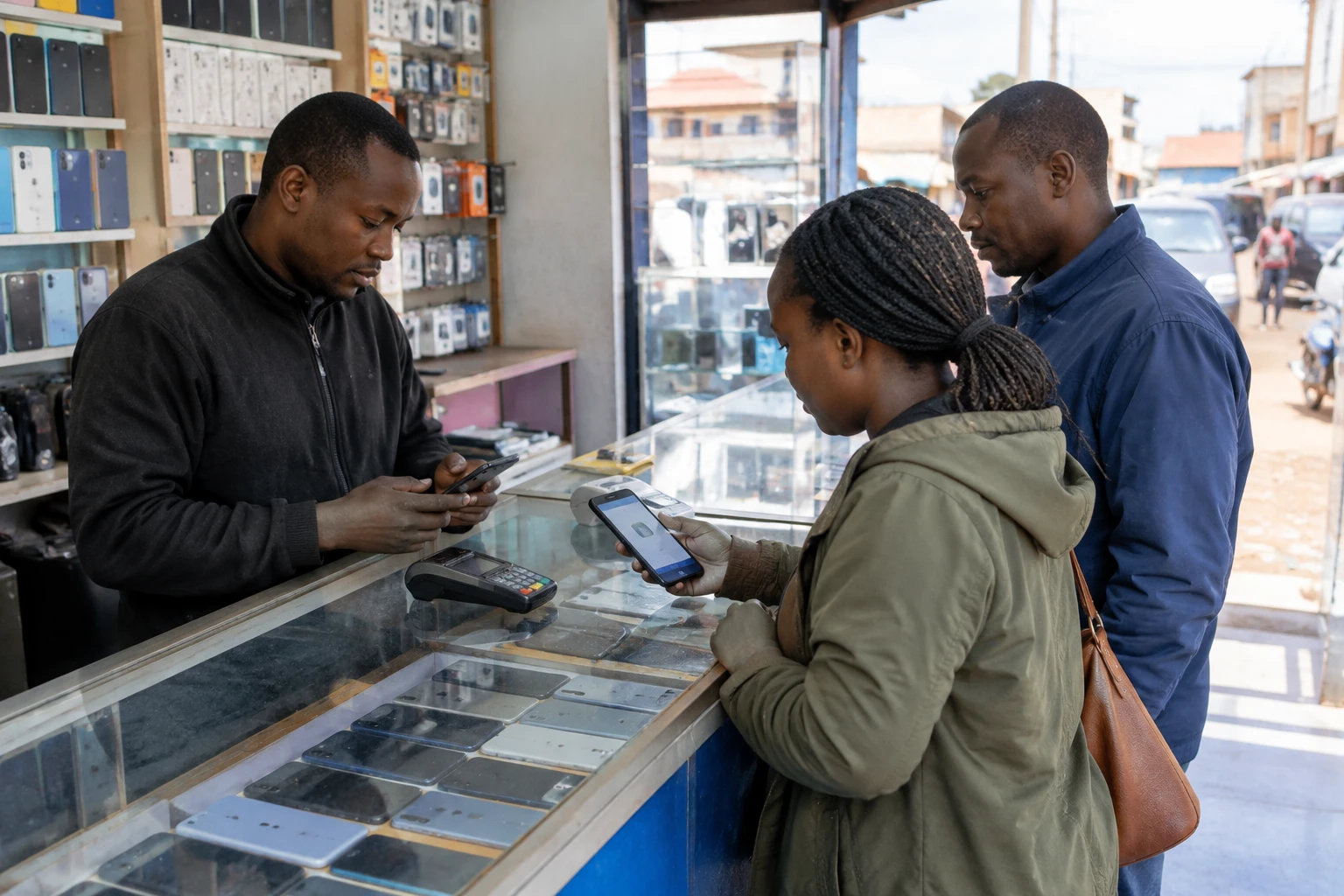
In Kenya, the price of a phone is not determined only in the shop. It also shapes access to mobile payments, public services and some jobs. The promise to ease taxes on these devices therefore affects both household budgets and the role of digital technology in the economy.
But the presidential announcement has not yet lowered the bill. It opens a new regulatory and political stage, as tax rules on phones have recently changed and their implementation has prompted debate.
An announcement in Eldoret, four measures unveiled
On 20 October 2026, during national Mashujaa Day celebrations in Eldoret, in Uasin Gishu County, President William Ruto unveiled four measures intended, according to his government, to ease certain expenses and widen access to economic opportunities. The holiday honours Kenya’s heroes and heroines. This year marked its 63rd observance.
The measure concerning phones provides for the abolition of the 25% levy applied to the devices concerned. Ruto said, however, that legal and customs procedures would be necessary. In other words, the rate will not disappear simply because of the announcement: the authorities still need to specify the timetable, the relevant legislation and the arrangements for implementation. The Kenyan Ministry of Foreign Affairs also presented the four measures as government announcements.
The three other proposals concern payroll tax, land transactions and youth employment. The government wants to exempt from PAYE — income tax deducted at source by the employer — employees earning no more than 32,333 Kenyan shillings a month. It also proposes abolishing stamp duty on certain land transactions worth up to one million shillings. Finally, it plans to expand the national internship programme to 50,000 young people from January 2027.
Phone taxation still under debate
The 25% rate is part of a recent tax reform. During parliamentary debates on the Finance Bill 2026, the Treasury had argued for simplifying phone levies: replacing several taxes with a single excise duty, payable when a device is activated on a network. A government explanatory document presented this formula as a way to reduce the overall burden compared with the previous combination of levies. The proposal nevertheless raised questions about how it would work in practice.
The debate is therefore about the design of the tax as much as its level. A levy collected on activation involves telecoms operators and the authorities responsible for collecting it. Rules must also be set for devices already in use, phones imported by individuals and locally assembled devices. Discussions in the National Assembly illustrated these difficulties, particularly around tracking devices and collection. The 20 October announcement appears to signal a political change of direction, but forthcoming legislation will have to establish precisely what will be abolished.
This distinction matters to consumers. A tax cut can reduce the cost of imports, but it does not guarantee an equivalent drop in shop prices. The outcome will depend on how importers and retailers pass on the savings, as well as on other charges and levies that remain. The cheapest phones could be particularly important for lower-income households, small traders and workers who use their devices to access digital services.
From phones to income and employment
Mobile payments play a major role in everyday transactions in Kenya. A phone can be used to transfer money, pay for purchases or access online services. It is also used for distance learning, selling products and looking for work. It was this link between devices and economic activity that the president highlighted in Eldoret, describing the phone as a tool for work and access to education.
The effects of a tax cut would not be the same for everyone, however. In cities, buyers often have access to more outlets and competing offers. In rural areas, network access, device availability and the cost of data also remain decisive. For formal businesses, a simpler tax rule can make importing and selling easier. For small retailers and consumers who buy second-hand or individually imported devices, clarity about the new rules will be just as important as the announced rate.
The measures on wages and internships address other concerns. The proposed PAYE exemption would increase the disposable income of the employees concerned, if it is adopted and implemented. Expanding internships could give more young people their first work experience, but its impact will depend on the number of placements actually created, their pay and the quality of support provided. The announcement sets a target of 50,000 beneficiaries; it is not yet a record of jobs delivered.
Parliament, the next decisive step
The reach of these announcements will now depend on their translation into enforceable measures. Tax and customs authorities will have to publish the arrangements; Parliament will need to act where legislative changes are required. The Business Daily Africa report confirms that the proposals were presented as a package of measures to be implemented, not as cuts that have already taken effect.
For Kenyans, the immediate question is when the rules will change and how prices will evolve. For the government, the challenge is to reconcile a lower cost of living, access to digital services and public revenue. The issue concerns more than phone buyers: it also affects operators, retailers, government agencies and young people looking for work.
Across East Africa, where digital trade and mobile services increasingly cross borders, consistency in tax rules is becoming a regional issue. Kenya, a member of the East African Community, will have to clarify how its reform fits with its economic integration goals. The next milestone to watch is the publication of the legislation and procedures: that, more than the speech, will show when households can genuinely feel the effects.