Algeria
 Egypt
 Libya
 Morocco
 Sudan
 Tunisia
 Benin
 Burkina Faso
 Cabo Verde
 Côte d'Ivoire
 Ghana
 Guinea
 Guinea-Bissau
 Liberia
 Mali
 Mauritania
 Niger
 Nigeria
 Senegal
 Sierra Leone
 The Gambia
 Togo
 Cameroon
 Central African Republic
 Chad
 DR Congo
 Equatorial Guinea
 Gabon
 Republic of the Congo
 São Tomé and Príncipe
 Burundi
 Comoros
 Djibouti
 Eritrea
 Ethiopia
 Madagascar
 Malawi
 Mauritius
 Mozambique
 Rwanda
 Seychelles
 Somalia
 South Sudan
 Tanzania
 Uganda
 Angola
 Botswana
 Eswatini
 Lesotho
 Namibia
 South Africa
 Zambia
 Zimbabwe
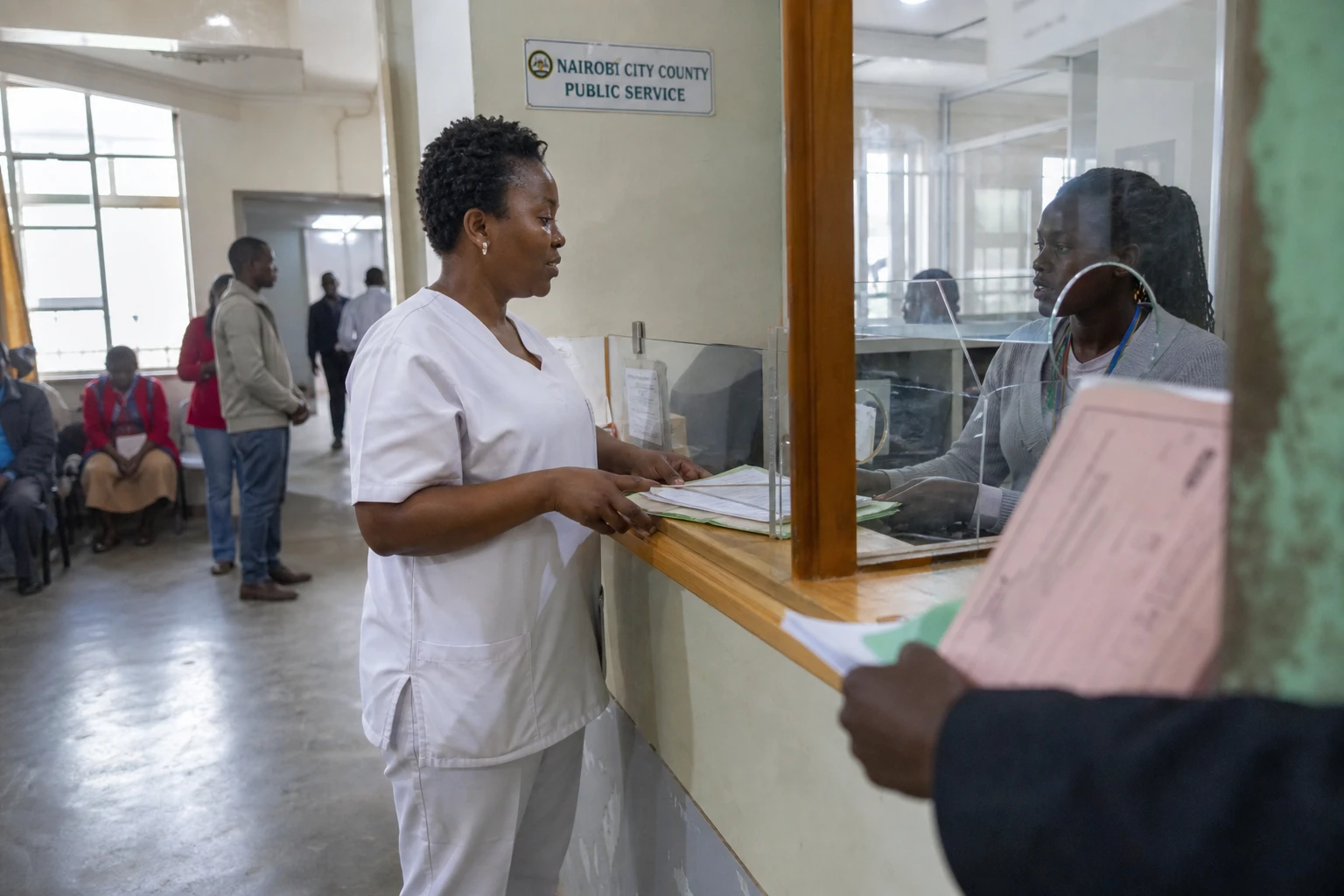
In Nairobi, the standoff goes beyond wages
In the health sector, a strike is measured not only by the number of placards in the street. It can be seen in waiting rooms, county dispensaries and the daily lives of families seeking basic care, which is becoming harder to find. In Kenya, the nurses’ mobilisation has exposed a wider problem: the place of health workers in a decentralised system where the national government, counties and regulatory bodies must move in step.
On Thursday 3 September 2026, Kenyan nurses demonstrated again in Nairobi to demand implementation of their 2017 collective agreement. The protest, which took the form of a march to the offices of the Salaries and Remuneration Commission, is part of a nationwide strike now in its tenth week. Protesters are demanding, among other things, the letter of no objection they say is needed to register the agreement with the Employment and Labour Relations Court.
An old dispute reignited by institutional machinery
The heart of the dispute dates back to the 2017 collective agreement, which was intended to govern nurses’ pay and benefits. In Kenya, the Salaries and Remuneration Commission, or SRC, advises public authorities on the pay and benefits of state employees. Its role remains central, as the body says it issues a letter of no objection to facilitate the registration of a collective agreement when the budgetary and administrative parameters are considered compatible.
This structure explains part of the deadlock. Unions say they have reached agreement in principle on the framework of the text, but are demanding that it move through the institutional process. Governors, for their part, who have administered county health services since devolution, argue that the matter cannot progress without clear decisions on funding. The Employment and Labour Relations Court has previously examined disputes related to the same 2017 agreement, showing that the case is neither new nor isolated.
Nurses keep up the pressure as counties remain under strain
The Nairobi march was led by Seth Panyako, secretary-general of the Kenya National Union of Nurses and Midwives. Protesters carried slogans demanding implementation of the 2017 agreement and declaring that no return to work was possible without a formal deal. The union is also pressing on other unresolved issues, such as career progression and the position of health workers employed under the universal health coverage programme, often known as UHC workers.
At the same time, political pressure is mounting. The president of the National Nurses Association of Kenya has warned that public health facilities are severely affected. This is an important signal, because the impact of such a strike is not uniform. In Nairobi, large hospitals can absorb some of the shock through emergency arrangements. In several counties, however, the partial closure of basic services is leading to treatment delays, postponed tests and a heavier burden on patients’ relatives.
The authorities are seeking to ease the pressure. On 1 September 2026, Vice-President Kithure Kindiki called for a swift resolution to the dispute, highlighting patients’ suffering. Meanwhile, Kenya’s intergovernmental structure continues to shape the issue: the Council of Governors is defending the counties’ position, while the national government, the SRC and the labour courts must contend with budgetary and legal constraints.
What the dispute says about Kenya, and beyond
The strike highlights a very concrete continental issue: public health depends as much on doctors and nurses as on the rules governing their pay, mobility and contractual security. In Kenya, devolution has strengthened counties’ responsibility for the day-to-day management of services, but it has also created more points of deadlock when pay scales and collective agreements must be approved at several levels. It is a technical issue, but one that directly affects the quality of care.
Across East Africa, the case is also of interest to the East African Community, whose member states face similar challenges: health financing, the exodus of skilled personnel, pressure on public budgets and high social expectations. For Nairobi, the immediate challenge is to end the stand-off between unions, counties and the regulator before the dispute becomes entrenched in hospitals. For other regional capitals, the Kenyan case is a reminder that health reform depends not only on opening facilities, but also on the stability of the teams that keep them running.