Algeria
 Egypt
 Libya
 Morocco
 Sudan
 Tunisia
 Benin
 Burkina Faso
 Cabo Verde
 Côte d'Ivoire
 Ghana
 Guinea
 Guinea-Bissau
 Liberia
 Mali
 Mauritania
 Niger
 Nigeria
 Senegal
 Sierra Leone
 The Gambia
 Togo
 Cameroon
 Central African Republic
 Chad
 DR Congo
 Equatorial Guinea
 Gabon
 Republic of the Congo
 São Tomé and Príncipe
 Burundi
 Comoros
 Djibouti
 Eritrea
 Ethiopia
 Madagascar
 Malawi
 Mauritius
 Mozambique
 Rwanda
 Seychelles
 Somalia
 South Sudan
 Tanzania
 Uganda
 Angola
 Botswana
 Eswatini
 Lesotho
 Namibia
 South Africa
 Zambia
 Zimbabwe
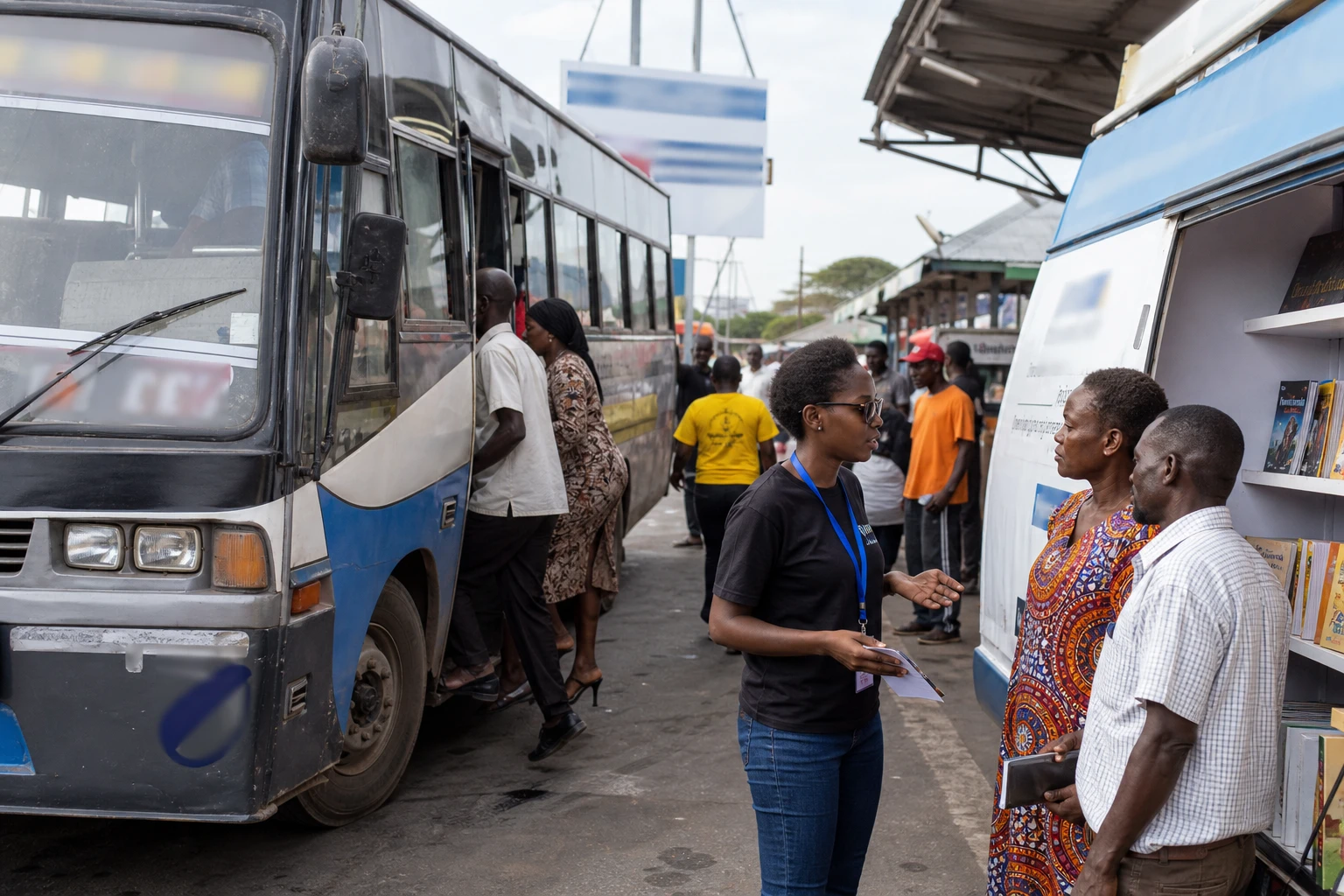
From Nairobi to remote counties, artificial intelligence is entering everyday spaces for learning. In Kenya, public libraries are set to host free training to help citizens understand the technology and use it in their work.
Libraries at the heart of a new initiative
Intel, the Kenya National Library Service (KNLS) and the Mandela AI Hub Foundation have entered into a partnership to widen access to basic artificial intelligence skills. The agreement was announced in September 2026 on the sidelines of the 81st United Nations General Assembly in New York.
The programme is based on two courses. The first, called “AI for Citizens”, introduces the general public to the essential concepts of artificial intelligence. It is designed to explain common uses, the limitations of tools and precautions relating to personal data.
The second, “AI for Current Workforce”, is aimed at people in employment. It is intended to help them integrate digital tools into their professional activities, without restricting training to engineers or IT specialists.
Courses will be offered online. They will also be supplemented by sessions in KNLS libraries, the public body responsible for developing reading, information and documentation services in Kenya. Mobile units are expected to reach communities beyond major urban centres.
The Mandela AI Hub Foundation will contribute to outreach, training and participant engagement. The initiative therefore seeks to bring artificial intelligence closer to students, self-employed workers, small businesses and people who are far from conventional training channels.
Responding to growing demand
The choice of libraries is significant. These institutions already play a role in providing access to information and can serve as training centres in areas where technology hubs remain scarce. KNLS also says it works with local authorities and communities to strengthen information and digital services.
Demand is expected to grow. The report Africa’s Development Dynamics 2024, published by the African Union Commission and the Organisation for Economic Co-operation and Development, estimates that 32.7 million jobs in Kenya will require digital skills by 2030.
Of these, 21.4 million jobs are projected to require basic digital skills. About 9.6 million will require an intermediate level. Advanced skills will be needed for 1.7 million jobs. These figures therefore describe needs beyond those of technology companies. They also concern public administration, agriculture, financial services, healthcare, commerce and self-employment.
Intel says its Digital Readiness programmes had already trained more than 7 million people in 29 countries by June 2024. The company later announced that the figure had risen to 8 million people by the end of 2024. These figures come from Intel’s own reporting and do not constitute an independent measure of the training’s actual impact.
The challenge of access beyond Nairobi
Kenya has a dynamic digital ecosystem, particularly visible in Nairobi. The capital is home to start-ups, incubators, universities and companies specialising in digital services. Yet this concentration does not reflect access conditions across the country as a whole.
In rural areas and outlying neighbourhoods, training still depends on the quality of internet connections, the price of devices and the availability of trainers. Mobile units can reduce some of these barriers. They will not remove them on their own.
Language will also be crucial. Training designed mainly in English may exclude some audiences. The use of Kiswahili, local languages and examples drawn from everyday activities could make the tools easier to adopt. This issue is also reflected in discussions by the East African Community on the place of Kiswahili in the age of artificial intelligence.
The content will also need to go beyond simply introducing applications. Citizens will need to understand potential system errors, bias in data, the risk of scams and the terms governing the use of generated content. This critical understanding will be as important as technical proficiency.
An initiative within the national strategy
The partnership comes as Kenya seeks to shape its public policy on artificial intelligence. The Ministry of Information, Communications and the Digital Economy launched the Kenya National Artificial Intelligence Strategy 2025-2030 in Nairobi in March 2025.
The roadmap presents artificial intelligence as a driver of public services, economic growth and innovation. It also emphasises infrastructure, data, research, skills, governance and ethics. Training in libraries can contribute to the component focused on talent development.
The programme’s reach will nevertheless depend on its implementation. It will be necessary to measure participant numbers, their distribution across counties, the regularity of sessions and learners’ ability to use these skills after training. The announced free access is an important starting point, but it does not guarantee sustained access to equipment and connectivity.
An issue that extends beyond Kenya’s borders
Kenya is moving forward in a regional environment where East African countries are seeking to align their digital policies. In May 2026, the East African Community held a workshop to validate its regional artificial intelligence strategy.
The organisation is also preparing shared mechanisms to support research, infrastructure, innovation and skills. This approach could encourage the exchange of knowledge between Kenya, Uganda, Tanzania, Rwanda, Burundi, the Democratic Republic of the Congo, South Sudan and the community’s other members.
In this context, the library network offers a practical way to democratise access to learning. But its effectiveness will be measured above all in areas far from Nairobi, among women, young people, informal economy workers and small businesses.
The next step will therefore be less about announcing the partnership than putting it into practice. Kenya will need to show whether its libraries can become regular gateways to digital skills, rather than mere testing grounds. This experience will be closely watched in East Africa, where countries are seeking to build their own capacity in artificial intelligence.