Algeria
 Egypt
 Libya
 Morocco
 Sudan
 Tunisia
 Benin
 Burkina Faso
 Cabo Verde
 Côte d'Ivoire
 Ghana
 Guinea
 Guinea-Bissau
 Liberia
 Mali
 Mauritania
 Niger
 Nigeria
 Senegal
 Sierra Leone
 The Gambia
 Togo
 Cameroon
 Central African Republic
 Chad
 DR Congo
 Equatorial Guinea
 Gabon
 Republic of the Congo
 São Tomé and Príncipe
 Burundi
 Comoros
 Djibouti
 Eritrea
 Ethiopia
 Madagascar
 Malawi
 Mauritius
 Mozambique
 Rwanda
 Seychelles
 Somalia
 South Sudan
 Tanzania
 Uganda
 Angola
 Botswana
 Eswatini
 Lesotho
 Namibia
 South Africa
 Zambia
 Zimbabwe
A new credit channel for Kenya’s small businesses
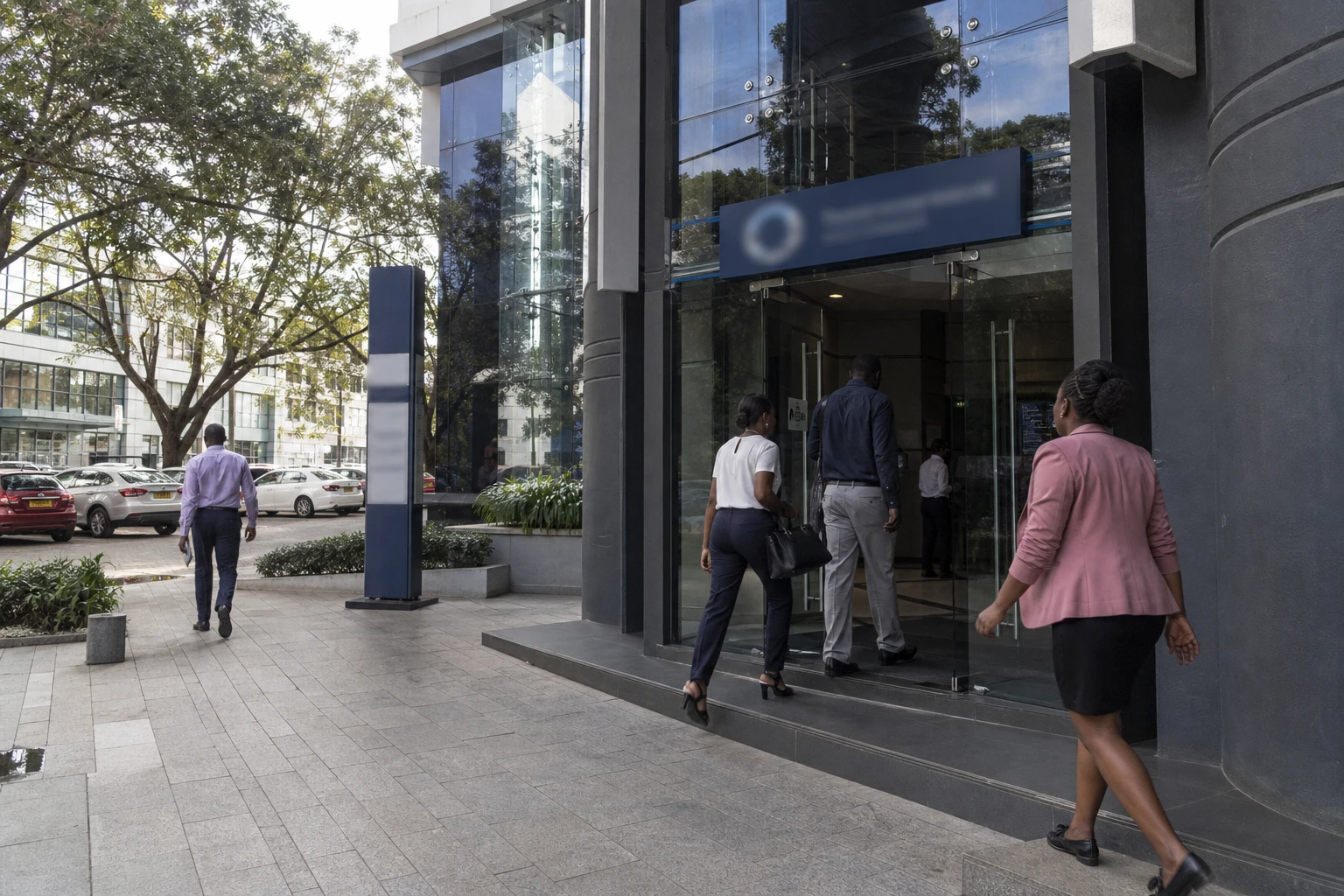
In Kenya, the debate over financing is no longer limited to the size of loans. It also concerns where they go, their cost and their ability to reach the businesses that account for most employment. Against this backdrop, a $100 million credit line for KCB Bank Kenya sends a strong signal for micro, small and medium-sized enterprises (MSMEs).
The deal was announced as the European Bank for Reconstruction and Development’s (EBRD) first commitment in Kenya’s financial sector. The loan is intended to fund “inclusive and green” financing for MSMEs, with a stated priority for businesses owned or led by women and young people.
The timing is significant. Since July 2025, Kenya has been a shareholder in the EBRD, a step that paved the way for a more active presence by the European institution in the country. This development gives the KCB deal significance beyond a simple banking agreement. For Nairobi, it establishes a new kind of development partnership focused on the private sector.
KCB, women entrepreneurs and the green transition
KCB Bank Kenya has structured this financing around three pillars. First, lending to MSMEs. Second, a dedicated facility for businesses owned or managed by women and young people. Finally, a share directed towards green investments, particularly technologies related to the climate transition. The EBRD also plans to provide technical support, including training and advice to strengthen the bank’s capacity to finance green projects.
The Kenyan bank is already developing this market segment. Its Female-Led and Made Enterprises (FLME) programme aims to support women-owned businesses with financial and non-financial services. KCB says it has set aside 250 billion Kenyan shillings over five years for this segment, and its offering includes unsecured loans of up to 10 million shillings.
On climate, KCB says it has already issued 48.8 billion shillings in green loans and received approval in March 2026 for $96.9 million for green projects involving MSMEs and farmers. The new agreement with the EBRD is therefore part of an existing trajectory, as the bank seeks to link credit, climate and inclusion.
KCB’s management describes the funding as a way to broaden access to affordable finance for SMEs that still struggle to persuade banks to lend to them. The argument is a familiar one, but it remains central in Kenya, where collateral requirements, volatile incomes and the weight of the informal sector continue to hinder access to formal credit.
A changing credit market that remains selective
Figures published by the Kenya Bankers Association give a sense of the scale of the trend. In 2025, the country’s leading banks provided 326.5 billion Kenyan shillings in financing to MSMEs, a level reported to be more than 117% above the sector’s annual target of 150 billion. Equity Bank topped the ranking, ahead of KCB Bank Kenya and Co-operative Bank of Kenya.
This is an important signal for the Kenyan economy. MSMEs form the backbone of the productive economy, in cities and counties alike. They underpin retail, services, food processing, transport and part of the informal economy. When banks increase their exposure to this segment, they are not just financing balance sheets. They are also supporting jobs, local value chains and more stable incomes.
But access to credit is not the only issue. The cost of borrowing, the quality of follow-up, flexible terms and adaptation to the realities of small businesses all remain crucial. This is where the technical assistance announced by the EBRD takes on significance. It can help improve risk assessment, especially for green projects or businesses with limited access to banking.
At the same time, Kenya’s banking sector is seeking to show that it can support growth without focusing solely on large companies. The Kenya Bankers Association’s establishment of the Centre for Sustainable Finance and Enterprise Development in September 2025 was already a step in that direction. The loan to KCB confirms that sustainable finance and small-business financing are now converging in the sector’s strategy.
What the deal says about Kenya and East Africa
For Kenya, the stakes extend beyond KCB. The country wants to remain East Africa’s most developed financial centre, within the East African Community (EAC), which is seeking to deepen market integration and the movement of capital. In this context, directing credit towards MSMEs is a practical test of the financial system’s ability to support the real economy.
For the region, the message is broader. The EBRD, traditionally active in Europe and some neighbouring economies, is strengthening its presence in Nairobi at a time when other lenders, including the African Development Bank, are also stepping up support for inclusive and green growth in Kenya. This convergence shows that the country has become a focus of both competition and co-operation around climate finance and SMEs.
The next stage will be measured in practical terms: how many small businesses actually gain access to credit, in which counties, on what terms, and with what effect on employment among women and young people. That is where the value of this loan will be measured. Not by its headline amount, but by its ability to channel financing into the workshops, shops, farms and services that sustain the Kenyan economy.