Algeria
 Egypt
 Libya
 Morocco
 Sudan
 Tunisia
 Benin
 Burkina Faso
 Cabo Verde
 Côte d'Ivoire
 Ghana
 Guinea
 Guinea-Bissau
 Liberia
 Mali
 Mauritania
 Niger
 Nigeria
 Senegal
 Sierra Leone
 The Gambia
 Togo
 Cameroon
 Central African Republic
 Chad
 DR Congo
 Equatorial Guinea
 Gabon
 Republic of the Congo
 São Tomé and Príncipe
 Burundi
 Comoros
 Djibouti
 Eritrea
 Ethiopia
 Madagascar
 Malawi
 Mauritius
 Mozambique
 Rwanda
 Seychelles
 Somalia
 South Sudan
 Tanzania
 Uganda
 Angola
 Botswana
 Eswatini
 Lesotho
 Namibia
 South Africa
 Zambia
 Zimbabwe
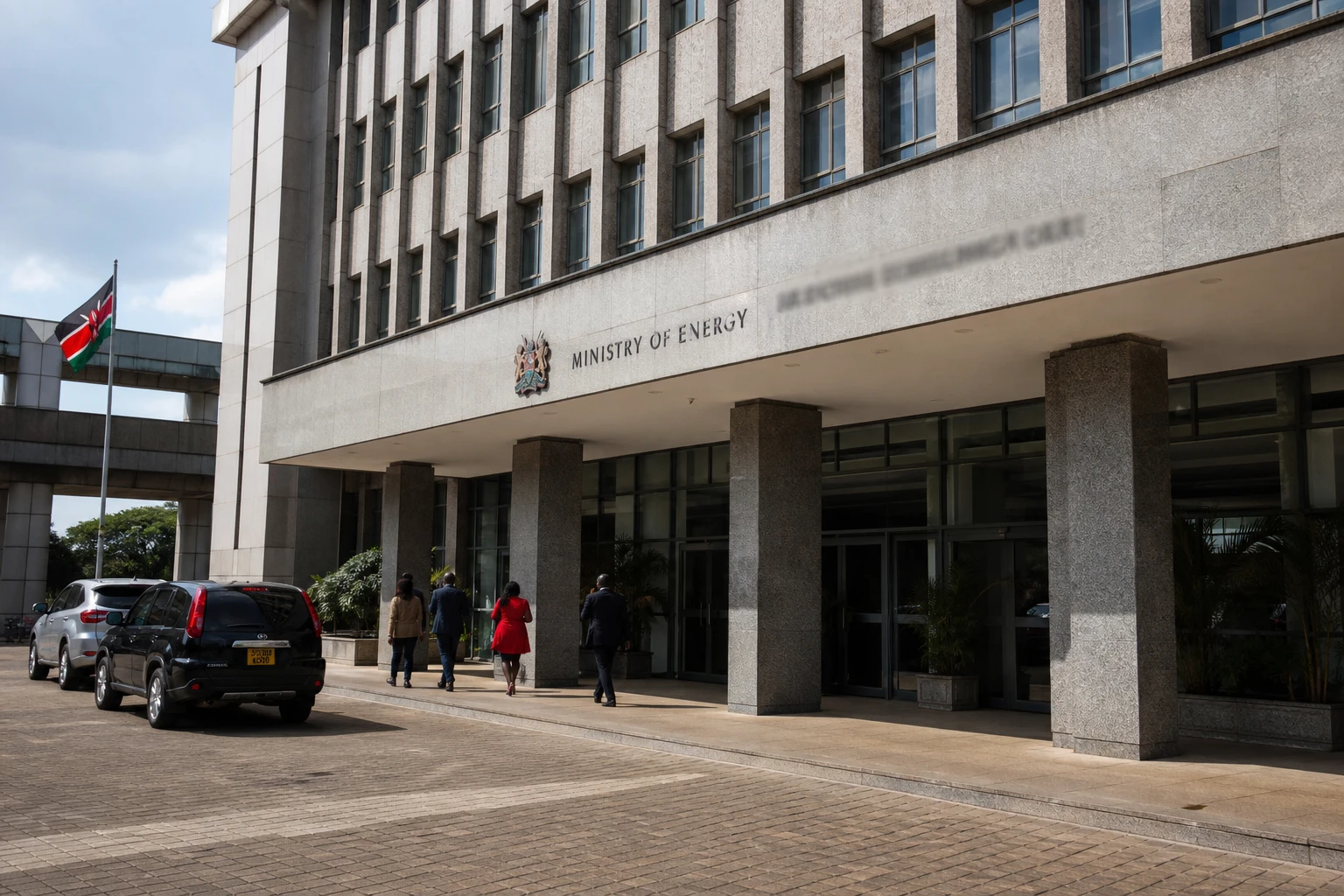
Green power does not always mean lower bills
In Kenya, the energy debate is no longer just about producing more. It is also about a very practical question for households, SMEs and industry from Nairobi to Mombasa: how can a grid largely powered by clean sources be maintained without electricity tariffs stifling economic activity? The country already has a remarkable energy base, but the cost per kilowatt-hour remains at the heart of political and economic tensions.
This question is all the more sensitive because Kenya has become a benchmark in East Africa and beyond, thanks to geothermal power from the Rift Valley, hydropower and wind energy. In a regional context marked by growing electricity needs and still uneven interconnections within the East African Community, Nairobi has a real advantage: the ability to produce mostly low-carbon energy. But this leadership does not remove financing constraints or debates over power purchase agreements.
Pipeline expanded to 5,500 MW, with nuclear as a strategic option
KenGen, the state-owned electricity producer, has revised its renewables development target from 1,500 MW to 5,500 MW. The announcement was made in Nairobi on 29 June 2026, with a plan combining several technologies: an additional 700 MW of hydropower, new geothermal projects and 2,000 MW of nuclear power as part of the expansion plan. The company says it supplies about 60% of Kenya’s electricity and that more than 93% of its installed capacity already comes from renewable sources.
In substance, the 5,500 MW figure signals more than technical ambition. It also reveals an industrial strategy. Kenya is seeking to secure its supply to support urbanisation, the electrification of energy use and the growth of more energy-intensive sectors, such as agricultural processing, digital services and some light industries. The International Energy Agency notes that the country is well placed to retain its role as a regional leader in renewable energy production while strengthening the reliability of its system.
The inclusion of nuclear power in this plan calls for a cautious reading. It does not mean Kenya is abandoning its green profile. Rather, it shows that the authorities and KenGen want to diversify generation sources over the long term, as demand grows and balancing the grid becomes more complex. In a country that has for years relied on geothermal power as a comparative advantage, adding a nuclear option reflects a desire for energy strength, as well as a search for stable baseload power to complement variable renewables.
The real issue: clean, but expensive, electricity
Kenya’s paradox is well known. The country already generates 93% of its electricity from renewable sources, making it one of the continent’s most advanced cases of power-sector decarbonisation. Yet consumers and lawmakers complain that bills are too high. The problem therefore does not lie solely with power plants. It also lies in contracts, fixed costs, transmission, taxes and the structure of the market.
Kenyan MPs renewed pressure on the government in July 2026 to cut wholesale electricity prices. Parliament’s energy committee asked the Minister for Energy and Petroleum to draw up, within 12 months, a framework for renegotiating power purchase agreements with major producers. The stated aim is clear: secure better terms without undermining security of supply or investor confidence.
This issue is central for urban households, but also for small informal operators, workshops, traders and businesses that make up the country’s real economy. When electricity costs remain high, the impact is quickly felt in prices, margins and competitiveness. Conversely, a sustained reduction can support local manufacturing, ease household expenses and reduce reliance on diesel generators, which remain costly and polluting. This is where Kenya’s debate goes beyond climate alone. It becomes a question of purchasing power and productivity.
What Kenya is telling East Africa
The Kenyan case has immediate regional significance. Within the East African Community, states are seeking to expand access to electricity, strengthen interconnections and make better use of local resources. Kenya shows that an African country can build a largely renewable power system on a large scale. But it also highlights that a clean energy mix does not automatically guarantee affordable prices. The energy transition is therefore measured not only by the share of renewables. It is also judged by the final bill, the quality of the grid and access to financing.
For East Africa’s neighbours, the signal is important. Kenya’s geothermal sector remains an inspiration for countries that also have volcanic or hydropower potential. The Kenyan model shows that a state can attract investment, build a powerful public company and retain a leading role in the regional transition. But it also reveals the limits of a system in which legacy contracts, grid costs and the need for new capacity weigh on the final price paid by consumers.
What happens next will depend on several trade-offs. The government will have to decide on renegotiating supply agreements, KenGen will have to clarify the timetable for its new projects, and the authorities will need to determine how to balance capacity expansion, budgetary discipline and lower tariffs. Kenya thus remains an African laboratory for the power transition: advanced on climate, ambitious on industry, but still facing the decisive question of affordability.