Algeria
 Egypt
 Libya
 Morocco
 Sudan
 Tunisia
 Benin
 Burkina Faso
 Cabo Verde
 Côte d'Ivoire
 Ghana
 Guinea
 Guinea-Bissau
 Liberia
 Mali
 Mauritania
 Niger
 Nigeria
 Senegal
 Sierra Leone
 The Gambia
 Togo
 Cameroon
 Central African Republic
 Chad
 DR Congo
 Equatorial Guinea
 Gabon
 Republic of the Congo
 São Tomé and Príncipe
 Comoros
 Djibouti
 Eritrea
 Ethiopia
 Kenya
 Madagascar
 Malawi
 Mauritius
 Mozambique
 Rwanda
 Seychelles
 Somalia
 South Sudan
 Tanzania
 Uganda
 Angola
 Botswana
 Eswatini
 Lesotho
 Namibia
 South Africa
 Zambia
 Zimbabwe
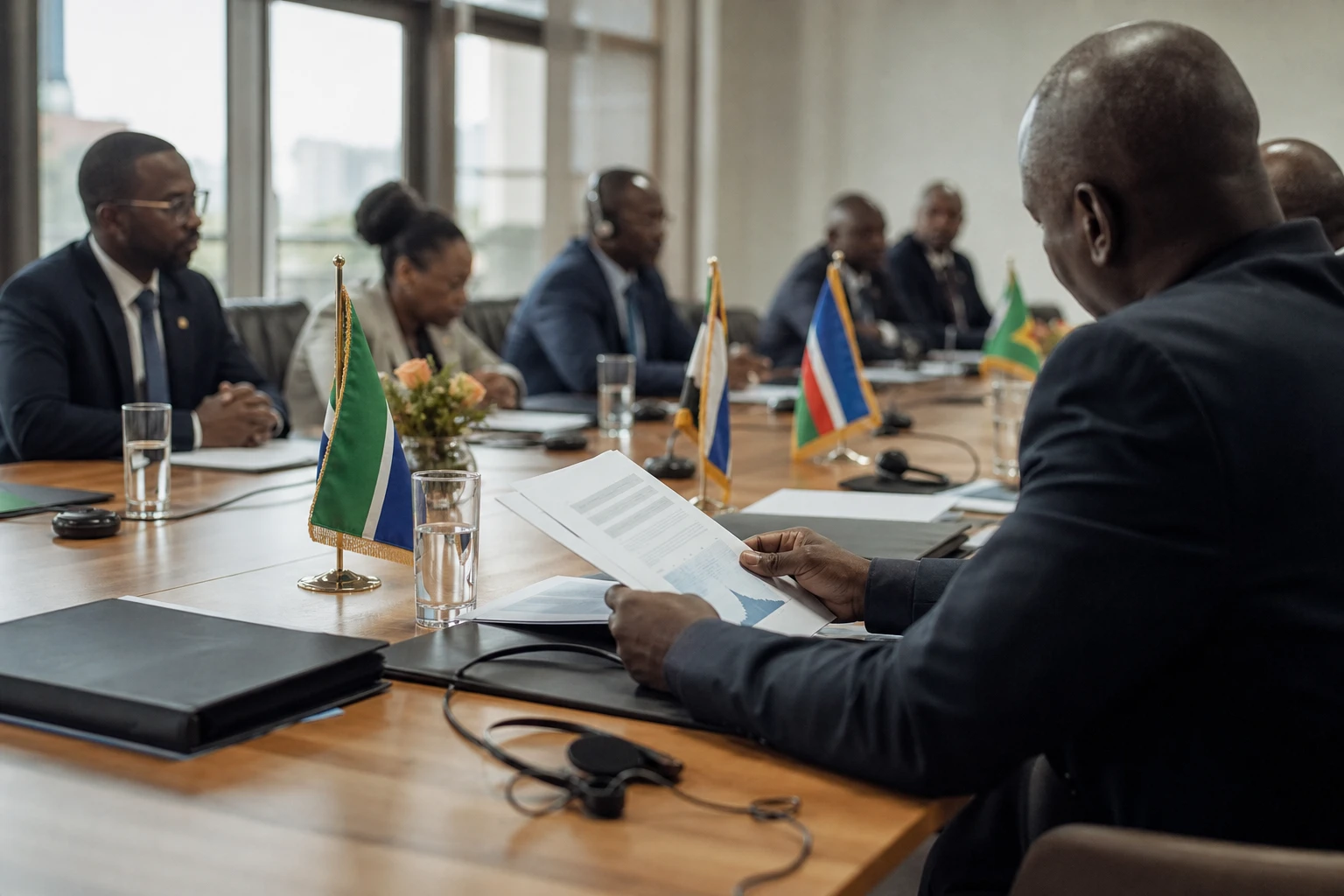
When economic regulation reaches neighbourhood life
In Nairobi, a decision taken at the highest level of government can turn into tangible fear within hours. For many Burundians living in the Kenyan capital, the question is no longer merely administrative. It has become simple and urgent: stay or leave. On 8 September 2026, dozens of Burundians flocked to their embassy to request travel documents after Nairobi announced a crackdown on certain small businesses run by foreigners.
The issue goes beyond the case of Burundians alone. It touches the heart of East Africa’s integration model, in which the East African Community, or EAC, promises the free movement of people and professional mobility among its partners, while leaving states room to regulate economic activity and public security. Kenya, the region’s largest economy, has long attracted traders, employees and entrepreneurs from Burundi, Uganda, Rwanda, Tanzania, South Sudan and the DRC.
What Nairobi decided, and why the effect was immediate
According to information corroborated by several international media outlets and regional authorities, Kenyan President William Ruto asked in early September 2026 for small businesses operated by foreigners without valid papers to cease trading. The government then announced a 90-day period for the foreign nationals concerned to regularise their status, in relation to work permits, business licences and administrative registration.
It was in this context that a queue formed outside the Burundi embassy in Nairobi’s Kilimani neighbourhood. Burundians came to request travel passes, some with suitcases, others with bags and paper files. Accounts of threats, assaults or looting reported by some of them have not been independently verified by the media cited, but they help explain the panic that followed the president’s remarks.
Burundi’s Ministry of Foreign Affairs responded swiftly. It said it was monitoring the situation of its nationals in Kenya and referred to cases of abuse and discrimination. Kenyan diplomacy, for its part, sought to correct the initial interpretation of the president’s message. Korir Sing’Oei, principal secretary at Kenya’s Ministry of Foreign Affairs, assured the Burundi embassy that the police would protect the areas identified and that the initiative was also intended to establish who was living in Kenya, where, and under what status.
Burundi also confirmed that it was preparing buses and that its embassy in Nairobi would issue free travel passes to those wishing to return. This diplomatic response shows that the issue is not only about security; it is also consular, social and regional. It affects families, traders, informal workers, as well as the administrations responsible for monitoring mobile populations that are often poorly documented.
What the episode reveals about Kenya, Burundi and the region
For Kenya, the affair highlights a familiar but sensitive tension: protecting local trade without undermining the image of a country that has for years been presented as a regional hub open to capital, services and East African mobility. Amid pressure over the cost of living, anger among small traders and debate about employment, the Kenyan government is seeking to reassert control over the informal economy. But this strategy carries a political and diplomatic cost if it fuels the perception that some foreigners are being made scapegoats.
For Burundians living in Kenya, the impact is immediate and uneven. Those working in the formal sector with valid documents may hope for clarification. Those who rely on small businesses, street vending or local services, by contrast, fear losing their income, housing and sometimes their social networks within days. In Nairobi, the economic capital, this pressure is felt more quickly than in rural areas. In the urban economy, an administrative check can be enough to upend lives that are already precarious.
The issue also shows that the EAC is more than a treaty on paper. Free movement exists, but its implementation is uneven and relies on national controls and permits that are often costly or poorly understood. Experience shows that, in the region, the movement of people is advancing faster than the effective recognition of economic rights. When a state tightens the rules, the most vulnerable workers are the first to be exposed.
At continental level, the signal is significant. The African Union has for years championed the idea of a more integrated Africa, and the African Continental Free Trade Area, or AfCFTA, presupposes a smoother flow of goods, services and, eventually, entrepreneurs. If regional capitals multiply unilateral restrictions under domestic pressure, African integration risks remaining selective: open to capital, closed to small players. The credibility of the continent’s integration project is partly at stake here.
What happens next will depend on how Nairobi implements its regularisation window, and on the EAC’s ability to prevent this kind of crisis from turning into lasting tension between partners. Burundi, Kenya and the region’s other states have every interest in treating this as an issue of public order, labour rights and human dignity. Not simply as a surge of fear.