Algeria
 Egypt
 Libya
 Morocco
 Sudan
 Tunisia
 Benin
 Burkina Faso
 Cabo Verde
 Côte d'Ivoire
 Ghana
 Guinea
 Guinea-Bissau
 Liberia
 Mali
 Mauritania
 Niger
 Nigeria
 Senegal
 Sierra Leone
 The Gambia
 Togo
 Cameroon
 Central African Republic
 Chad
 DR Congo
 Equatorial Guinea
 Gabon
 Republic of the Congo
 São Tomé and Príncipe
 Burundi
 Comoros
 Djibouti
 Eritrea
 Ethiopia
 Madagascar
 Malawi
 Mauritius
 Mozambique
 Rwanda
 Seychelles
 Somalia
 South Sudan
 Tanzania
 Uganda
 Angola
 Botswana
 Eswatini
 Lesotho
 Namibia
 South Africa
 Zambia
 Zimbabwe
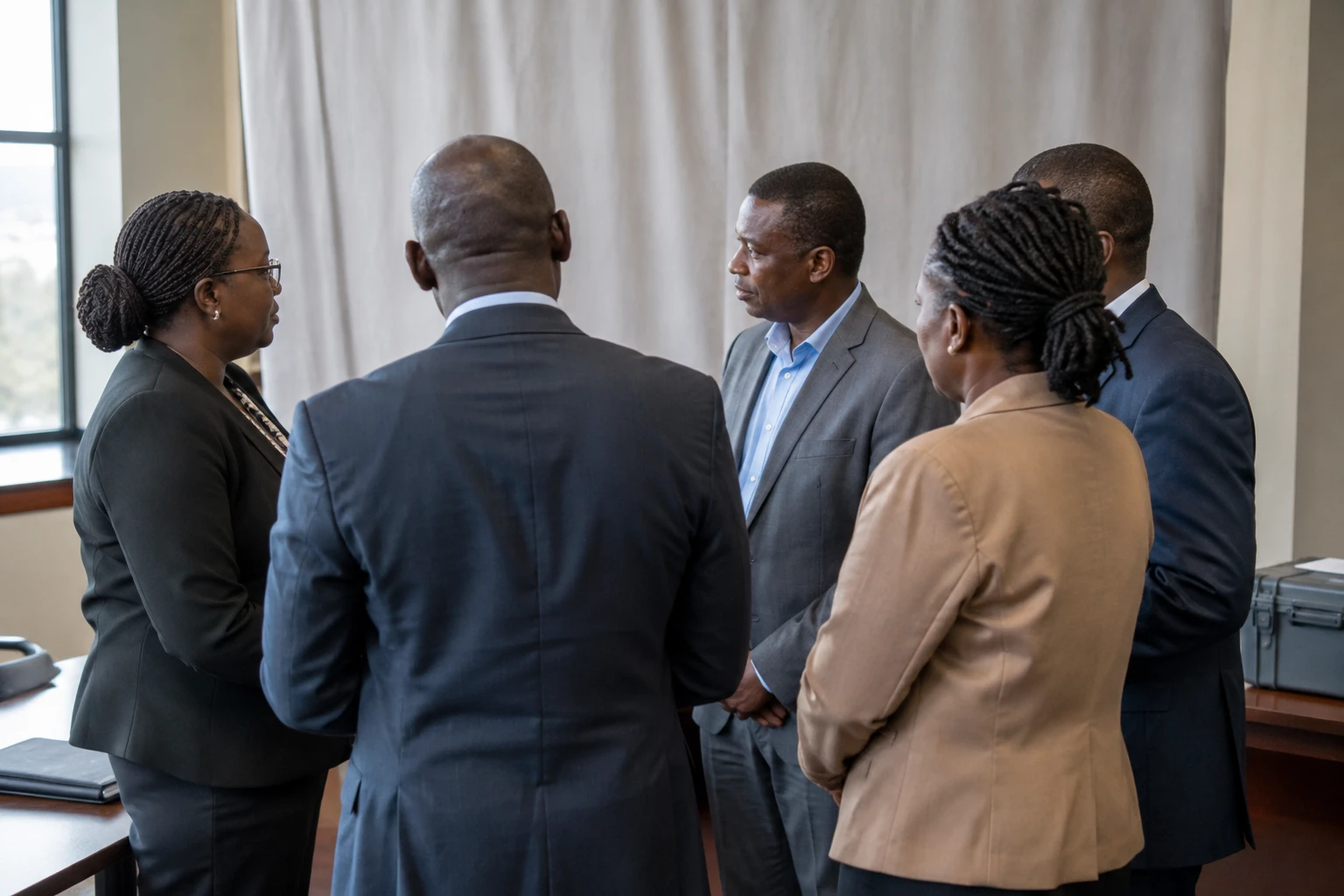
A travel advisory can affect movement and economic activity far beyond those directly exposed to a disease. In Kenya, the US alert comes as authorities seek to contain a chain of infections linked to an imported case, while maintaining exchanges with neighbouring countries.
A transmission chain traced from Nairobi
The first confirmed patient had travelled from the Democratic Republic of the Congo via Uganda before arriving in Nairobi, Kenya’s capital. He died on 5 October. The World Health Organization (WHO) said Kenya notified it on 6 October 2026 of an imported case of Bundibugyo virus disease, a strain of Ebola virus.
Since then, confirmed infections have involved people linked to the initial patient. On Sunday 18 October, Kenya’s Ministry of Health announced an eighth case. The patient was a 49-year-old healthcare worker identified as a contact of the first patient. Authorities said the cases were linked to this chain and that no community transmission had been detected at that point. The WHO also reported that several secondary cases had been identified while the people were already in quarantine. The latest on Kenya’s eight confirmed cases.
The figures need to be read precisely: eight confirmed cases do not mean eight people are currently in hospital, nor that the disease is circulating widely in the country. The first patient died; authorities described the other patients as receiving care and being monitored. The numbers may change as testing and contact tracing continue.
What the US advisory means
The United States raised its travel advisory for Kenya to Level 3, “Reconsider Travel”. The State Department cites several reasons, including health risks, crime, terrorism, kidnapping, civil unrest and road safety. Ebola is therefore one factor in an advisory that is not solely about the outbreak.
A US consular advisory is a recommendation to US citizens. It is neither an international travel ban nor a comprehensive assessment of the risk in every part of Kenya. Travellers, airlines and businesses may nevertheless take it into account in their decisions. The official US travel advisory for Kenya brings together these different factors.
This distinction matters for Kenya’s economy. Nairobi is a regional centre for transport, business and services. A decline in travel can affect tourism, hotels, airlines and small businesses that depend on visitors. The consequences are unevenly distributed: formal-sector operators may be able to reorganise bookings, while workers and small businesses reliant on daily flows often have less room to manoeuvre.
The immediate health challenge is different: to isolate cases, protect healthcare workers and quickly trace people who have been exposed. The WHO says the secondary cases identified in Kenya are linked to the first patient and that the country began preparations as early as May 2026. Nearly 5,000 health professionals had received training in detection and case management, with the organisation’s support. This response capacity is an essential part of the picture, alongside the risk of transmission.
A response that crosses borders
The initial patient’s journey is a reminder that administrative borders do not follow people’s routes. Regional transmission requires coordination between Kenya, the DRC and Uganda, particularly on screening at points of entry, referring symptomatic travellers and rapidly sharing health information.
The East African Community (EAC), a regional organisation that includes Kenya, Uganda and Tanzania, announced a ministerial agreement in June to harmonise surveillance and protective measures at airports, ports and land border posts. In September, it organised specialist training in Nairobi for 120 health professionals from the eight partner states. These arrangements do not replace national resources, but they can reduce gaps in detection between countries. The EAC’s health coordination measures.
Across the continent, the challenge is to combine vigilance with continued movement. Targeted screening, trained medical teams and clear communication can help contain infections without treating an entire country as uniformly dangerous. The WHO assessed the risk as high for countries sharing a land border with the DRC, but low for the rest of the African region and globally, in its analysis of the Bundibugyo outbreak.
The next indicators to watch are the results of contact tracing in Kenya, any cases emerging with no known link to the initial chain, and the implementation of regional mechanisms. For Kenya’s authorities, the priority is to halt transmission. For its partners, it is also to maintain coordination that is fast enough to prevent regional travel from becoming a blind spot in health protection.
The WHO’s update and risk assessment on Bundibugyo virus provide the regional health context; the next official updates will show whether the chain of transmission remains contained.