Algeria
 Egypt
 Libya
 Morocco
 Sudan
 Tunisia
 Benin
 Burkina Faso
 Cabo Verde
 Côte d'Ivoire
 Ghana
 Guinea
 Guinea-Bissau
 Liberia
 Mali
 Mauritania
 Niger
 Nigeria
 Senegal
 Sierra Leone
 The Gambia
 Togo
 Cameroon
 Central African Republic
 Chad
 DR Congo
 Equatorial Guinea
 Gabon
 Republic of the Congo
 São Tomé and Príncipe
 Burundi
 Comoros
 Djibouti
 Eritrea
 Ethiopia
 Madagascar
 Malawi
 Mauritius
 Mozambique
 Rwanda
 Seychelles
 Somalia
 South Sudan
 Tanzania
 Uganda
 Angola
 Botswana
 Eswatini
 Lesotho
 Namibia
 South Africa
 Zambia
 Zimbabwe
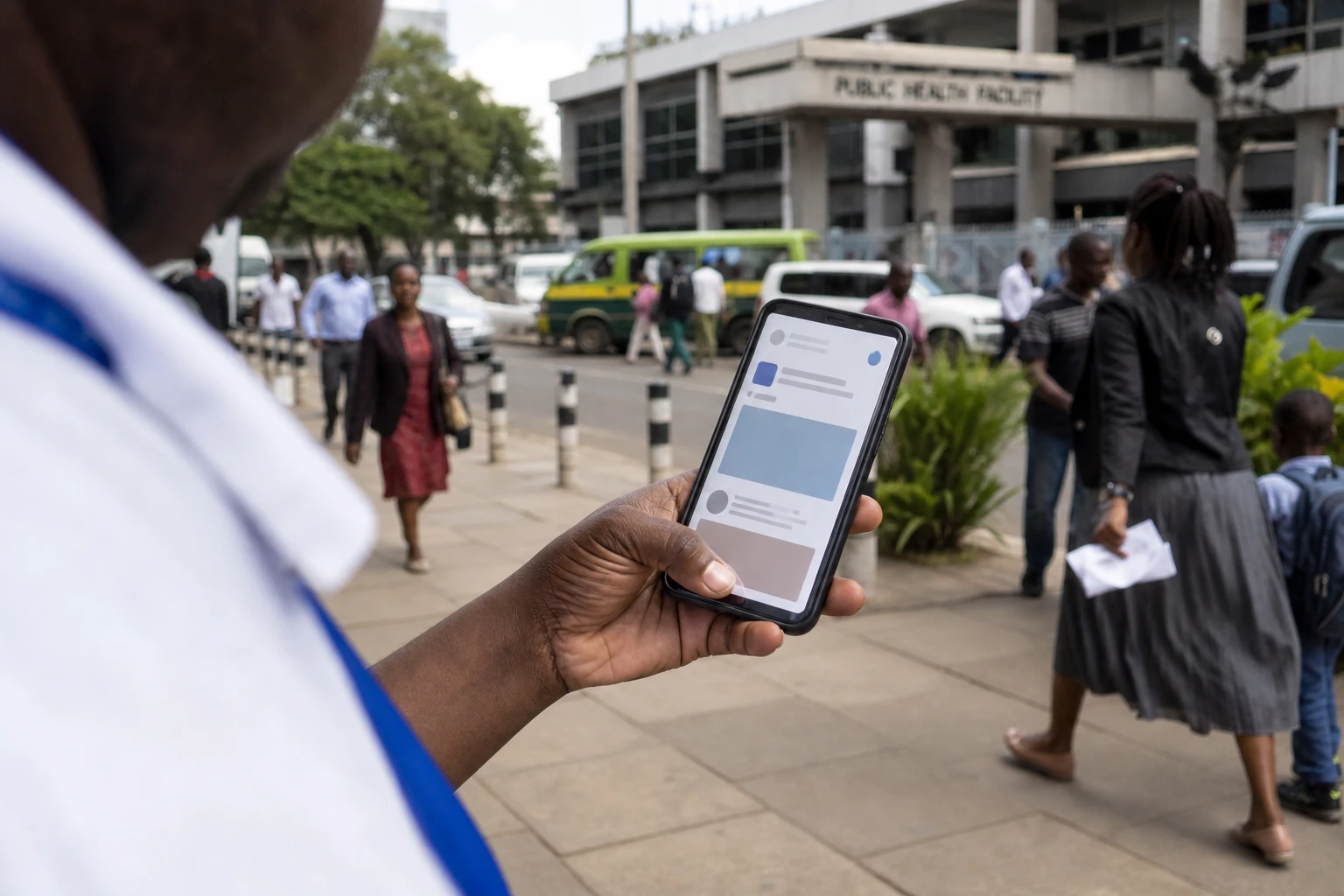
In Nairobi, the priority is no longer just to prevent the Ebola virus from arriving. It is now to stop an imported case from becoming a chain of local transmission. The death of a Kenyan national, confirmed on Monday 5 October 2026, puts Kenya’s health system up against its first Ebola case since the start of the regional outbreak.
Regional movement puts controls to the test
The patient had lived in the Democratic Republic of the Congo (DRC), a Central African country where an outbreak linked to the Bundibugyo virus is ongoing, for about seven years. He fell ill about a month before returning and received treatment at several Congolese health facilities before travelling by road to Kampala, Uganda.
His journey illustrates a familiar challenge for health authorities: administrative borders do not reflect actual patterns of movement. In the Great Lakes region, road travel, trade and air links connect the DRC, Uganda and Kenya quickly. Surveillance must therefore operate at several levels, from border posts to urban hospitals.
Kenya is a member of the East African Community (EAC), a regional bloc that facilitates trade between several countries in the area. This integration supports commerce and the movement of people, but also requires constant health coordination during epidemic alerts.
First confirmed case in Nairobi
The patient arrived in Nairobi on Saturday 3 October 2026 on a flight from Kampala. According to Kenya’s Ministry of Health, he was screened at Jomo Kenyatta International Airport and then taken to a hospital in the capital by a relative and a friend.
Doctors quickly noted symptoms consistent with a haemorrhagic fever: high fever, extreme fatigue, weakness, muscle pain, difficulty swallowing, a sore throat and bleeding under the skin at an injection site. A sample subsequently confirmed the presence of the Bundibugyo virus.
The patient was isolated in a unit equipped to treat infectious diseases. Despite supportive treatment, he died at about 11.30pm on the night of Monday 5 to Tuesday 6 October, Kenya’s Health Minister, Aden Duale, announced. The authorities said preparations for a safe and dignified burial had begun in accordance with public health protocols.
The ministry has identified 28 people who came into contact with the patient, including family members and health workers. The authorities are also seeking to trace the 23 passengers and four crew members on the flight from Kampala to Nairobi. The information was reported by Kenya’s Ministry of Health, as well as several Kenyan media outlets, including the Kenya Broadcasting Corporation and The EastAfrican.
So far, no other positive cases have been announced among those already identified. Monitoring must continue throughout the incubation period, however, as the absence of immediate symptoms is not enough to rule out infection.
Why the monitoring period is critical
The Ebola virus is transmitted mainly through direct contact with the blood or bodily fluids of an infected person. The risk rises during medical care, handling a body after death or close family contact. By contrast, a person without symptoms does not transmit the virus in the same way as someone who is symptomatic.
Kenyan authorities must now check every contact, arrange any necessary tests and maintain regular medical follow-up. Health workers have a particular role in this effort. They may be exposed while providing initial care, especially when a haemorrhagic fever has not yet been identified.
Kenya had strengthened its preparedness even before this case was confirmed. In June 2026, the Ministry of Health said it had activated a national Ebola incident management mechanism and screened tens of thousands of travellers at points of entry. That organisation must now move from preparedness to an operational response.
The issue also concerns Nairobi residents. The capital is home to the main international transport links, major hospitals and a high level of daily movement. A poorly explained alert could fuel rumours, overwhelm health facilities or stigmatise travellers from the DRC and Uganda. Conversely, communication that is too vague could delay people seeking care.
A rare strain at the centre of a regional outbreak
The ongoing outbreak in the DRC is linked to the Bundibugyo virus, a strain different from the one that caused the major West African outbreaks between 2014 and 2016. Health authorities have said that no widely established vaccine or specific treatment for this strain is yet available. Care therefore relies mainly on isolation, infection control, contact tracing and supportive treatment.
The regional response also depends on the situation in the DRC and Uganda. The previous Ugandan case shows that an outbreak can cross a border without automatically causing sustained transmission. Uganda had previously declared an outbreak over after monitoring cases and their contacts. Kenya will have to draw on that experience while adapting its procedures to its own healthcare network.
Regional surveillance backed by the World Health Organization and coordination mechanisms run by the Africa Centres for Disease Control and Prevention will be essential. Kenya also hosts a regional coordination centre focused on health preparedness, giving it a role that extends beyond managing its own territory.
The next test will be trust
For the government, the challenge is to contain the risk without unnecessarily disrupting regional links. Families and health workers need clear information about symptoms, where to seek care and protective measures. For local authorities, the priority will be to maintain vigilance in counties crossed by travellers, rather than limiting the response to Nairobi.
The confirmed death in Nairobi does not mean that community transmission has taken hold in Kenya. It does, however, mark a change of phase. The results of monitoring the 28 contacts, identification of the flight’s passengers and developments in the DRC and Uganda will be the main indicators to watch in the coming days.
This first detection is also a reminder that the continent’s health security depends on coordinated African responses. Borders can slow an epidemic, but only trust, rapid diagnosis and cooperation between health systems can limit its effects over the long term.