Algeria
 Egypt
 Libya
 Morocco
 Sudan
 Tunisia
 Benin
 Burkina Faso
 Cabo Verde
 Côte d'Ivoire
 Ghana
 Guinea
 Guinea-Bissau
 Liberia
 Mali
 Mauritania
 Niger
 Nigeria
 Senegal
 Sierra Leone
 The Gambia
 Togo
 Cameroon
 Central African Republic
 Chad
 DR Congo
 Equatorial Guinea
 Gabon
 Republic of the Congo
 São Tomé and Príncipe
 Burundi
 Comoros
 Djibouti
 Eritrea
 Ethiopia
 Madagascar
 Malawi
 Mauritius
 Mozambique
 Rwanda
 Seychelles
 Somalia
 South Sudan
 Tanzania
 Uganda
 Angola
 Botswana
 Eswatini
 Lesotho
 Namibia
 South Africa
 Zambia
 Zimbabwe
A case testing Kenya’s promise of the rule of law
In Nairobi, the Albert Ojwang case goes far beyond a single trial. It touches on a broader question: what is a citizen’s protection worth once they walk through the door of a police station? In a country where police violence has fuelled mistrust for years, the case has become a test of the credibility of Kenya’s institutions.
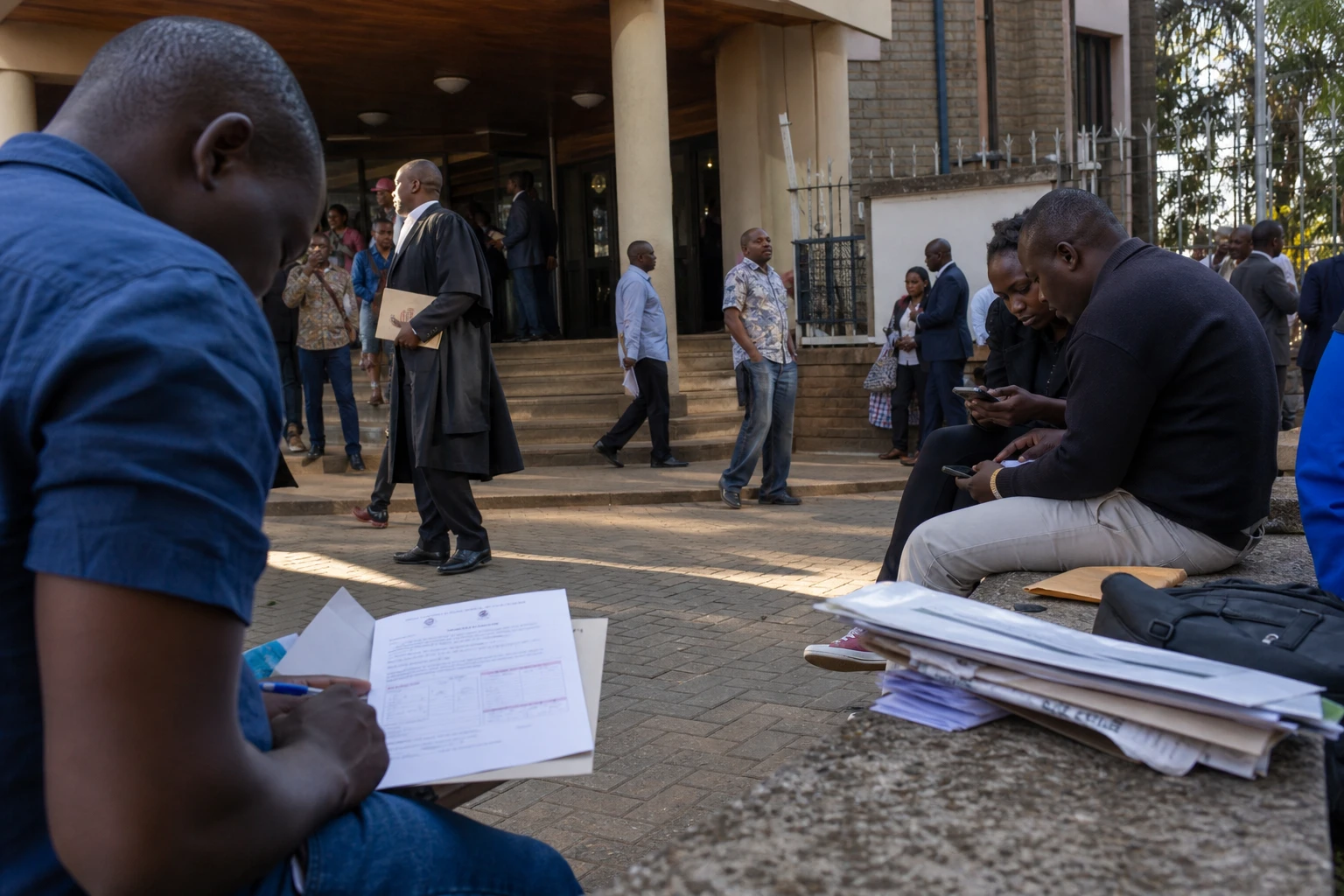
The trial, which opened at the Kibera High Court in Nairobi, concerns six defendants, including three police officers, over the death of the 31-year-old teacher and blogger. All have pleaded not guilty. The case is being closely followed because it brings together several sensitive issues: freedom of expression, police accountability and the ability of the justice system to see a case through when state agents are involved.
The national context remains fraught. Kenya has already seen waves of protests over police abuses and the brutality of arrests, particularly after the demonstrations of 2024 and 2025. Regionally, the case also resonates within the East African Community, where several countries are still debating civilian oversight of security forces and the role of independent monitoring bodies.
What the court is examining in Kibera
Hearings began on 20 and 21 July 2026 before the Kibera High Court. The Office of the Director of Public Prosecutions opened the case by presenting its first witnesses. Among them, a witness cited by the prosecution says he was summoned to the police station after Albert Ojwang’s death, then given money to make CCTV footage disappear. The prosecution says the recordings were later recovered and submitted as evidence.
According to evidence reported in court, an expert from the Independent Policing Oversight Authority, IPOA, says the footage shows Albert Ojwang entering the police station alive, before being carried out a few hours later, apparently unconscious. Another witness says he saw unidentified men heading towards the cell. These remain pieces of evidence to be contested, but they strongly shape the prosecution’s case.
As early as June 2025, the IPOA had established that Albert Ojwang died in custody on 8 June 2025, shortly after being transferred to Nairobi from Homa Bay County. The autopsy ruled out suicide and concluded that he died from head trauma, compression of the neck and several subcutaneous bruises. This directly contradicted the police’s initial account, according to which he had hit his head against a wall.
The name of Eliud Lagat, then Kenya’s deputy police chief, remains central to the background of the case. Ojwang’s arrest followed a complaint concerning posts published on X, according to judicial and police sources cited during the early stages of the investigation. Lagat was later urged to step aside to allow investigations to proceed, following strong public pressure.
A sensitive case for police, prosecutors and families
For Kenya’s prosecution service, the challenge is clear: to show that this was not a death shrouded in uncertainty inside a cell, but a sequence of specific acts attributable to identifiable individuals. In cases of this kind, physical evidence matters as much as testimony. That is why CCTV footage, forensic reports and police station attendance records carry considerable weight.
For the police, the case exposes a breakdown in trust. Contradictory accounts have damaged their public credibility. An initial narrative was quickly challenged by independent experts, then by the medical records submitted to the court. In a country where law enforcement is regularly accused of abuses, every inconsistency fuels the perception of an institution that puts protecting itself first.
Albert Ojwang’s family, meanwhile, is waiting for a judgment that does not stop with those who carried out the acts. Kenya’s public debate widened early on to encompass the chain of command, the orders given, and the way some evidence was manipulated or delayed. This is also why the case touches a raw nerve: it raises questions about the responsibility of senior officers, not just that of those present at the police station.
Civil society and the legal profession have given the case symbolic weight. The former president of the Law Society of Kenya denounced a “choreography of impunity”, a phrase that captures the exasperation felt by part of the country over police violence cases that have not led to clear outcomes. This anger does not come from nowhere: the IPOA has been investigating cases of arbitrary arrests, ill-treatment and deaths in custody for years.
What the case says about Kenya and East Africa
Albert Ojwang’s trial will be watched far beyond Kenya. In several East African capitals, debates over police reform, the preservation of CCTV footage and the independence of oversight bodies are just as acute. The Kenyan case therefore offers a regional precedent: if the courts establish a robust chain of responsibility, they will send a powerful signal about an African state’s ability to judge its own abuses.
The judicial timetable now matters as much as the facts themselves. The hearings must establish whether the video evidence was altered, who gave the orders, and at what point in the chain of custody the death occurred. This is where the substance of the case will be decided: not just by determining how Albert Ojwang died, but whether the system meant to protect him failed at every level.
In Kenya, the case therefore measures the distance between the law and its implementation. Across the continent, it is a reminder that accountable policing, an independent judiciary and preserved evidence are three inseparable pillars. Without them, public trust quickly erodes. With them, a trial can become more than a criminal case: an institutional milestone.