Algeria
 Egypt
 Libya
 Morocco
 Sudan
 Tunisia
 Benin
 Burkina Faso
 Cabo Verde
 Côte d'Ivoire
 Ghana
 Guinea
 Guinea-Bissau
 Liberia
 Mali
 Mauritania
 Niger
 Nigeria
 Senegal
 Sierra Leone
 The Gambia
 Togo
 Cameroon
 Central African Republic
 Chad
 DR Congo
 Equatorial Guinea
 Gabon
 Republic of the Congo
 São Tomé and Príncipe
 Burundi
 Comoros
 Djibouti
 Eritrea
 Ethiopia
 Madagascar
 Malawi
 Mauritius
 Mozambique
 Rwanda
 Seychelles
 Somalia
 South Sudan
 Tanzania
 Uganda
 Angola
 Botswana
 Eswatini
 Lesotho
 Namibia
 South Africa
 Zambia
 Zimbabwe
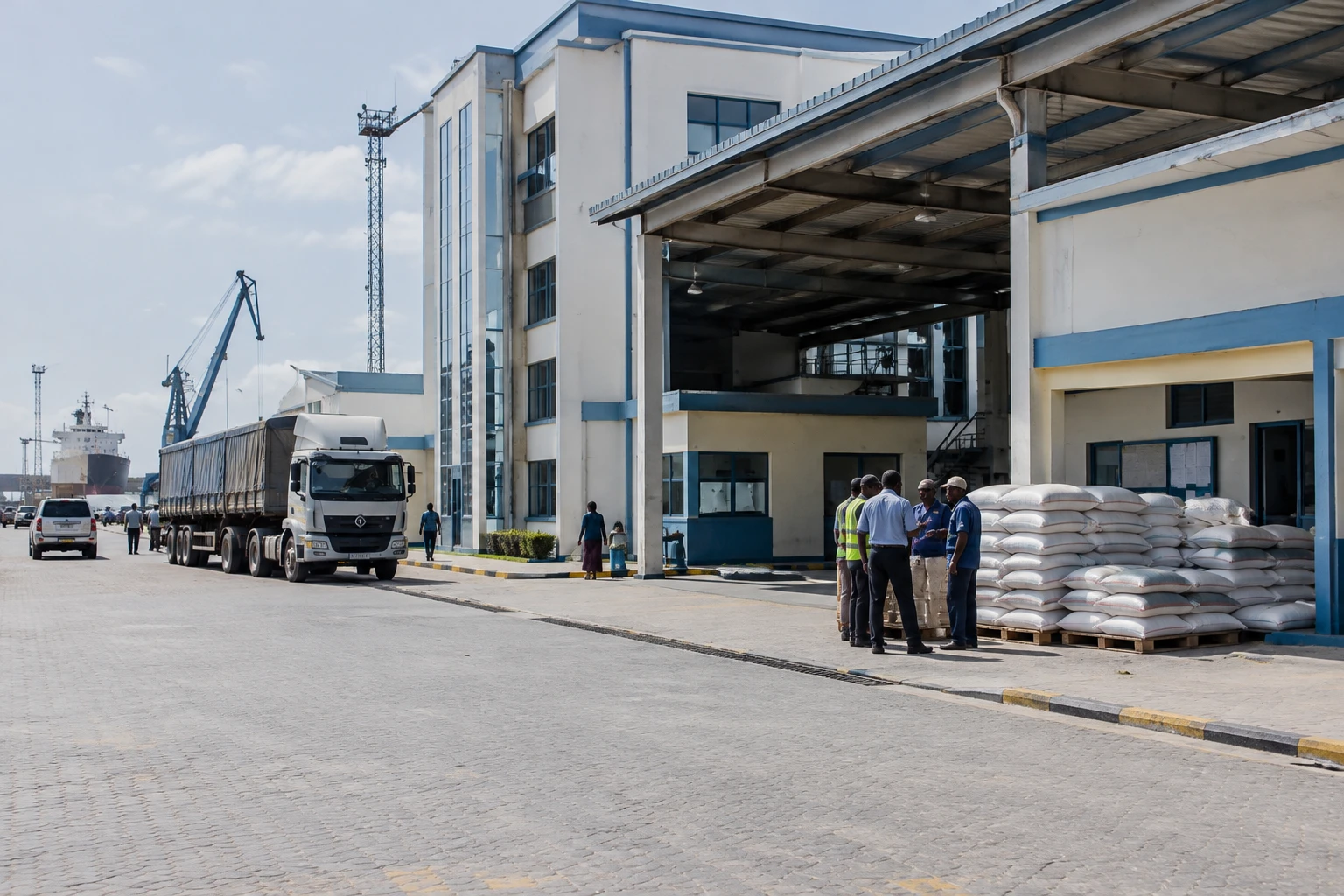
For Kenya, diversifying its wheat sources is about more than commercial calculations. Delivery delays or import formalities can affect flour mills, then the price of flour and bread. Kazakhstan is now proposing one option, but not yet a shipment.
A regional market heavily reliant on external purchases
Kenya is one of East Africa’s main wheat buyers. Local production covers only a small share of demand: the Kenya Agriculture and Food Authority put it at 2.2 to 2.4 million tonnes a year, compared with production of 135,000 tonnes in 2023. The country therefore relies on imports to supply its mills.
This dependence links the domestic market to harvests, prices and international shipping routes. The port of Mombasa is a key entry point for grain. In the East African Community (EAC), of which Kenya is a member, regional trade and transport infrastructure also matter for the movement of goods. But regional integration does not remove the need to buy wheat on world markets.
Supply security is not measured solely by the volume available. Phytosanitary documents, required to verify that imported plant products comply with regulations, can also delay a shipment. Kenya’s KEPHIS service states that importers must obtain a permit before shipment and present the necessary certificates.
Nairobi and Astana explore agricultural cooperation
On 25 October 2026, Kazakhstan’s ambassador to Kenya, Barlybay Sadykov, discussed opportunities for cooperation in wheat, flour and food processing in Nairobi. At a meeting with representatives of Kenya’s business community, he also cited agricultural and industrial inputs, as well as skills exchanges.
The diplomat presented Kazakhstan as a major producer and exporter of wheat and flour. The initiative is part of a broader rapprochement: during the Kenyan president’s state visit to Kazakhstan on 19 and 20 May 2026, the two countries signed ten bilateral agreements covering trade, investment and transport, among other areas.
However, public statements specify no export volume to Kenya, delivery schedule or supply contract. The ambassador called for existing agreements to be put into practice. Diplomatic and commercial interest must therefore be distinguished from a supply deal that has actually been negotiated.
Kenya is not the only African country involved in this outreach. On 25 September 2026, on the sidelines of the United Nations General Assembly, Kazakhstan and Malawi established diplomatic relations and discussed possible supplies of Kazakh wheat. Here too, the talks signal an opening, not a contract already carried out.
Logistical disruptions make diversification more urgent
Kenyan importers report recent difficulties in shipping Russian and Ukrainian wheat. Disruptions in the Black Sea have prompted exporters to consider or use alternative routes. The regional daily TheEastAfrican reported delays in obtaining phytosanitary certificates for some shipments destined for East Africa, as well as concerns linked to transit through the Baltic.
These obstacles can complicate purchases and increase uncertainty over delivery times and costs. They do not, however, prove that Kazakhstan’s initiative was prompted by these difficulties. Rather, they illustrate why buyers and millers seek to maintain several supply options.
Available figures confirm the market’s importance, although statistical coverage varies by source and trading season. Trade Map data available for 2025 show Kenyan imports of wheat and meslin exceeding two million tonnes. Meanwhile, the US Department of Agriculture’s agricultural service estimates imports at 2.5 million tonnes for the 2025/26 season, a period that does not exactly match the calendar year.
Established suppliers have an advantage: they have existing commercial and logistical networks. To secure a foothold, Kazakh wheat will have to meet millers’ quality requirements, be offered at a competitive price and reach Mombasa reliably. The cost of transport from Central Asia will be part of the equation, along with formalities and delivery times.
A test for commercial ambitions south of the Sahara
For Astana, Kenya would offer a market south of the Sahara and access to a regional market connected to EAC countries. So far, Kazakh wheat sales in Africa have been directed mainly to North Africa. A presence in Kenya would therefore broaden the geography of these exchanges, without guaranteeing a lasting breakthrough.
For Kenyans, the arrival of a new supplier could widen importers’ choice and strengthen their negotiating position. But diversification does not automatically bring down the price of bread: its effect will depend on volumes, freight costs, the exchange rate and how prices are passed on to consumers. Flour mills, which buy the grain, would be the first to assess the offer; households would feel the effects mainly through more or less regular supply.
The next tangible indicator will therefore be commercial: an announcement of a contract, volume or first shipment would show whether trade is moving beyond discussions. In the meantime, the rapprochement between Nairobi and Astana reflects a broader search for agricultural partners between Africa and Central Asia, while shipping routes and health requirements continue to weigh on supply security.