Algeria
 Egypt
 Libya
 Morocco
 Sudan
 Tunisia
 Benin
 Burkina Faso
 Cabo Verde
 Côte d'Ivoire
 Ghana
 Guinea
 Guinea-Bissau
 Liberia
 Mali
 Mauritania
 Niger
 Nigeria
 Senegal
 Sierra Leone
 The Gambia
 Togo
 Cameroon
 Central African Republic
 Chad
 DR Congo
 Equatorial Guinea
 Gabon
 Republic of the Congo
 São Tomé and Príncipe
 Burundi
 Comoros
 Djibouti
 Eritrea
 Ethiopia
 Kenya
 Madagascar
 Malawi
 Mauritius
 Mozambique
 Rwanda
 Seychelles
 Somalia
 South Sudan
 Tanzania
 Uganda
 Angola
 Botswana
 Eswatini
 Lesotho
 Namibia
 South Africa
 Zambia
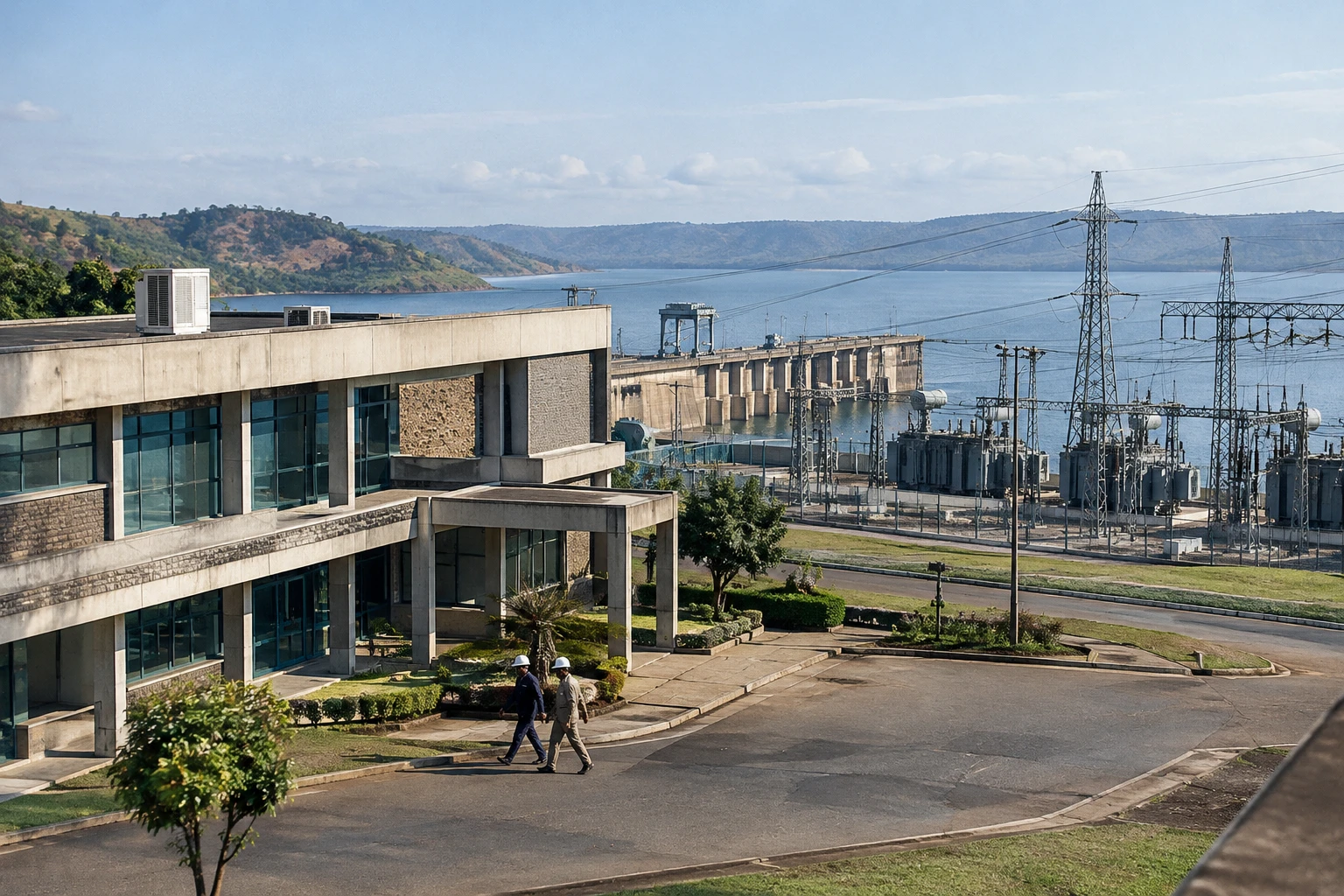
At Kariba, one reservoir has to meet two demands: generate electricity today and retain enough water for the months ahead. For Zimbabwe and Zambia, the challenge in 2027 will be to maintain supply as hydrological forecasts point to a tighter allocation.
A shared resource, a regional constraint
The Kariba Dam lies on the Zambezi River, on the border between Zimbabwe and Zambia. The Zambezi River Authority (ZRA), a body jointly owned by the two countries, co-ordinates the management of the lake’s water for hydroelectricity generation. Decisions made at this level therefore affect both electricity grids, not just Zimbabwe’s.
The lake’s level was higher than a year earlier in mid-October 2026: on 14 October, usable storage was estimated at 36.68%, compared with 12.75% on the same date in 2025, according to ZRA records. This improvement does not guarantee a favourable season. The authority based its 2027 forecasts on regional climate outlooks and estimates of water inflows.
The risk of hydroclimatic variability also affects neighbouring countries. Within the Southern African Development Community (SADC), energy and water ministers have focused on energy security, water management and regional interconnections. These networks can facilitate exchanges between countries, but they cannot eliminate a simultaneous drop in output across several hydropower-dependent systems.
Reduced water allocation for 2027
On 14 October, the ZRA announced a total allocation of 23 billion cubic metres of water for electricity generation at Kariba in 2027, down from 36 billion in 2026. The reduction is about 36%. According to information published about the decision, the two national utilities, Zambia’s ZESCO and Zimbabwe Power Company (ZPC), would each receive 11.5 billion cubic metres.
This allocation sets a limit on the use of water by the turbines; it does not mean the power stations will shut down. The amount of electricity actually generated also depends on inflows into the lake, equipment, grid demand and how water is distributed over time. The ZRA nevertheless forecasts usable storage of about 9% at the end of 2027 if its assumptions prove correct.
The measure comes as Kariba South, in Zimbabwe, remains an important part of the country’s electricity supply. On 14 October, its output was reported at 415 megawatts. The government has also announced progress on a 600 MW solar project being developed by GreenGrid Energy, with an estimated investment of $650 million. ZETDC, the national transmission and distribution utility, is due to buy the electricity generated.
Solar moves forward, but financing remains decisive
Announced milestones include technical and grid-connection studies, regulatory procedures and the signing of commercial agreements. Preparatory works were reportedly completed in July 2026. GreenGrid says the first phase will prioritise panels installed on land near Kariba; the project could later include floating installations. The construction schedule and financial close remain decisive milestones.
Solar addresses a specific operational challenge. During the day, its output could meet part of demand without drawing as much water through the turbines. The reservoir could therefore retain more resources for peak hours, particularly in the morning and evening, when the panels are no longer generating electricity. This complementarity will, however, depend on the grid’s capacity to integrate the new output and on the project being completed.
For households and small businesses, the issue is continuity of service: outages disrupt activity, while independent power solutions carry costs that not everyone can afford. Industries, meanwhile, need a predictable supply to plan production. Solar can expand supply, but its development does not replace maintenance of existing power stations or investment in electricity transmission.
A test for Southern Africa’s power balance
The Kariba project is part of a broader shift: the region is seeking to diversify its sources of generation and strengthen cross-border trade. The SADC supports electricity interconnections, including the Zimbabwe-Zambia-Botswana-Namibia corridor. This infrastructure can help share available resources, but its effectiveness also depends on surplus generation among partners and transmission capacity.
For Harare, the next step will be to turn announced approvals and agreements into secured financing, then into a construction project with a verifiable schedule. For the ZRA and the two electricity utilities, monitoring rainfall, Zambezi inflows and water consumption will determine how the allocation is applied. At Kariba, the energy transition will therefore depend as much on the shared management of the reservoir as on the commissioning of new solar panels.