Algeria
 Egypt
 Libya
 Morocco
 Sudan
 Tunisia
 Benin
 Burkina Faso
 Cabo Verde
 Côte d'Ivoire
 Ghana
 Guinea
 Guinea-Bissau
 Liberia
 Mali
 Mauritania
 Niger
 Nigeria
 Senegal
 Sierra Leone
 The Gambia
 Togo
 Cameroon
 Central African Republic
 Chad
 DR Congo
 Equatorial Guinea
 Gabon
 Republic of the Congo
 São Tomé and Príncipe
 Burundi
 Comoros
 Djibouti
 Eritrea
 Ethiopia
 Kenya
 Madagascar
 Malawi
 Mauritius
 Mozambique
 Rwanda
 Seychelles
 Somalia
 South Sudan
 Tanzania
 Uganda
 Angola
 Botswana
 Eswatini
 Lesotho
 Namibia
 South Africa
 Zambia
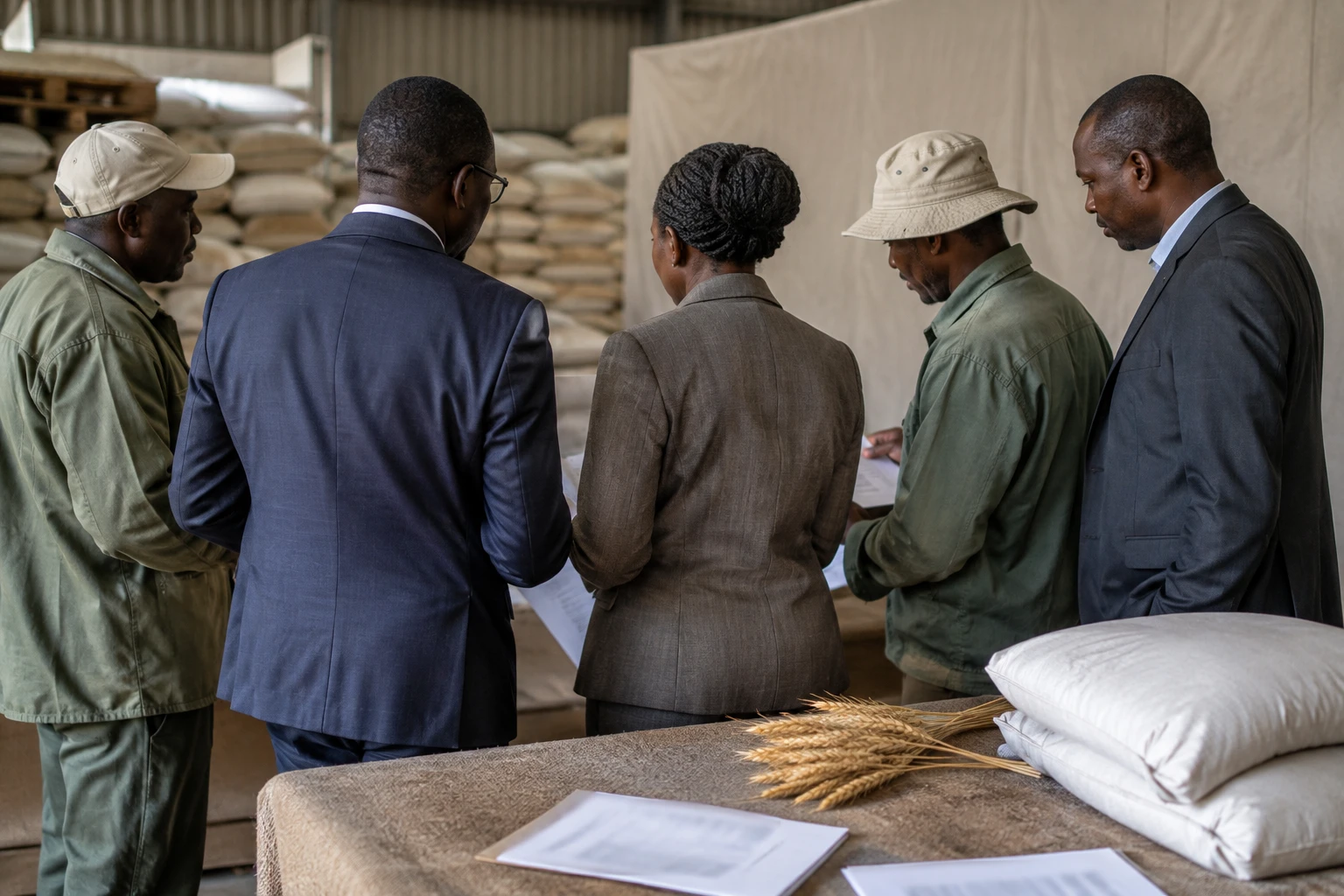
Producing more wheat is not enough to guarantee that Zimbabwean households will be able to find it at an affordable price. But a bumper harvest can reduce reliance on imports and give Harare more room to build up its reserves as the country prepares for the next rainy season.
A harvest that has already surpassed the previous peak
By 4 November 2026, farmers had harvested 670,981 tonnes of wheat, according to Zimbabwe’s Ministry of Agriculture. This provisional tally exceeds the previous record, set at 640,195 tonnes in 2025. The figure was reported by several Zimbabwean media outlets, including Zimbabwe Situation and the Zimbabwe Broadcasting Corporation. The latter reported on 2 November that more than 600,000 tonnes had already been harvested, without giving the precise total published a few days later.
The harvest was not quite complete. By 4 November, 127,518 hectares had been harvested out of the 130,316 planted, or nearly 98% of the area. The final tally may therefore still change. The ministry attributes these figures to its weekly monitoring of the season; they should be read as a provisional snapshot rather than a final audited result.
The area planted with wheat increased by about 6.3% compared with the 122,566 hectares of the previous season. It also exceeded the government’s target of 125,000 hectares. This increase in area explains part of the rise in output. Shadreck Makombe, president of the Zimbabwe Commercial Farmers Union, also cited the availability of electricity, irrigation water and agricultural equipment, according to remarks reported by the local press.
Progress as part of an agricultural strategy
Wheat is grown during the austral dry season and is heavily dependent on irrigation. Production therefore requires operational farms, as well as reliable access to water, energy, seeds and equipment. A strong national result does not mean that every farmer has access to these resources on the same terms.
Zimbabwe has substantially increased its harvests in recent years. The United Nations Food and Agriculture Organization (FAO) estimated 2025 production at about 640,000 tonnes, nearly double the average of the previous five years. This growth is part of a policy aimed at expanding irrigated crops and strengthening domestic production. It does not, however, insulate the country from climate risks or difficulties in accessing inputs.
Domestic demand is also rising. According to data from the Agricultural Marketing Authority (AMA), a public body that monitors agricultural markets, total wheat consumption, including imports, rose from 489,402 tonnes in 2022/2023 to 605,183 tonnes in 2024/2025. The AMA links the increase to population growth and changing eating habits, including higher consumption of bread, pasta and noodles.
The record harvest should therefore not be confused with an automatic fall in prices or a guaranteed abundance in every shop. Wheat must be collected, stored, milled into flour and distributed. For millers and bakers, a steady supply matters as much as the volume harvested. For households, the final price also depends on transport, processing and marketing costs.
Strategic reserves and the next season
The harvest comes as Harare seeks to rebuild its grain reserves ahead of the 2026/2027 summer farming season. The government is targeting a strategic stock of 600,000 tonnes by October 2027. On 2 November, Agriculture Minister Anxious Masuka said reserves exceeded 300,000 tonnes and that the goal was to reach 400,000 tonnes by the end of the year, according to ZBC. A government update published in October confirmed the 600,000-tonne target, while describing preparations for a season threatened by a possible El Niño event.
These reserves are used to cushion production shortfalls and support food assistance programmes. Their level alone, however, does not show whether grain is reaching the areas with the greatest needs. The authorities must also manage procurement, storage, payments to producers and deliveries to the regions. Commercial farmers, smallholders, processing companies and households do not all benefit in the same way from increased production.
The recent past is a reminder of this vulnerability. The 2024/2025 season was marked by a severe drought in the country, while the government is now seeking to reduce risks linked to rainfall in the following season. For irrigated wheat, dependence on rainfall differs from that of summer maize, but the availability of water and electricity remains crucial.
A regional signal, not yet a guarantee of self-sufficiency
In southern Africa, where droughts and harvest fluctuations affect food trade, higher wheat production in Zimbabwe could reduce the country’s import needs and, if surpluses are available, contribute to regional supplies. Zimbabwe is a member of the Southern African Development Community (SADC), which brings together states in the region and promotes economic co-operation. But the current harvest alone is not enough to conclude that exports will rise: domestic demand continues to grow and strategic stocks need to be replenished.
What happens next will therefore depend less on the record itself than on how the harvest is purchased, stored and brought to market. The final harvest tally, the actual level of reserves and water availability for the summer season will be the next indicators to watch. For Zimbabweans, the practical challenge is to turn increased production into steady supplies without allowing the needs of households and producers to be overshadowed by the national stockpiling target alone.