Algeria
 Egypt
 Libya
 Morocco
 Sudan
 Tunisia
 Benin
 Burkina Faso
 Cabo Verde
 Côte d'Ivoire
 Ghana
 Guinea
 Guinea-Bissau
 Liberia
 Mauritania
 Niger
 Nigeria
 Senegal
 Sierra Leone
 The Gambia
 Togo
 Cameroon
 Central African Republic
 Chad
 DR Congo
 Equatorial Guinea
 Gabon
 Republic of the Congo
 São Tomé and Príncipe
 Burundi
 Comoros
 Djibouti
 Eritrea
 Ethiopia
 Kenya
 Madagascar
 Malawi
 Mauritius
 Mozambique
 Rwanda
 Seychelles
 Somalia
 South Sudan
 Tanzania
 Uganda
 Angola
 Botswana
 Eswatini
 Lesotho
 Namibia
 South Africa
 Zambia
 Zimbabwe
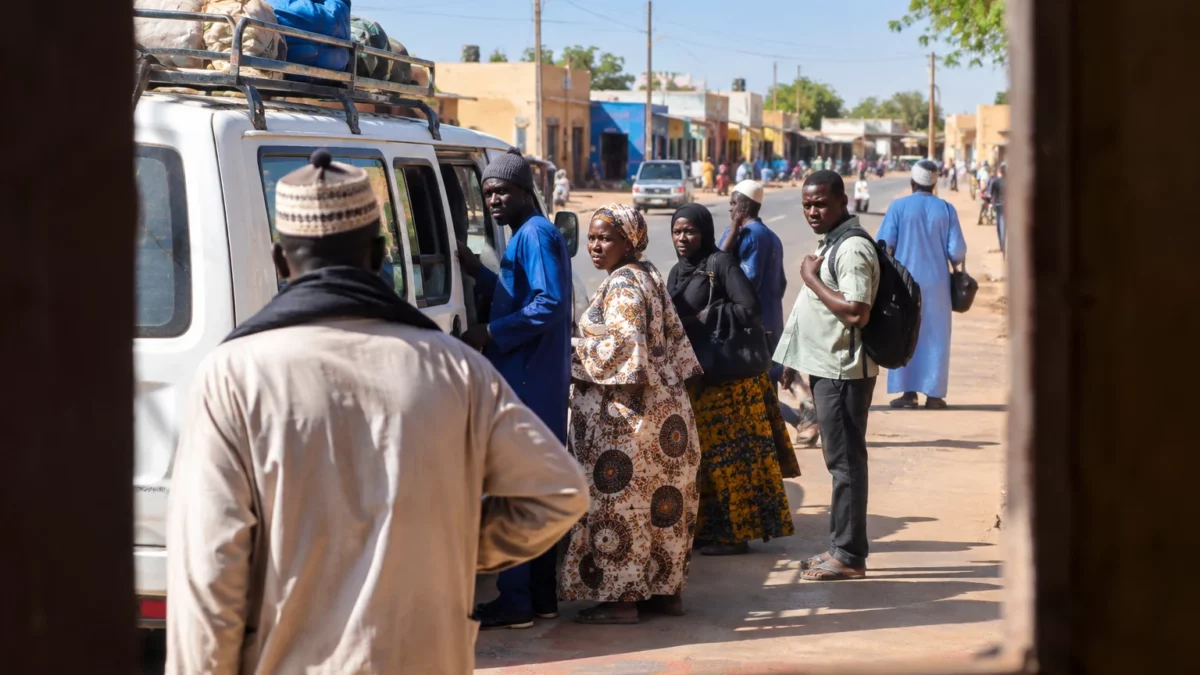
In Tonka, in the Timbuktu region, the deadline announced by an armed group has left residents facing a decision they cannot control: stay in their town or leave before access routes are cut. Beyond the confrontation between armed forces, the immediate issue is civilian movement and supplies.
An ultimatum, but no confirmed blockade yet
The Group for the Support of Islam and Muslims (JNIM), affiliated with al-Qaeda, has given the residents of Tonka until Friday 27 November 2026 to leave the locality, according to several reports published this week. The group has announced that it will then impose a blockade. However, as of the publication of these reports, there is no independent evidence that the town is actually encircled or that all access routes are closed.
Tonka is in the Goundam cercle, in the Timbuktu region of northern Mali. Press reports attribute the rise in tensions to the recent deployment of a detachment of the Malian Armed Forces (FAMa) and personnel from Russia’s Africa Corps. This link has been reported, but the available evidence does not make it possible to verify the precise timing of the deployment or the role it may have played in JNIM’s decision.
The military presence is not enough to dispel residents’ uncertainty. Operations in the area can change travel conditions and increase risks on the roads. But the available information describes neither a death toll linked to the ultimatum nor a general evacuation of the town.
Pressure on movement and trade
A blockade is not simply a line of fighters around a locality. It can also take the form of threats against routes, obstructions to transport, or restrictions imposed on people and goods. For families, leaving under duress means temporarily abandoning their homes, livelihoods and sometimes their means of subsistence. Staying, by contrast, can make it harder to access essential goods and services.
Local geography matters. In this part of Mali, travel depends on roads and connections between localities that can be far apart. A prolonged obstruction can therefore affect traders, transport operators and households beyond Tonka. The impact is not the same for everyone: families with a vehicle or resources can leave more easily than those without. In the absence of verified data on departures, it would be premature to estimate their scale.
A recent precedent underlines the importance of caution. In its 2025 annual report, Mali’s National Human Rights Commission says a blockade of the Léré-Niono route was imposed from October 2025. Citing the Malian Red Cross, the report records that 1,869 households, or 13,693 people, were displaced between 8 and 15 November in several localities in the Timbuktu region and its surroundings. These figures relate to that earlier episode, not the current situation in Tonka.
The security response and its limits
The Malian army announced several operations in the Tonka area during November. These statements describe the general staff’s account; on their own, they do not independently verify the reported results or prove that civilians have safe access to the roads. The local situation therefore requires a distinction between military announcements, JNIM’s threats and facts confirmed on the ground.
Africa Corps’ presence is part of the security partnership between Bamako and Moscow, following the withdrawal of French forces and the UN mission. The stated aim of the Malian authorities is to strengthen military capabilities. However, the deployment of forces does not automatically guarantee freedom of movement around a town. The response’s effectiveness will also be measured by the protection of residents, the continuity of trade and whether civilians can leave safely.
In Bamako, decisions on operations and partnerships are made by the central government. In Tonka, their consequences are felt in daily life: access to markets, mobility and family safety. This difference between the national management of strategy and local realities is crucial to understanding the limits of a purely military response.
A regional issue for the Sahel
Mali remains a member of the Economic Community of West African States (ECOWAS), although the Malian, Burkinabè and Nigerien authorities have embarked on a political break with the organisation and established the Alliance of Sahel States. This realignment complicates regional coordination at a time when armed groups are exploiting borders and vulnerabilities along transport routes. It also makes practical cooperation on civilian protection and humanitarian access important, regardless of diplomatic tensions.
For the African Union and regional partners, the developments to watch are concrete: will JNIM carry out its threat, will access routes remain open, and will residents be able to move without facing pressure? Until these points are confirmed by independent information, the term “blockade” should be used with caution. The ultimatum itself already places civilians under real pressure, even if the scale of its consequences in Tonka remains to be established.