Algeria
 Egypt
 Libya
 Morocco
 Sudan
 Tunisia
 Benin
 Burkina Faso
 Cabo Verde
 Ghana
 Guinea
 Guinea-Bissau
 Liberia
 Mali
 Mauritania
 Niger
 Nigeria
 Senegal
 Sierra Leone
 The Gambia
 Togo
 Cameroon
 Central African Republic
 Chad
 DR Congo
 Equatorial Guinea
 Gabon
 Republic of the Congo
 São Tomé and Príncipe
 Burundi
 Comoros
 Djibouti
 Eritrea
 Ethiopia
 Kenya
 Madagascar
 Malawi
 Mauritius
 Mozambique
 Rwanda
 Seychelles
 Somalia
 South Sudan
 Tanzania
 Uganda
 Angola
 Botswana
 Eswatini
 Lesotho
 Namibia
 South Africa
 Zambia
 Zimbabwe
When wealth also attracts violence
In Côte d’Ivoire, gold is more than a promise of income. In several regions, it has become a source of local tension, land degradation and security challenges. The debate is therefore no longer limited to clandestine pits. It also concerns the state’s ability to control its territory, protect waterways and offer alternatives to thousands of young people drawn to this fast-moving economy.
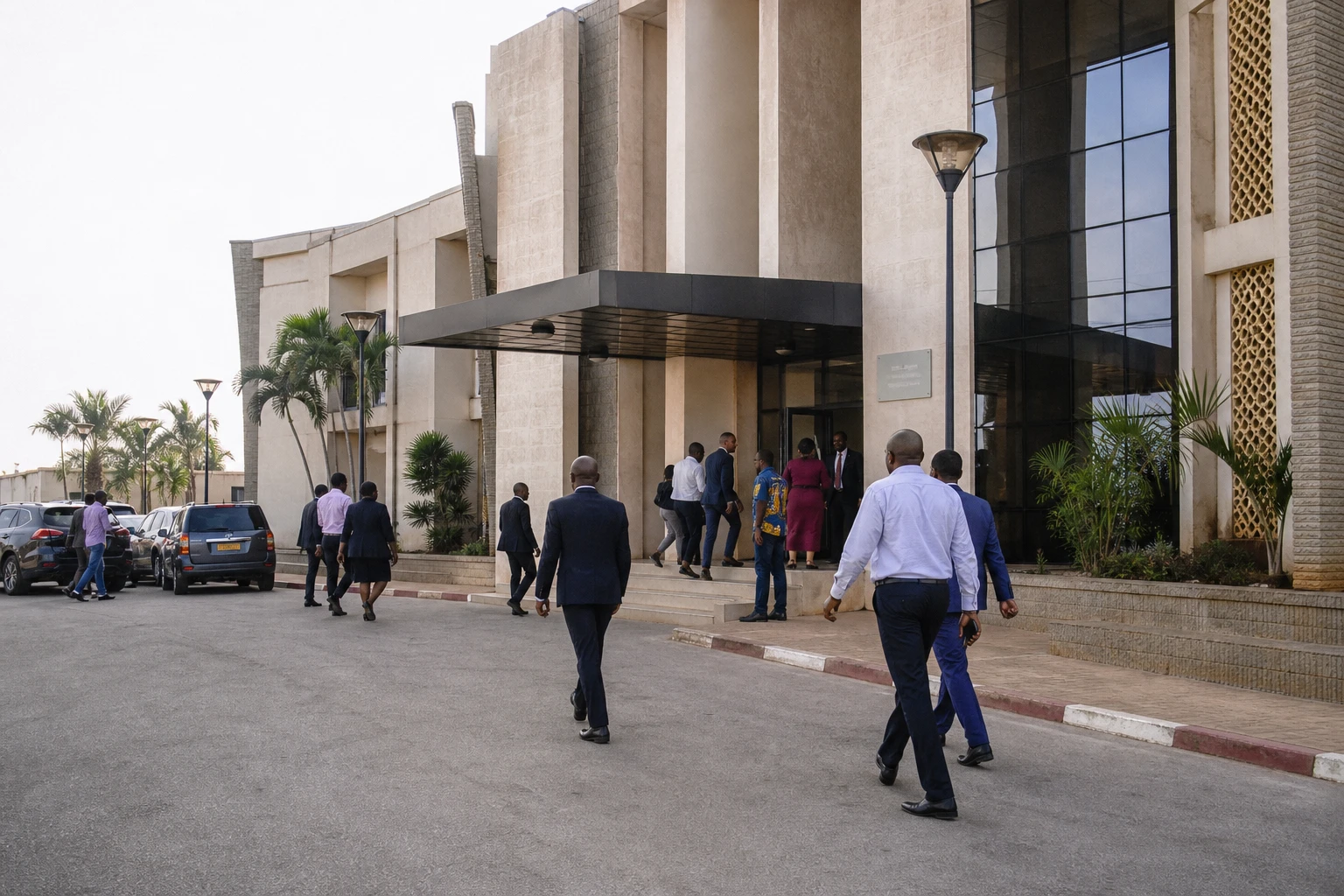
This issue forms part of a broader national trajectory. Yamoussoukro, the political capital, hosted a high-level workshop on harmonising the response to illegal gold mining. At the same time, technical services continued operations on the ground in the north of the country. This overlap reflects the approach being pursued: coordinating administrative decisions, security pressure and local monitoring.
A response combining enforcement, intelligence and local engagement
Meeting in Yamoussoukro from 4 to 5 September 2026, regional prefects said they aimed to eradicate the phenomenon within six months in their respective jurisdictions. The workshop was chaired by Fidèle Sarassoro, executive secretary of the National Security Council, alongside the ministers responsible for Security, Water and Forests, and the Environment. The proceedings produced a package of measures ranging from intelligence gathering to the creation of specialised units, as well as tougher legislation. The government is also considering submitting draft laws to the Council of Ministers soon.
The political message is clear: Côte d’Ivoire wants to move away from a pattern of sporadic interventions and establish a more stable system. This approach builds on decisions already taken by the National Security Council. In July 2024, it noted that the Special Group for Combating Illegal Gold Mining, created in 2021, and the Special Surveillance and Intervention Brigade had achieved significant results, while also reporting strong local resistance. The official document also referred to cross-border cooperation with Ghana to monitor the Tanoé and Bia rivers, two sensitive routes in eastern Côte d’Ivoire.
On the ground, pressure increased further in early September 2026. In Poro, the Special Surveillance and Intervention Brigade destroyed two clandestine sites at Oumbolo and Tangafla. In Sud-Comoé, the authorities began consultations with riverside communities, particularly around Aboisso, where the economic and environmental effects of the phenomenon are especially visible. The state is therefore combining two levers: coercive action against the sites and efforts to secure local support to break up networks that re-establish operations.
What the battle against clandestine gold mining reveals
The figures show the scale of the problem. The government says 8,500 sites were destroyed between July 2021 and July 2026, while more than 1,000 sites were occupied or reoccupied during the period, according to official data released this week. In 2024, the National Security Council had already reported the destruction of thousands of dredgers, crushers and other equipment. It also noted that hostility among some local populations complicated the work of the forces involved. In other words, illegal gold mining survives not only because of its mobility, but also because of complicity, economic interests and a lack of sustainable alternatives.
The consequences extend beyond security. Clandestine mining damages farmland, pollutes waterways and undermines access to drinking water. It directly affects rural families, as well as agricultural sectors and market economies in peri-urban areas. In several regions, people are already facing a double shock: the loss of cultivable land and competition from an activity that is more lucrative in the short term but destructive over the medium term. The problem is therefore not just a policing issue. It is social, land-related and economic.
This is where the Ivorian political debate becomes revealing. The PDCI-RDA considers six months too long to take action. The PPA-CI, for its part, accuses the current administration of allowing a degree of permissiveness to take hold. These criticisms form part of a broader contest over the state’s presence in its territories and the distribution of the benefits of mining. The government, meanwhile, stresses the need for a phased approach: enforcement, awareness-raising, engagement with communities and restoration of degraded sites.
The government has also raised complementary options, including rehabilitating affected land, using labour-intensive programmes and strengthening cooperation with neighbouring countries. This approach matters because illegal gold mining often follows the same routes as trade flows and cross-border movement. In the ECOWAS region, where borders remain porous and river basins are shared, no state can tackle this kind of trafficking alone. Côte d’Ivoire is therefore trying to establish a national response, while recognising that its effectiveness will also depend on regional partners, particularly in border areas with Ghana, Mali, Burkina Faso and Liberia.
An Ivorian decision with regional implications
Beyond Côte d’Ivoire, the issue resonates across West Africa. Clandestine gold mining there fuels informal financing networks, conflicts over land use and damage to ecosystems. It also exposes a familiar tension across the continent: how can a natural resource be turned into public wealth without allowing a parallel economy to develop that is faster-moving but more costly to society? The Ivorian response, coordinated from Yamoussoukro, shows that a state can still take the initiative when it is prepared to combine security, administration, environmental protection and local consultation.
What happens next will depend on implementation. The announced legislation must be adopted. The specialised units must be deployed. Prefects must honour their commitments in their departments. And communities must see, in concrete terms, that a closed site does not reappear in another form a few weeks later. Only then will “zero tolerance” cease to be a slogan and become a sustainable public policy.