Algeria
 Egypt
 Libya
 Morocco
 Sudan
 Tunisia
 Benin
 Burkina Faso
 Cabo Verde
 Côte d'Ivoire
 Ghana
 Guinea
 Guinea-Bissau
 Liberia
 Mauritania
 Niger
 Nigeria
 Senegal
 Sierra Leone
 The Gambia
 Togo
 Cameroon
 Central African Republic
 Chad
 DR Congo
 Equatorial Guinea
 Gabon
 Republic of the Congo
 São Tomé and Príncipe
 Burundi
 Comoros
 Djibouti
 Eritrea
 Ethiopia
 Kenya
 Madagascar
 Malawi
 Mauritius
 Mozambique
 Rwanda
 Seychelles
 Somalia
 South Sudan
 Tanzania
 Uganda
 Angola
 Botswana
 Eswatini
 Lesotho
 Namibia
 South Africa
 Zambia
 Zimbabwe
Bamako meeting goes beyond bilateral ties
A presidential visit to Bamako is never just a matter of two capitals. It also says something about the state of the Sahel, relations between neighbours and the possible ways out of a crisis in a region where security weighs on diplomacy as much as on the economy. The announced meeting between Malian President Assimi Goïta and his Senegalese counterpart Bassirou Diomaye Faye is part of this reality.
The visit comes as Mali, Burkina Faso and Niger have left ECOWAS, a decision that took effect on 29 January 2025. At the same time, the Alliance of Sahel States, formed by the three countries, is seeking to build its own security and political response. In this fragmented landscape, Senegal remains a key neighbour for Mali, through geography, trade flows and regional history.
What the two heads of state had to say — and, above all, do
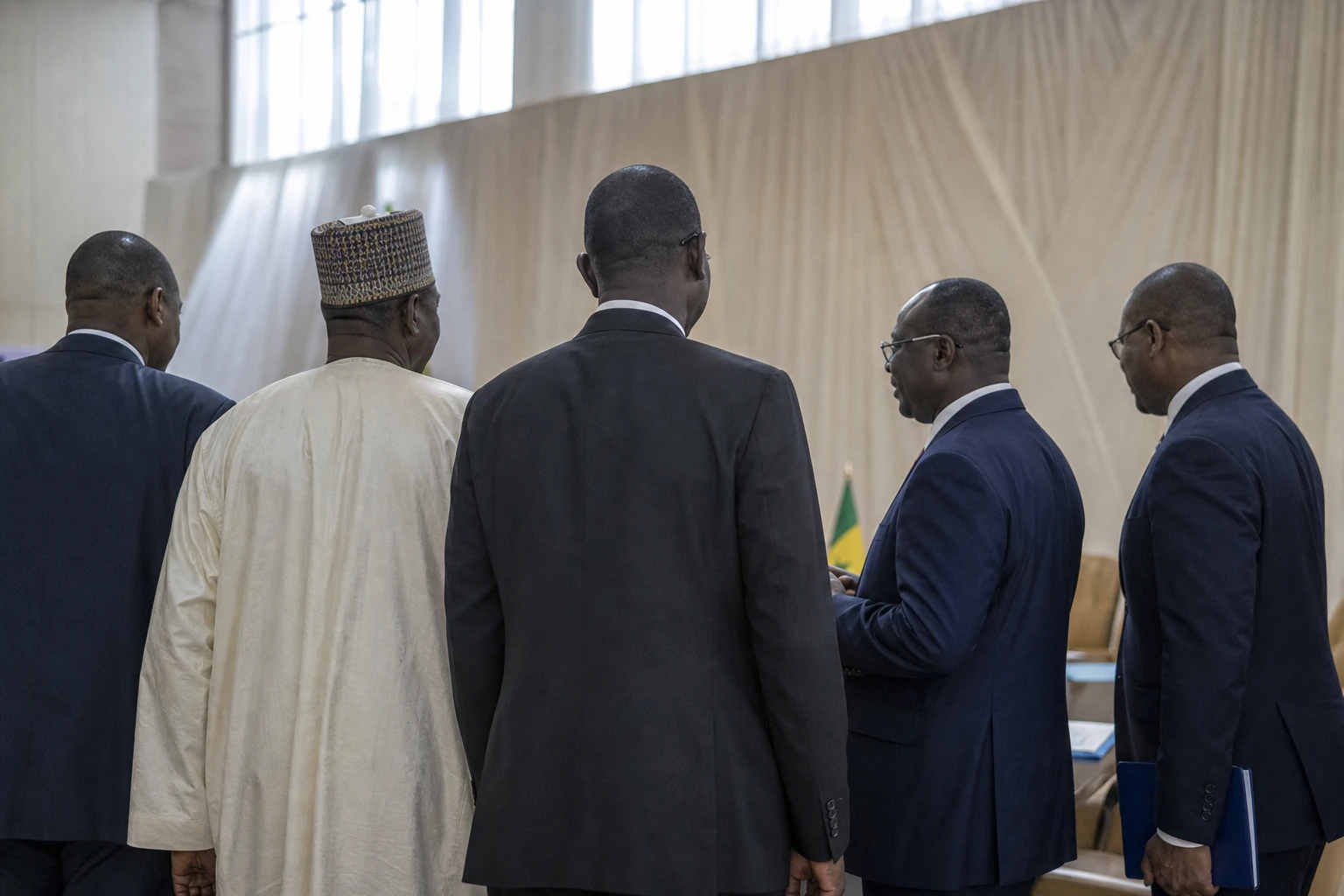
According to several West African media outlets, Bassirou Diomaye Faye travelled to Bamako on Tuesday 28 July 2026 for a working visit and to show solidarity, his first since being appointed to head ECOWAS. The Senegalese presidency had already confirmed, at other stages of its diplomacy, its intention to make dialogue a central tool of its regional mandate. The timing is significant: just days earlier, ECOWAS held its summit in Freetown and placed Senegal at the centre of its new rotating presidency.
According to the same sources, discussions in Bamako focused on the security crisis in the Sahel and the link between security and regional movement. This is a crucial issue for Mali, because armed pressure is not confined to the north of the country. It also affects routes in the south-west, supply corridors and the confidence of economic operators. The UK’s updated travel advice, moreover, refers to road blockages in southern and western Mali, including around Bamako, as well as armed groups’ ability to target the capital.
The military situation has become even more tense since early July. The African Union condemned the coordinated attacks of 4 July 2026 in Mali, while Reuters reported on 9 July that a convoy carrying Malian soldiers and fighters from Russia’s Africa Corps had been targeted in the north of the country. Subsequent reports in the international press have cited further attacks on convoys and military positions in the north. In this climate, the Goïta-Faye meeting was no mere protocol gesture.
Security under pressure, alliances shifting
Mali remains at the centre of a highly volatile security landscape. Since 2024, the Malian army has relied on Africa Corps, the Russian force that took over from Wagner. But this presence has not brought the rapid stabilisation that was promised. On the contrary, several sources have documented setbacks around Kidal, ambushes on convoys and an intensification of attacks in the country’s north and west. Caution is nevertheless warranted: this is less a total collapse than a foreign force facing more difficult terrain, multiple fronts and armed groups that are increasingly mobile.
The main political issue for Bamako and Dakar lies elsewhere. Senegal is seeking to keep a channel open with Mali without abandoning its place in ECOWAS. Mali, for its part, wants to preserve its decision-making sovereignty while maintaining close ties with its neighbours. Between the two lies a very concrete reality: borders, roads, markets, fuel, goods and families. For people on the ground, regional dialogue often matters more than diplomatic slogans.
This episode also shows that regional frameworks do not disappear when governments take a harder line. ECOWAS continues to manage the consequences of the withdrawal of the three Sahelian states, while the African Union is calling for collective efforts against terrorism. The message is clear: no Sahelian country can stabilise such a porous region alone. Threats move across borders, as do weapons, and responses must go beyond administrative boundaries.
What Bamako says to the rest of the continent
For West Africa, Bassirou Diomaye Faye’s visit to Bamako tests an approach: talking to transitional authorities without normalising political exceptionalism, maintaining dialogue without abandoning regional principles, and treating security as a shared concern rather than a constant stand-off. It is a narrow path, but one that fits the times. Sahelian crises can no longer be resolved through a single mediation framework. They require a succession of often fragile arrangements between states, regional organisations and external partners.
For Mali, the immediate challenge is to narrow the gap between claims of sovereignty and the security situation on the ground. For Senegal, it is to exert influence without being drawn into the divisions in its neighbourhood. And for the region, the key question is whether this close-range diplomacy can still produce a minimum level of coordination on roads, trade and the fight against armed groups. In the Sahel, that is often where the credibility of a presidential visit is tested.