Algeria
 Egypt
 Libya
 Morocco
 Sudan
 Tunisia
 Benin
 Burkina Faso
 Cabo Verde
 Côte d'Ivoire
 Guinea
 Guinea-Bissau
 Liberia
 Mali
 Mauritania
 Niger
 Nigeria
 Senegal
 Sierra Leone
 The Gambia
 Togo
 Cameroon
 Central African Republic
 Chad
 DR Congo
 Equatorial Guinea
 Gabon
 Republic of the Congo
 São Tomé and Príncipe
 Burundi
 Comoros
 Djibouti
 Eritrea
 Ethiopia
 Kenya
 Madagascar
 Malawi
 Mauritius
 Mozambique
 Rwanda
 Seychelles
 Somalia
 South Sudan
 Tanzania
 Uganda
 Angola
 Botswana
 Eswatini
 Lesotho
 Namibia
 South Africa
 Zambia
 Zimbabwe
A failed phone call or a mobile payment that gets stuck can quickly complicate end-of-year reunions. In Ghana, the challenge goes beyond the expected Christmas traffic spike: it is also about making weakened networks more reliable day to day, including in regions far from Accra.
Seasonal demand amid persistent complaints
The Minister for Communications, Digital Technology and Innovation, Samuel Nartey George, has called on operators to prepare their networks ahead of the holidays. He was speaking on Thursday 26 November 2026 in Accra, at the Ghana Chamber of Telecommunications’ 15th anniversary gala. His remarks were reported by several Ghanaian media outlets.
The minister cited dropped calls, slow connections and service interruptions that could worsen as usage increases during gatherings and travel. He also called on the regulator and operators to meet subscribers’ expectations, saying Ghanaians wanted « a reliable network » for Christmas.
However, these problems are not limited to a period of high activity. A study by CUTS International Accra, conducted with the National Communications Authority (NCA), surveyed 1,795 people across the country’s ten regions. Among respondents, 60.89% reported poor reception and 52.22% slow internet; 27.63% mentioned dropped calls. These results describe experiences reported in the survey, rather than a uniform technical measurement of each network.
Exposed cables and tougher rules
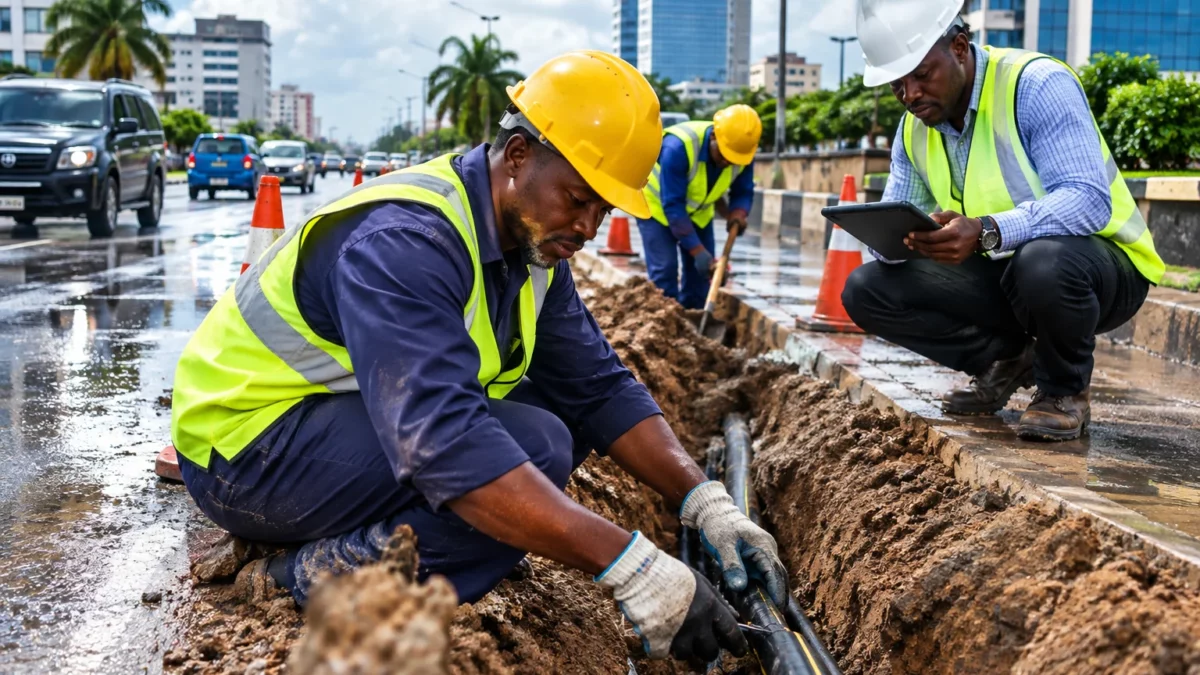
Some disruptions originate beyond the mobile towers. In September, the minister said that 8,578 fibre cuts had been recorded between January and August 2026. According to figures presented in Accra, roadworks accounted for 49% of incidents, illegal mining for 25%, and building projects or other activities for the remainder. Repairing these cables is costly and diverts resources that could be used to extend or strengthen networks.
The damage can affect several localities at once. In September, the NCA announced that voice and data services had been restored in five northern regions and parts of the Oti Region after damaged fibre cables were repaired. This is a reminder that telecommunications resilience also depends on coordination between operators, construction companies, road authorities and infrastructure managers.
The regulator, for its part, tightened its service quality indicators in February 2026. The new rule sets, among other things, a maximum dropped-call rate of less than 1% and provides for minimum coverage requirements in localities in each district. The NCA can penalise operators that fail to meet the thresholds set out in their licences. The minister’s call therefore comes within an already strengthened oversight framework, rather than being a simple seasonal request.
Invest, coordinate and be accountable
The response does not rest solely with telecommunications companies. Operators must size their networks to cope with busy periods, but the state and local authorities also have a role in protecting cables during excavation work. In September, the government said it was working on a system requiring construction teams to consult operators before work begins, as well as incorporating dedicated fibre ducts into certain road projects. Implementation and enforcement of these measures remain crucial.
The issue affects residents and economic activity in different ways. In Accra, local congestion can disrupt payments, business communications or digital services. In rural areas, already limited coverage makes a fibre cut particularly damaging. Small traders and users of mobile services often have fewer alternatives than a large company able to switch to another connection.
The minister acknowledged the need for predictable regulation and conditions conducive to long-term investment. In return, he expects operators to continue spending on infrastructure. This division of responsibility matters: private investment is not enough if cables remain vulnerable, while new rules will not improve subscribers’ experience without effective oversight and rapid repairs.
An issue that goes beyond the holidays
Ghana is a member of ECOWAS, the West African regional organisation where trade and cross-border communications make reliable connectivity increasingly important. Ghana’s efforts illustrate a shared regional challenge: expanding digital services while securing the infrastructure that makes them possible. It is not just a matter of adding mobile towers, but also of protecting the links that connect networks to one another.
In the short term, attention will focus on performance over the holidays and on the NCA’s ability to enforce its new indicators. In the longer term, the number of cuts, coordination with public works and coverage beyond major centres will show whether announcements translate into more stable service. For subscribers, the test is simple: being able to make calls, exchange data and complete transactions without a peak period turning a familiar weakness into a widespread outage.