Algeria
 Egypt
 Libya
 Morocco
 Sudan
 Tunisia
 Benin
 Burkina Faso
 Cabo Verde
 Côte d'Ivoire
 Guinea
 Guinea-Bissau
 Liberia
 Mali
 Mauritania
 Niger
 Nigeria
 Senegal
 Sierra Leone
 The Gambia
 Togo
 Cameroon
 Central African Republic
 Chad
 DR Congo
 Equatorial Guinea
 Gabon
 Republic of the Congo
 São Tomé and Príncipe
 Burundi
 Comoros
 Djibouti
 Eritrea
 Ethiopia
 Kenya
 Madagascar
 Malawi
 Mauritius
 Mozambique
 Rwanda
 Seychelles
 Somalia
 South Sudan
 Tanzania
 Uganda
 Angola
 Botswana
 Eswatini
 Lesotho
 Namibia
 South Africa
 Zambia
 Zimbabwe
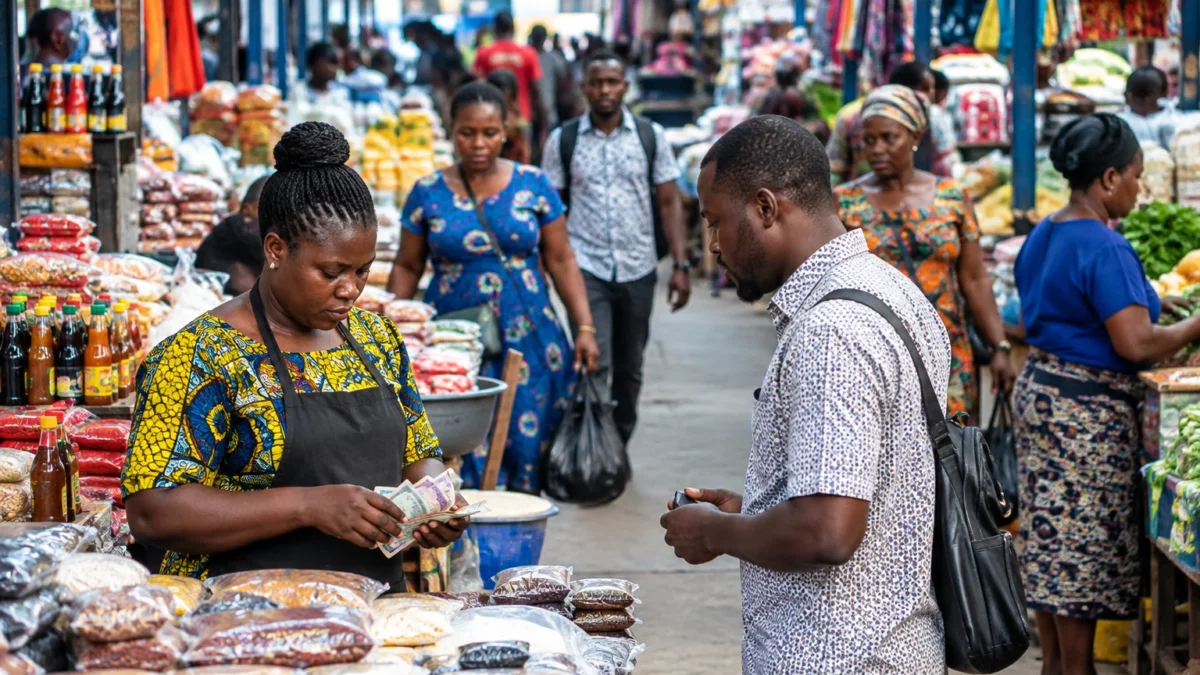
A common currency is not decided only in summit rooms. For businesses trading between West African countries, it could cut conversion fees and simplify payments. But its credibility will first depend on shared rules, ready institutions and lasting trust between states.
Ghana wants to be among the first participants if the Economic Community of West African States (ECOWAS), the regional integration organisation, launches the ECO in stages in 2027. This deadline remains a political and technical objective, not a definitively guaranteed date for the currency’s introduction.
Multi-speed monetary integration
The ECO project aims to bring closer economies that currently use several currencies and have differing levels of inflation, debt and reserves. The principle is ambitious: facilitate regional trade and limit the costs associated with conversions. For small businesses, transport operators and cross-border traders, these costs have a direct impact on margins.
The timetable has already been postponed several times. After deadlines were considered for 2003, 2015 and 2020, regional authorities are now working towards implementation from 2027. On 7 September 2026, the ECOWAS Convergence Council said the target remained achievable and called for work to be accelerated. In November, regional officials examined a strategic and operational framework for a phased launch. The work of the ECOWAS Convergence Council and ministerial discussions show that the deadline remains to be worked towards.
The regional political context nevertheless complicates the project. ECOWAS now has twelve members, following the official withdrawal of Mali, Burkina Faso and Niger in 2025. The West African Economic and Monetary Union (WAEMU), which already shares the CFA franc among eight countries, is not the same as ECOWAS. The ECO will therefore have to address different monetary and political realities, without assuming that all states will move at the same pace.
Accra highlights its indicators but does not announce immediate adoption
On 18 November 2026 in Freetown, Sierra Leone, Ghanaian President John Dramani Mahama advocated a gradual approach. Countries meeting the conditions could start, while others would join the arrangement later. The following day, Bank of Ghana Governor Johnson Pandit Asiama said the country was ready in terms of the convergence criteria, while clarifying that processes were still under way. The Ghana News Agency reported his remarks and the president’s proposal. John Dramani Mahama’s proposal in Freetown and the position of the Bank of Ghana governor set out the context for this announcement.
The figures available in Ghana’s 2027 budget shed light on this confidence, but also underline the need to distinguish between the criteria. At the end of October 2026, average annual inflation was 4.6%, below the 5% community threshold cited in the budget assessment. Twelve-month inflation, meanwhile, stood at 5.5%. These are two different measures: the monthly figure does not necessarily contradict compliance with the threshold calculated as an annual average.
The budget also reports a deficit of 2.3% of GDP, below the 3% ceiling, and zero central bank financing of the deficit. Gross external reserves stood at $12.7bn at the end of September, equivalent to 4.5 months of imports. The official document says Ghana met five of the six convergence criteria. The exchange-rate criterion remained pending: the cedi had depreciated by 10.1% against the dollar at the end of October, slightly exceeding the 10% margin shown in the budget table. Ghana’s 2027 budget sets out these indicators and criteria.
A currency will not eliminate economic disparities
Meeting thresholds on a given date does not, by itself, guarantee lasting convergence. A common currency reduces each state’s ability to adjust its exchange rate in response to its economic conditions. It therefore requires closer coordination of fiscal and monetary policies, as well as credible mechanisms for managing crises and competitiveness gaps.
For Ghana, where the national currency is the cedi, the issue affects both the authorities and everyday economic activity. Simpler regional payments could help exporters, businesses and traders operating in several countries. However, the benefits will depend on the fees actually charged, the interoperability of payment systems and small firms’ access to banking services. A new unit of account will not automatically eliminate logistics costs or financing difficulties.
The exchange-rate question is also sensitive. The cedi has seen marked movements in recent years. Moving to a common currency would change the tools available to respond to future shocks, including a rise in import prices or a fall in export revenues. Potential stability gains must therefore be weighed against the decision-making powers states would agree to share.
The test will be regional as well as Ghanaian
Mahama’s initiative puts a concrete alternative on the table: wait for all members to meet the criteria, or allow an initial group to proceed subject to conditions. ECOWAS has now raised the prospect of a framework for a phased launch, but the arrangements, institutional safeguards and actual participation of states remain to be specified. Ghana’s statement signals readiness; it is neither formal adoption nor a definitive regional decision.
The next steps will take shape in ECOWAS meetings and in governments’ ability to bring their economic policies closer together. For Accra, the stability of the cedi and confirmation of budget results will need to be monitored. For the region, the stakes extend beyond the currency itself: a viable ECO requires political cooperation strong enough to make common rules enforceable, including when economies go through difficult periods.