Algeria
 Egypt
 Libya
 Morocco
 Sudan
 Tunisia
 Benin
 Burkina Faso
 Cabo Verde
 Côte d'Ivoire
 Ghana
 Guinea
 Guinea-Bissau
 Liberia
 Mali
 Mauritania
 Niger
 Senegal
 Sierra Leone
 The Gambia
 Togo
 Cameroon
 Central African Republic
 Chad
 DR Congo
 Equatorial Guinea
 Gabon
 Republic of the Congo
 São Tomé and Príncipe
 Burundi
 Comoros
 Djibouti
 Eritrea
 Ethiopia
 Kenya
 Madagascar
 Malawi
 Mauritius
 Mozambique
 Rwanda
 Seychelles
 Somalia
 South Sudan
 Tanzania
 Uganda
 Angola
 Botswana
 Eswatini
 Lesotho
 Namibia
 South Africa
 Zambia
 Zimbabwe
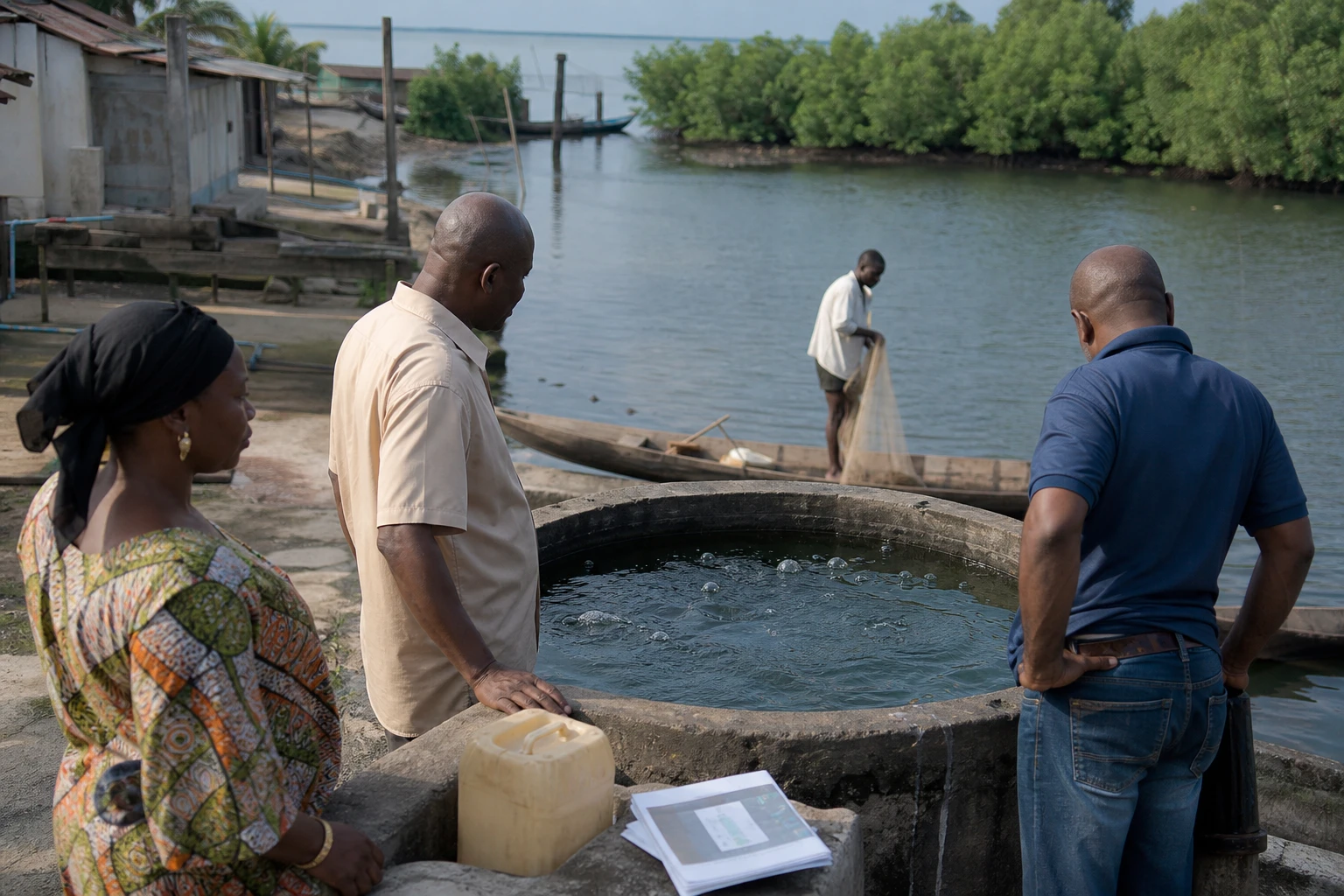
In Bille, Rivers State, the water no longer merely reflects the sky. In places, it bubbles. In wells, rivers and marshes, bubbles rise from the depths. For the residents of this riverside community in the Niger Delta, the emergency has become a daily reality: breathing safely, drinking without being poisoned and continuing to make a living from fishing.
A phenomenon first observed in autumn 2025
The first reports of gas rising to the surface came in October 2025, according to residents quoted by several Nigerian organisations and media outlets. The phenomenon initially appeared in waterways and mangrove areas. It was subsequently observed around wells, disused pumps and pipelines buried several decades ago.
Bille is in Degema Local Government Area, in Rivers State. The community can be reached by river from Port Harcourt, the state capital. Fishing remains a central activity there. The mangroves, creeks and shallow waters provide income and food, as well as routes for travel.
Residents describe a continuous sound, sometimes comparable to a low rumble. A sulphurous smell accompanies some of the gas emissions. In several homes, families have stopped using wells after seeing bubbles on the surface of the water.
Diri Tomitonwa, an official with the Bille Youth Federation, says more than half of the community’s wells may be affected. This estimate has not yet been published in a comprehensive official report. Nevertheless, it illustrates the scale of local concern.
Water pollution disrupts daily life
In a community where access to drinking water is already limited, abandoning a well is a serious decision. Families must buy packaged water or obtain supplies by boat. For households dependent on fishing or small businesses, this additional expense directly reduces their disposable income.
The situation affects residents differently. Households with resources can buy sachets of water or leave the area temporarily. Others remain dependent on local water sources, even when their quality is uncertain. Children, older people and residents already suffering from respiratory problems could be particularly vulnerable, but the scale of the health impact has not yet been documented in a comprehensive public study.
Pollution also threatens the local economy. Fishermen are seeing mangroves deteriorate and some aquatic organisms decline, including fish, shellfish and small invertebrates that serve as indicators of the state of the environment. If fishing grounds become unusable, the consequences will extend beyond the issue of drinking water alone.
This vulnerability is rooted in a longer history. The Niger Delta accounts for a large share of Nigeria’s oil and gas production. For decades, its communities have complained about leaks, flaring, land degradation and inadequate compensation. However, the precise source of the gas rising in Bille cannot be definitively attributed to any particular installation until technical analyses are complete.
Authorities investigate, but the source remains disputed
The Nigerian federal government has launched an investigation involving, among others, the Nigerian Upstream Petroleum Regulatory Commission (NUPRC) and the National Oil Spill Detection and Response Agency (NOSDRA). The former is responsible for overseeing upstream oil activities. The latter monitors hydrocarbon-related pollution.
Authorities have carried out site visits and begun analyses of the nature and source of the gas, and its effects on soil and water. The NUPRC has raised the possibility of an underground phenomenon resulting from several factors. This does not yet allow a conclusion that there has been a pipeline rupture, a leak from a well or natural gas migration.
Preliminary investigations carried out in December 2025 have also been reported. However, their detailed findings have not been made fully public. This lack of information is fuelling residents’ distrust; they are calling for clear information and immediate protective measures.
Civil society organisations say they have detected methane, volatile organic compounds and hydrogen sulphide in the environment around Bille. These findings need to be interpreted using accessible and verifiable laboratory reports. Methane can pose a fire risk when it accumulates. Hydrogen sulphide is toxic at certain concentrations. The priority is therefore to secure the affected areas and regularly monitor the air and water.
A case linked to the transformation of the oil sector
Bille is close to infrastructure long associated with oil activities in the Niger Delta. In 2025, Shell sold its Nigerian subsidiary responsible for onshore operations to a local consortium, while retaining other activities in Nigeria. This change complicates the question of responsibility: it absolves neither former operators, nor new asset holders, nor the authorities of the need to clarify the condition of installations and the obligations for restoring them.
The sector’s reform, launched with the Petroleum Industry Act, is intended in particular to strengthen regulation and improve the governance of oil operations. In producing communities, the challenge now is to establish whether these rules are delivering tangible results. Credible regulation must make it possible to identify those responsible quickly, fund clean-up and compensate people whose livelihoods are affected.
For Bille’s residents, the wait cannot be limited to an administrative report. They need drinking water, medical care, monitoring of gas concentrations and regular information about the risks. These measures are first and foremost a matter of civil and public health protection. They do not prejudge the legal responsibility that will be established by the investigations.
A warning for the Niger Delta and ECOWAS
The case extends beyond Bille. The Niger Delta is one of the most strategically important areas of the Nigerian economy, but also one of those most exposed to the cumulative effects of hydrocarbon extraction. The crisis raises a regional question for ECOWAS, the Economic Community of West African States: how can energy production be reconciled with public safety and the protection of transboundary ecosystems?
What happens next will depend on several decisions. The authorities will have to publish the full results of the analyses, secure the leak points and determine whether nearby installations played a role. They will also have to clarify the support arrangements for families deprived of water or income.
In Bille, the priority is immediate. As long as gas continues to rise in wells, homes and waterways, each day brings further health and economic uncertainty. Above all, the case tests Nigeria’s ability to turn its regulatory commitments into effective protection for communities in the Niger Delta.