Algeria
 Egypt
 Libya
 Morocco
 Sudan
 Tunisia
 Benin
 Burkina Faso
 Cabo Verde
 Côte d'Ivoire
 Ghana
 Guinea
 Guinea-Bissau
 Liberia
 Mali
 Mauritania
 Niger
 Nigeria
 Senegal
 Sierra Leone
 Togo
 Cameroon
 Central African Republic
 Chad
 DR Congo
 Equatorial Guinea
 Gabon
 Republic of the Congo
 São Tomé and Príncipe
 Burundi
 Comoros
 Djibouti
 Eritrea
 Ethiopia
 Kenya
 Madagascar
 Malawi
 Mauritius
 Mozambique
 Rwanda
 Seychelles
 Somalia
 South Sudan
 Tanzania
 Uganda
 Angola
 Botswana
 Eswatini
 Lesotho
 Namibia
 South Africa
 Zambia
 Zimbabwe
A crossing that recalls the real cost of the Atlantic route
In The Gambia, the hope of leaving for Europe too often turns into a painful wait. When a pirogue disappears from radar for weeks, families know they are no longer dealing with a simple delay, but with a crossing where every day counts. The rescue off the Canary Islands of a boat that had set off from The Gambia, with 45 survivors and five bodies on board, has brought this reality back into focus. Survivors say they left the country on 7 August and spent 27 days at sea.
This route is not new. It links the coasts of West Africa to Spain’s Canary Islands in the Atlantic, and remains one of the deadliest for African migrants. The International Organization for Migration (IOM) says the route, which has been active for several years, has grown in importance again since 2020. In 2025, the agency recorded 54 shipwrecks along this route, with 1,214 people dead or missing.
What we know about the tragedy
Spanish rescue services found the boat south of Gran Canaria in extreme conditions. Five bodies were still on board at the time of the rescue. Field organisations and several media outlets later reported survivors’ accounts that the boat had originally been carrying about 127 or 128 people. If that figure is confirmed, more than 80 passengers would have died or gone missing at sea. However, this toll is still based on survivors’ accounts and initial checks, not a definitive count by the authorities.
The survivors were in an advanced state of exhaustion. According to rescue services and reception teams, several could barely stand, further complicating the precise identification of passengers and the collection of names. In cases of this kind, the Red Cross and mediation teams often have to piece together lists from fragments of testimony, telephone numbers, relatives’ names and clues provided after disembarkation.
The survivors were taken care of in Arguineguín, on the island of Gran Canaria, one of the usual arrival points for boats from West Africa. The Spanish government has confirmed that arrivals along this route fell markedly between January and the end of August 2026 compared with the same period in 2025, but a decline in numbers does not mean a decline in danger. On the contrary, boats sometimes become less frequent because the journey is so risky that some departures never reach their destination.
In The Gambia, migration affects families first and foremost
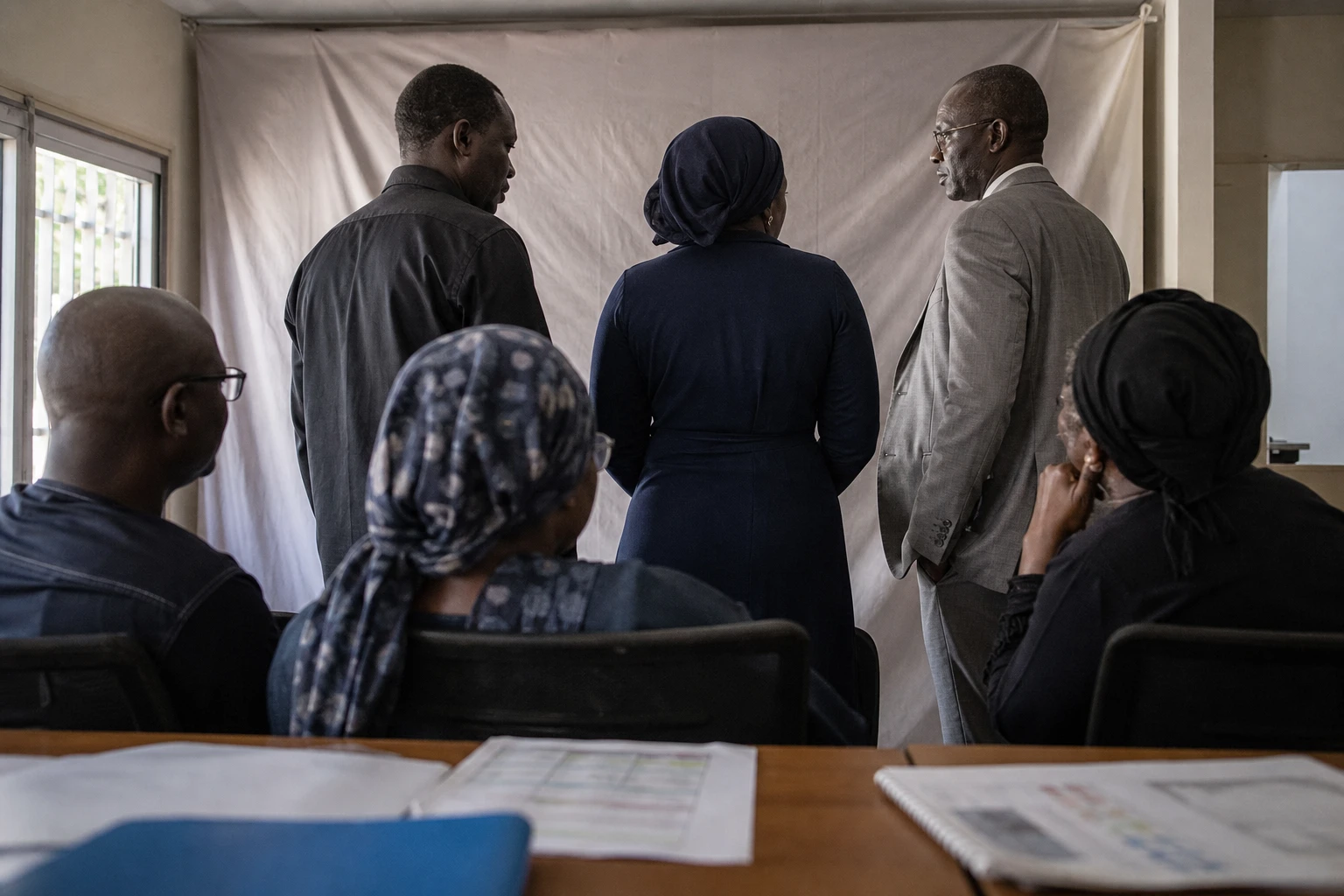
In The Gambia, a West African country whose capital is Banjul, the human impact is immediate. Even before news is confirmed, relatives often find themselves in a state of complete uncertainty. They do not know whether the boat has sunk, drifted or been intercepted further away. In this tragedy, officials from Gambian associations said they had lost all hope before the pirogue reappeared. Their experience highlights a dimension often missing from the figures: behind every boat are villages, neighbourhoods, households and precarious incomes.
The phenomenon is also political. The Gambian authorities say they are stepping up interceptions and patrols against irregular migration. The Immigration Department says it is the lead agency managing population movements and has indicated that it has stepped up operations to monitor departures for the Canaries. This security response remains limited, however, unless it is accompanied by jobs, training and a public narrative that does not present clandestine departure as the only horizon for young people.
The Gambia is not alone. The Atlantic route crosses a regional space where mobility is part of social and economic history. ECOWAS, the Economic Community of West African States, protects the free movement of people within the sub-region, facilitating legal travel but not resolving the issue of irregular departures for Europe. When regular routes close or seem too slow, smuggling networks gain ground.
A warning for all of West Africa
This shipwreck also underlines a continental reality: the route to the Canaries has become one of the most dangerous in the Atlantic. The IOM and several international agencies have reported that deaths and disappearances along this route reached a very high level in 2025, while crossings remained deadly in 2026 despite stepped-up controls. This is therefore not an isolated accident, but a symptom of a system in which the gap between social expectations, the local economy and legal alternatives remains immense.
For West Africa, the stakes extend beyond The Gambia. Senegal, Mauritania, Guinea-Bissau and other coastal countries are affected by the same routes, the same recruiters and the same promise of a quick departure. The Spanish authorities, for their part, are also monitoring the security and diplomatic dimensions, as the Canaries remain a point of entry into the European Union. But the African perspective on the issue is different: it begins with the value of life, followed by the question of economic opportunities, legal movement and the protection of families.
The next steps will unfold on several fronts. In The Gambia, social pressure linked to unemployment and hardship will continue to push some people towards departure. Across the sub-region, states will have to work with ECOWAS and their own coastal surveillance systems. And on the European side, a statistical reduction in arrivals will not be enough to obscure a simple reality: as long as the Atlantic route remains open without adequate protection, it will continue to swallow lives.