Algeria
 Egypt
 Libya
 Morocco
 Sudan
 Tunisia
 Benin
 Burkina Faso
 Cabo Verde
 Côte d'Ivoire
 Ghana
 Guinea
 Guinea-Bissau
 Liberia
 Mali
 Mauritania
 Niger
 Nigeria
 Senegal
 Sierra Leone
 The Gambia
 Togo
 Cameroon
 Central African Republic
 Chad
 DR Congo
 Equatorial Guinea
 Republic of the Congo
 São Tomé and Príncipe
 Burundi
 Comoros
 Djibouti
 Eritrea
 Ethiopia
 Kenya
 Madagascar
 Malawi
 Mauritius
 Mozambique
 Rwanda
 Seychelles
 Somalia
 South Sudan
 Tanzania
 Uganda
 Angola
 Botswana
 Eswatini
 Lesotho
 Namibia
 South Africa
 Zambia
 Zimbabwe
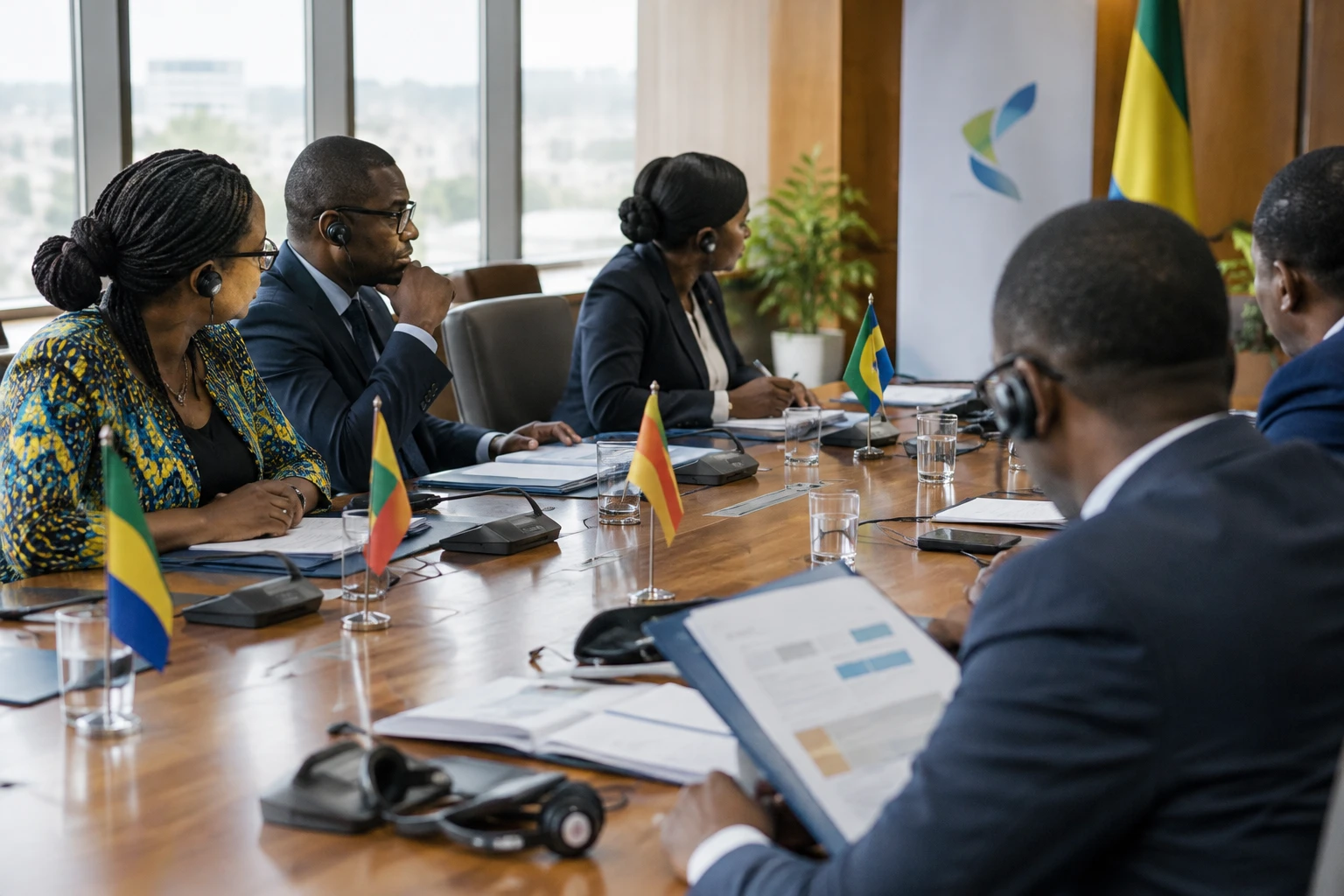
In Gabon, changing ministers is not enough to bring power back to neighbourhoods plunged into darkness or to calm schools. The reshuffle announced on 11 October 2026 places several sensitive social issues in the hands of new teams. It comes as Gabonese people’s expectations remain high and the state’s financial room for manoeuvre is under pressure.
Expanded team, key posts retained
President Brice Clotaire Oligui Nguema reshuffled the government ten months after it was formed. Hermann Immongault retains the role of vice-president of the government, which directs government action. The new team has 33 members, compared with 30 previously, according to figures reported at the announcement.
The composition published by the government confirms that several officials are staying in important posts. Brigitte Onkanowa remains in Defence. Clotaire Kondja retains the oil portfolio. Thierry Minko remains in Economy and Finance, while Marie-Edith Tassyla-Ye-Doumbeneny stays in Foreign Affairs. The official list also sets out the new ministerial titles and portfolio changes.
Among those leaving, the departure of Camélia Ntoutoume Leclercq, the minister of state responsible for Education, has drawn attention. Her ministry has been through a prolonged teachers’ strike, with demands including the regularisation of administrative status and pay. In February 2026, the Gabonese Press Agency reported that 609 teachers’ cases had been regularised and other measures implemented after the strike was suspended. A change of minister will therefore not automatically resolve the difficulties that fuelled the dispute.
Philippe Tonangoye is also leaving the government. He headed the water and energy sector, which has faced outages disrupting households and economic activity. Olivier Mouckocko succeeds him at the head of the portfolio for Universal Access to Water and Energy. A geologist specialising in hydrogeology, he has worked in mining infrastructure and in the public and private sectors, the Gabonese Press Agency reports.
François Ndong Obiang, responsible for Reform and Relations with Institutions, is also leaving the executive. His departure follows controversy over the procedure for amending a law on political parties. The issue was considered by the Constitutional Court, according to the Gabonese press. At this stage, the reported allegations and proceedings should be distinguished from facts that may be established by a final ruling.
Social priorities tested by public finances
Eight newcomers are joining the team, including Olivier Mouckocko for water and energy, Raïssa Nana Ghogho for Social Affairs and Emmanuel Eyeghe Nze as government spokesperson. These appointments put new faces in sectors where expectations are tangible: reliable access to services, a response to social needs and explanations of public decisions.
For residents of Libreville, power and water cuts affect daily life, businesses and services. In other cities and rural areas, access to networks and continuity of supply are also at stake. The ministry’s title now includes the goal of “universal access”, but its reach will depend on investment, the state of infrastructure and the ability to maintain it.
Schools face a comparable challenge: behind the appointments lie working conditions, delays in administrative processing and continuity of lessons. The minister’s departure alone does not allow us to conclude that there will be a change in policy. The first signs to watch will be whether commitments to staff are honoured and new work stoppages prevented.
Budget constraints make these trade-offs more difficult. On 24 June 2026, Moody’s kept Gabon’s sovereign rating at Caa2 but lowered its outlook from “stable” to “negative”. The agency highlighted high financing needs and limited access to funding. This assessment is not a direct measure of households’ day-to-day lives; it may, however, affect the state’s borrowing terms and complicate the funding of its priorities.
A governance test watched across the sub-region
The reshuffle comes during a period of institutional reorganisation. After the political rupture of August 2023, Gabon adopted a new Constitution and held a presidential election in 2025. The executive must now turn this new architecture into visible results, while responding to social demands and preserving the balance of public finances.
The country belongs to the Central African Economic and Monetary Community (CEMAC), which brings together six states around economic and monetary cooperation. Gabon’s difficulties do not sum up those of its neighbours, but energy, debt and investment capacity also feature in regional debates on integration and infrastructure. How Libreville funds its public services will therefore be watched beyond its borders.
The reshuffle gives the government a new division of responsibilities, but is not yet proof of a change in results. The next decisions on the electricity network, water supply, monitoring of commitments to teachers and budget execution will show whether the expanded team is meeting expectations. For Gabonese people, the test will first be whether services work and the state responds consistently.
Official composition of Gabon’s new government · The Gabonese Press Agency’s profile of the new water and energy minister · The Gabonese Press Agency’s update on regularisations in education · Background on the controversy over the political parties law · Report on Moody’s decision on Gabon’s outlook · Overview of CEMAC member states