Algeria
 Egypt
 Libya
 Morocco
 Sudan
 Tunisia
 Benin
 Burkina Faso
 Cabo Verde
 Côte d'Ivoire
 Ghana
 Guinea
 Guinea-Bissau
 Liberia
 Mali
 Mauritania
 Niger
 Nigeria
 Senegal
 Sierra Leone
 The Gambia
 Togo
 Cameroon
 Central African Republic
 Chad
 DR Congo
 Equatorial Guinea
 Republic of the Congo
 São Tomé and Príncipe
 Burundi
 Comoros
 Djibouti
 Eritrea
 Ethiopia
 Kenya
 Madagascar
 Malawi
 Mauritius
 Mozambique
 Rwanda
 Seychelles
 Somalia
 South Sudan
 Tanzania
 Uganda
 Angola
 Botswana
 Eswatini
 Lesotho
 Namibia
 South Africa
 Zambia
 Zimbabwe
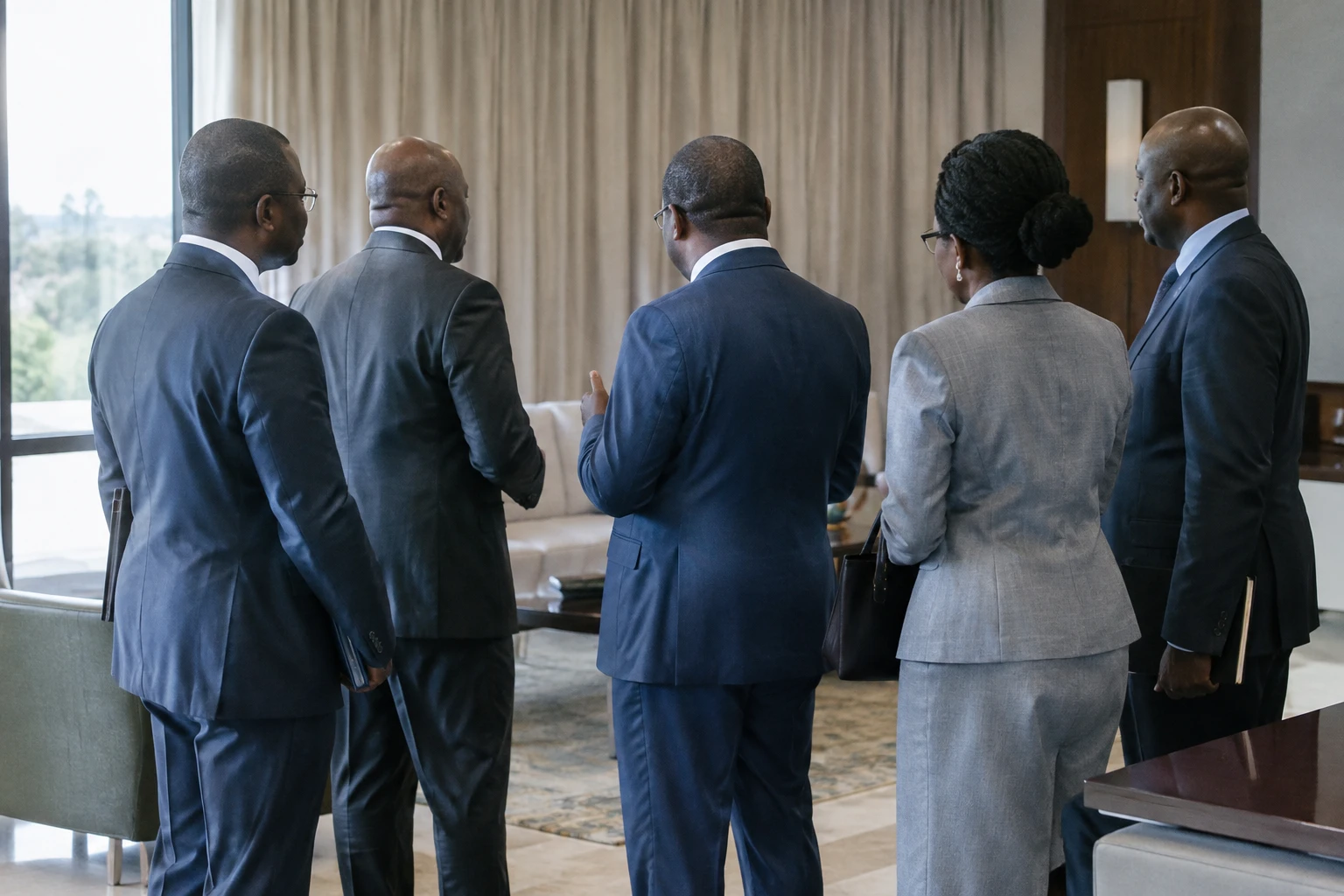
In Libreville, the meeting between the head of state and the Gabonese Democratic Party (PDG) comes just weeks before a congress that must settle a decisive question: who can speak on behalf of the former dominant party? For the authorities, the meeting opens a political channel. For the party, it brings visibility to a leadership whose legitimacy remains contested.
A historic party facing two rival claims to legitimacy
The PDG governed Gabon for several decades under Omar Bongo Ondimba, then his son Ali Bongo Ondimba. The coup d’état of 30 August 2023 ended Ali Bongo’s presidency and the party’s long-standing dominance. Since then, the PDG has had to redefine its place in a transformed political landscape.
The break has also taken hold within the party. On 30 January 2025, an extraordinary congress elected Blaise Louembé as its president and Angélique Ngoma as secretary-general. Delegates revised the statutes and removed several provisions linked to the prerogatives of the “founding president”. These changes strengthened Louembé’s leadership, but did not settle the debate over Ali Bongo’s authority. Gabonreview documented the decisions taken at the congress.
Ali Bongo disputes the new leadership and continues to claim the party presidency. Officials close to him also defend their own organisation. The disagreement is therefore about the party’s rules, control of its bodies and each faction’s ability to represent its members.
A meeting ahead of the November congress
On Friday 30 October 2026, President Brice Clotaire Oligui Nguema received the leadership team led by Blaise Louembé in Libreville. According to an account published by Gabonactu, the PDG leaders expressed their gratitude to the head of state, presented their concerns and reaffirmed their willingness to support his vision for the country.
The meeting comes ahead of the 13th ordinary congress, scheduled for 27 to 29 November 2026. The timetable for the event has also been reported by Gabonreview and 7 jours info. The congress is expected to set the party’s direction and could consolidate the current leadership. But its authority will also depend on how the different factions are involved in its proceedings.
The account of the meeting says Oligui Nguema offered to support preparations for the congress. He praised “dialogue” and “national concord”, while calling for unity. His willingness to help is a political signal, but it does not resolve the internal dispute or amount to a legal ruling on the PDG leadership.
Rapprochement driven by political calculation and reconstruction
The public display of closeness between the authorities and the PDG may seem paradoxical. General Oligui Nguema led the coup that overthrew Ali Bongo. Yet, in the presidential election of 12 April 2025, the PDG called on voters to support him. The final results proclaimed by the Constitutional Court gave him 94.85% of the vote. The African Union observed the poll and published its findings on the electoral process.
The rapprochement may serve several interests. For Louembé’s PDG, being received at the presidential palace raises its profile and gives it de facto political recognition, without resolving the internal challenge. For the head of state, dialogue with an organisation that still has a presence across the country could help broaden support and reduce tensions. It cannot, by itself, measure the support of party members or voters.
The stakes extend beyond the party leadership. The battle over the party’s bodies may mobilise officials, elected representatives and members, but residents also expect political parties to offer practical proposals on jobs, public services and the cost of living. In the capital and the provinces alike, the PDG’s ability to reconnect with its grassroots will matter more than the symbolism of a return to the institutions.
A test for pluralism in Gabon and the region
Gabon is a member of the Economic and Monetary Community of Central Africa (CEMAC), which brings together six states under shared economic mechanisms. The PDG’s crisis remains a national affair, but how it is resolved also matters to a region marked by political transitions and debates over the role of parties. It is a reminder that a return to elected institutions is not enough to rebuild political competition: organisations must also be able to settle their disputes according to recognised rules.
At continental level, after the 2025 presidential election, the African Union had recommended strengthening the role of political parties and continuing democratic reforms in Gabon. The November congress will therefore be a useful indicator: will it produce a decision accepted beyond Louembé’s camp, or deepen the split with Ali Bongo’s supporters? For now, the presidential meeting signals an opening by the authorities, not the end of the battle for control of the PDG.