Algeria
 Egypt
 Libya
 Morocco
 Sudan
 Tunisia
 Benin
 Burkina Faso
 Cabo Verde
 Côte d'Ivoire
 Ghana
 Guinea
 Guinea-Bissau
 Liberia
 Mali
 Mauritania
 Niger
 Nigeria
 Senegal
 Sierra Leone
 The Gambia
 Togo
 Cameroon
 Central African Republic
 Chad
 DR Congo
 Equatorial Guinea
 Republic of the Congo
 São Tomé and Príncipe
 Burundi
 Comoros
 Djibouti
 Eritrea
 Ethiopia
 Kenya
 Madagascar
 Malawi
 Mauritius
 Mozambique
 Rwanda
 Seychelles
 Somalia
 South Sudan
 Tanzania
 Uganda
 Angola
 Botswana
 Eswatini
 Lesotho
 Namibia
 South Africa
 Zambia
 Zimbabwe
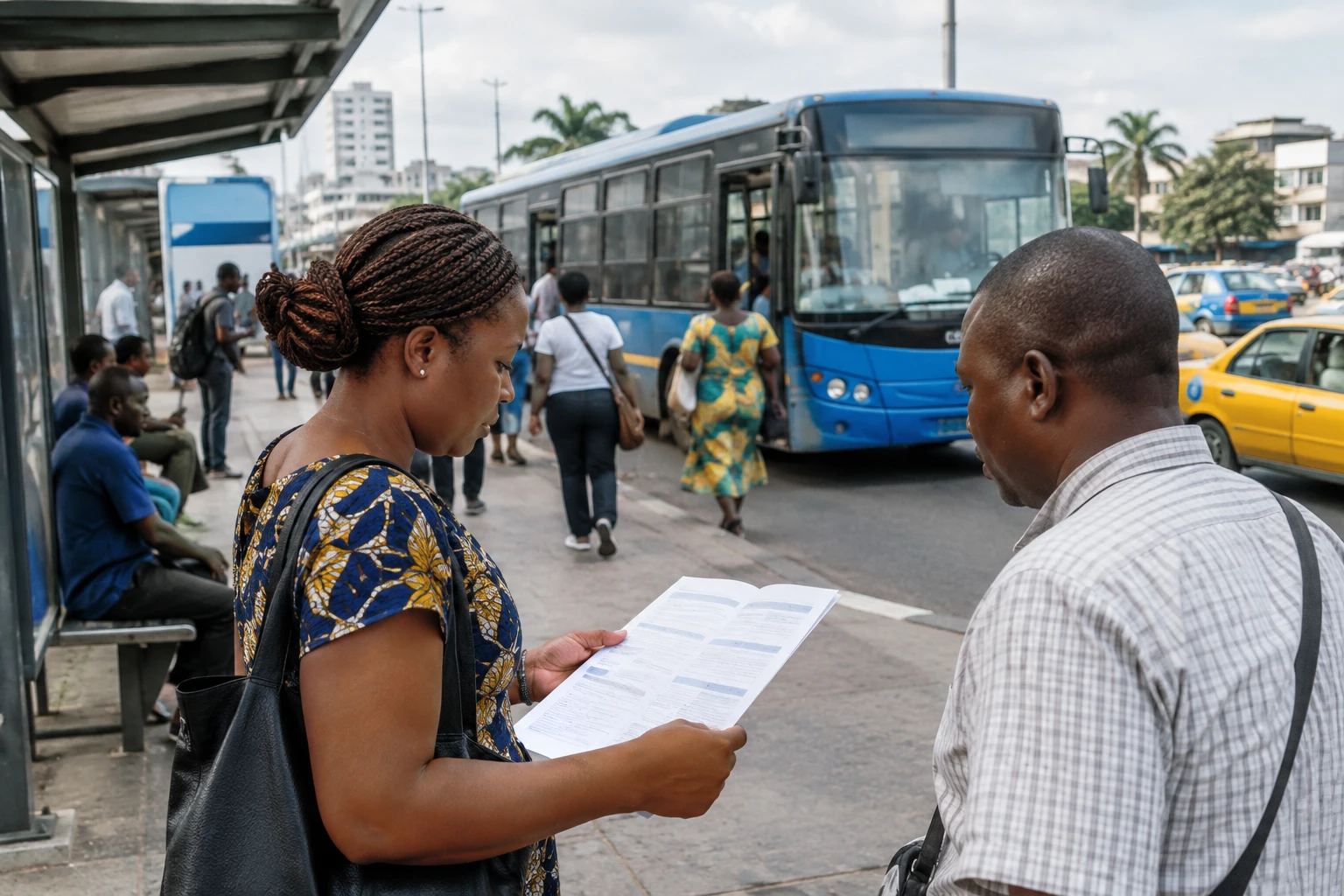
An accident can leave a victim facing medical bills and lost income without effective recourse. In Gabon, a proposed Motor Guarantee Fund is aimed precisely at situations where the driver responsible is unknown, uninsured or insolvent. But announcing a mechanism does not yet guarantee compensation will be paid: its funding and access rules still need to be established.
A safety net still to be built
The draft law was examined by the Council of Ministers on 8 October 2026 in Libreville. It provides for the creation of a Motor Guarantee Fund (FGA), tasked with covering certain medical costs and personal injury damages when the usual compensation channels fail. The victims’ dependants could also benefit from this protection, within the limits to be set by the legislation.
The government presents the FGA as a complement to compulsory motor insurance, not a replacement for it. The draft is based on Article 94 of the Gabonese Constitution and Article 621 of the Insurance Code of the Inter-African Conference on Insurance Markets (CIMA), the organisation that governs insurance rules in several African states. The Gabonese Press Agency reports on the draft’s examination and the proposed remit. The CIMA code provides that member states determine the Fund’s legal form and financing.
The mechanism would be a public institution with legal personality and administrative and financial autonomy. Its structure would include a board of directors, a general management office and an accounting agency. However, the information published so far does not specify the resources that would fund it, or any potential contributions from the state and insurers.
These choices will directly affect its capacity to pay compensation. The required documents, processing times, reimbursement limits and avenues of appeal in the event of a refusal will also need to be defined. Without accessible rules and swift procedures, a Fund may exist on paper while remaining difficult for victims to use.
Many accidents, but needs still to be assessed
Provisional figures from the Directorate General for Road Safety (DGSR), reported by several Gabonese media outlets, record 2,228 accidents in 2025, compared with 1,928 in 2024. The figures reported in June 2026 also mention 640 people injured and 68 deaths. These data give an indication of the scale of accidents, but do not show how many victims would qualify for the future Fund: figures are particularly lacking on drivers who are uninsured, unidentified or insolvent.
The figures are attributed to a provisional assessment, not a final tally. Gabon Media Time and Journal du Gabon report these figures, citing the DGSR. The cross-check confirms the published figures, but does not replace a detailed official statistical series by province or accident type.
The motor insurance market is also growing. In 2024, the sector generated around 25.67 billion CFA francs in revenue, up 19.4% year on year, according to industry data published by Atlas Magazine. Gabon’s National Insurance Directorate has also made available a report covering the 2024 financial year. This growth shows the sector’s economic weight, but is not in itself enough to conclude that the future Fund’s resources are secured.
Rising premiums and the number of accidents do not indicate the future cost of compensation. It will be necessary to establish the number of eligible claims, the extent of personal injury and the sums actually recovered from those responsible or their insurers. This distinction is essential: the Fund should not cover every accident, but only situations defined by law.
An issue of trust and solidarity
For households, the mechanism’s value will depend on how accessible it is. An overly complex procedure risks further penalising people with limited means to assemble a claim or pay medical costs upfront. Victims living far from Libreville could also face obstacles if reporting and claim follow-up are concentrated in the capital.
For insurers, the Fund could help spread the cost of certain risks that fall outside ordinary policies. For the state, the challenge is to balance victim protection, spending controls and sustainable financing. The choice of contributions — premiums, levies or public funding — will therefore need to be explicit. Transparent accounts and regular publication of compensation figures will be crucial to assessing the mechanism’s effectiveness.
The regional framework also matters. Gabon belongs to the Economic and Monetary Community of Central Africa (CEMAC), which brings together several Central African countries, and applies the CIMA Insurance Code. This common framework provides rules of reference, but the Fund’s establishment, organisation and financing in practice are matters for national decision-making. The code provides for the principle of the mechanism; the Gabonese draft still needs to specify how it will work.
The next step will be decisive
As of its examination by the Council of Ministers, the text remains a draft law: this stage does not amount to final adoption. The parliamentary process, followed by implementing legislation, will need to specify the conditions for compensation and the Fund’s resources. It will also be necessary to establish when victims can submit claims and to which body.
The FGA’s impact will be judged less by its administrative status than by its ability to process verifiable claims quickly and pay the sums due. For Gabon, the issue is tangible: to turn the principle of compensation into genuinely accessible protection while maintaining sustainable funding. Publication of the rules, timeframes and initial results will then make it possible to assess whether this safety net meets the needs observed on the roads.